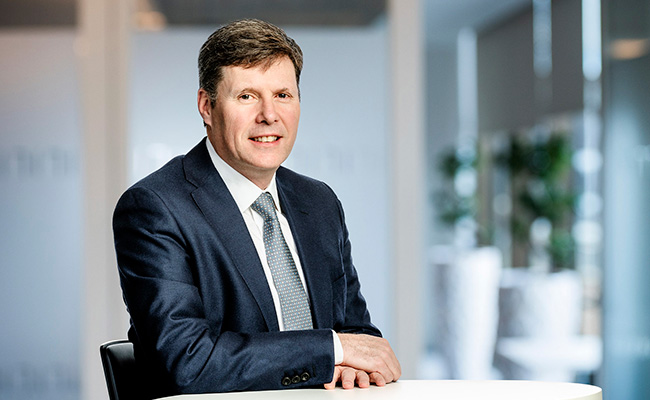

“We are not deterred by the decline in bitcoin’s price,” says Warren Wheatley, the CEO of the Africa Bitcoin Corporation (ABC), which recently launched the continent’s first crypto treasury company in a bid to emulate the success of global firms like Strategy Inc. “It means we can buy bitcoin far cheaper. Our only regret about this is that we don’t yet have more money to spend doing this.”
The fall in bitcoin’s price – down 25% in two months – has stirred the sceptics, who have been confounded by its four-fold increase in the past five years. They see this new frailty as validating their view that there is no asset underpinning this rise.
But for Wheatley, who rebranded his alternative investment company Altvest as ABC two months ago, the long-term story remains undimmed.
“When you look at a company like Strategy, its share price has fallen 53% in the past year, but it has 650,000 bitcoin and virtually no liabilities. It is pretty much the safest bet in the entire world,” he says.
Strategy might be looking frail right now, but its share price on the New York Stock Exchange has risen 474% over the past five years, premised on buying more bitcoin and riding the market wave while paying out chunky dividends.
Some don’t buy it. Peter Schiff, a renowned US stockbroker and crypto cynic, told Currency this week that Strategy and its founder Michael Saylor are “the biggest fraud on Wall Street”. It is a “Ponzi scheme, destined to collapse – it is going to zero”, he said.
But Schiff acknowledged that predicting bitcoin’s inevitable demise after its stellar run is like “going into a church and telling everyone there is no God”.
‘Flushing out the garbage’
For those adherents of the crypto story, however, an African bitcoin company listed on the JSE is compelling. Since its relaunch in October, ABC’s stock has risen 22% – though it was only able to sell 36% of the 1-million shares in an equity placement that month.
Does this suggest ABC missed the boat for bitcoin treasury companies?
“Not at all. There was a definitive bubble in this area – there was a time when all you had to say was that you’re a bitcoin treasury company, and your price would go crazy, and that was just stupid,” Wheatley says. “This correction has flushed out much of the garbage, so we’re much happier listing at a time like this.”
He believes the low take-up of the equity raise reflects lingering scepticism from the asset management industry, which has largely ignored his company and bitcoin. In part, he says, this is because the market doesn’t yet fully get ABC’s strategy.
“People think our plan is to just buy bitcoin and hope it goes up, and it’s not that. What we’re doing is using bitcoin as kerosene for our engine to raise money to lend to small businesses in South Africa and Africa, based on the fact that it is the best collateral in the world,” he says.
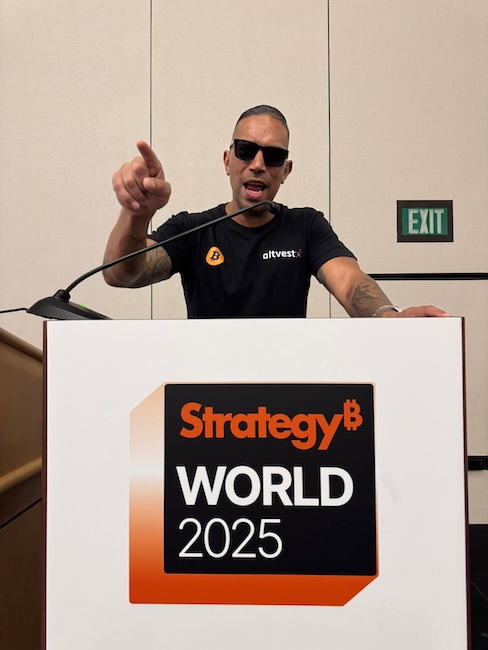
ABC plans to use bitcoin as collateral to raise money from banks in countries like Switzerland or Japan, where it typically attracts an interest rate of about 5% per year, which it can then on-lend to African businesses at a rate of more than 15%.
“We will raise debt at far cheaper rates than you could in South Africa, and lend to small businesses at a fraction of the interest rate they would otherwise have to pay. In Zimbabwe, for instance, businesses pay at least 10% in interest per month, which is ludicrous.”
Banks and other lenders globally are more comfortable with using bitcoin as collateral today, he says, given that it is more fungible than, say, a beach house in Knysna. This model, he says, is fundamentally different from many other bitcoin treasury companies.
“We’re not imitating anyone – we’ve got a real-life business here, which plans to use bitcoin to reduce the cost of capital in Africa. So in that sense, we’re actually early to the market, rather than too late.”
Execution risks
The need for low-cost business financing in capital-starved African nations is clear – but the reality is there is a substantial distance between where ABC is now, and its long-term goal of being able to marshal its crypto reserves to address this.
For instance, Wheatley says the idea is to buy 21,000 bitcoin – which would be worth $1.95bn or R34bn, and amount to about 0.1% of the total 21-million coins that can ever be mined. Yet ABC has a sum total of three bitcoin right now, worth about R4.7m, and its cash resources by the end of August were just R29,000.
Doesn’t this represent an immense execution gamble?
“Yes, it does,” he admits. “Look, we have big ambitions, but a more realistic target over the next two years is 3,000 bitcoin. And yes, that is a long way away, and sentiment is terrible for bitcoin treasury companies. But I’d rather be doing this now than when everyone has drunk the Kool-Aid and you have to justify crazy values.”
Nonetheless, the 22% gain in the share price suggests the model of treasury companies isn’t dead.
Wheatley says interest in his company has surged, but the company is treading carefully: in recent weeks, it turned down a $210m investment from an overseas hedge fund for fear it would lend the stock out to short the company.
Conviction at the company isn’t a problem. In October, its new chair, Stafford Masie spoke of how it was determined to deliver “tangible development outcomes” across South Africa using “the world’s most secure and scarce monetary asset”.
While Masie conceded that crypto treasury companies have come under pressure, he said the fundamentals for bitcoin remain “stronger than ever”.
Greed and fear
ABC’s belief in its lending model will have been bolstered by Strategy’s founder, Saylor, who told the Binance Blockchain Week in Dubai this week that the banking system has made a remarkable U-turn on bitcoin over the past year.
“I couldn’t get a loan against bitcoin from any major bank, and now, if I counted the top 10 US banks, eight of them are engaged in crypto lending, and they’ve all flipped their stance in the last six months,” he said.
Saylor’s keynote address, dubbed “The Undeniable Case for Bitcoin”, admitted to zero weaknesses in the narrative, despite the plunge in Strategy’s share price.
Fortune magazine this week described Saylor as the most ardent “bitcoin evangelist”, who likes to post memes extolling himself as an AI-generated action hero. But it warned that if Strategy becomes the first major crypto domino to fall, others will follow. “A further plunge in Strategy’s share price could not only threaten its future viability, but spur the collapse of dozens of other firms that have copied its business model,” it said.
Sceptics like Schiff have only fuelled this scepticism. Speaking to media in Dubai on the sidelines of the Binance event, Schiff said bitcoin is a fake rather than a hard asset, destined to collapse spectacularly.
“There’s a lot of ignorance and greed in the world, and that’s why the price is where it is,” he said. “The reason inflation makes hard assets go up is that you need it for things – but you don’t need bitcoin for anything.”
Yet Saylor used the same Dubai platform to play to his stereotype as a diehard.
“Run towards the fire,” he told an enthusiastic audience. “There’s scepticism, but there’s scepticism about electricity, automobiles and airplanes.”
Saylor said while money markets return 3% per year on average, companies using bitcoin can return 47% per year. Strategy pays $800m in dividends per year, and has enough assets to satisfy 73 years’ worth of dividends. “For us to pay that money forever and grow shareholder value, bitcoin would have to appreciate 1.36% a year. If it does, we win,” he said.
But the problem for Saylor is that Strategy now owns 3.1% of all the bitcoins in issue; should he opt to dump any of this, this in itself could put pressure on the price, and spark a deeper unwind.
If Schiff is right, it could be the beginning of the end; if he is wrong, companies like ABC could thrive.
On this point, Wheatley says Schiff’s view that these treasury companies are premised upon a deceit and destined for collapse is incorrect and misconstrues bitcoin’s utility.
“Schiff’s criticism is relentless, but it’s wrong to suggest that Strategy, with so much collateral, is a Ponzi scheme,” he says. “Of course, many South African asset managers share his view – but they’ll begin to realise in the next few months they’ll need to play catch up.”
ALSO READ:
- Inside Altvest’s mega $210m bitcoin gamble
- My terrible investment punt this year: Strategy Inc
- Crypto: Has the banking industry finally surrendered?
Top image: Supplied/ChatGPT/Rawpixel/Currency collage.
Sign up to Currency’s weekly newsletters to receive your own bulletin of weekday news and weekend treats. Register here.