
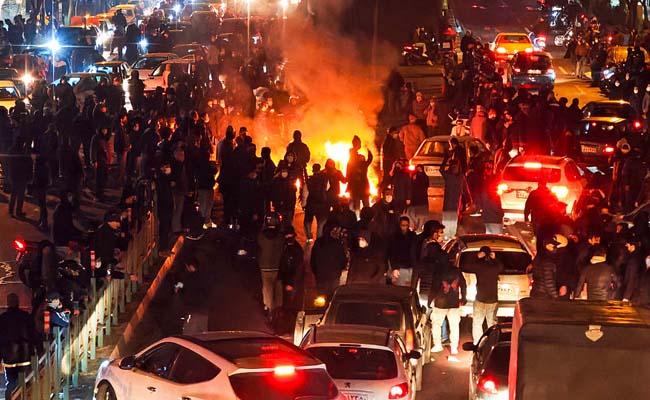


While its naval ships made their way around False Bay next to good friends from the Russian navy in exercises hosted by the tone-deaf South African military command, Iran’s security forces were perpetrating a mass killing of shocking proportions back home.
According to Amnesty International, “verified videos and credible information from eyewitnesses in Iran reveal mass unlawful killings committed on an unprecedented scale amid an ongoing internet shutdown imposed by the authorities since January 8 to conceal their crimes”.
The organisation said 2,000 had died and that video evidence revealed how “security forces positioned on the streets and rooftops, including of residential buildings, mosques and police stations, have repeatedly fired rifles and shotguns loaded with metal pellets, targeting unarmed protesters frequently in their heads and torsos”.
It added: “Medical facilities are overwhelmed with the injured while distraught families have been searching for their missing loved ones among body bags near overflowing morgues and witnessed bodies piled up in pick-up trucks, freight containers or warehouses.”
Foreign policy pivot
This horror, which resembles that perpetrated by Tanzania’s vote-rigging president last year, where more than 3,000 are believed to have been killed by security forces, has drawn international condemnation.
Yet, while the Iranian regime is loathed at home and abroad, it still has a good and unlikely friend in democratic South Africa, which believes the Iranians are involved in some sort of just war against “the West”, which deserves applause.
South Africa’s strange foreign policy pivot to shunning fellow democrats and embracing autocrats has puzzled the world. After the Hamas massacre of Israelis on October 7 2023, South Africa’s then foreign minister, Naledi Pandor, hastened to Tehran bearing a “special message” from President Cyril Ramaphosa. She also took a call from Hamas and then, unsurprisingly, attacked Israel with genocide charges.
But even President Cyril Ramaphosa – who has been an Iranian superfan since the regime gave MTN, of which he was chair, a licence to print rial – was moved to issue a criticism, of sorts, of the deaths.
Ramaphosa said developments were being followed with “concern” and that “all parties” – because somehow both sides are equally guilty of repression – must “exercise maximum restraint”.
As vague and veiled statements go, this was a whopper. It did, however, demonstrate that Pretoria knows it is playing with fire as it continues its relationship with the violent autocracy and others, such as Russia.
Commander in chief?
What ought to be concerning for South Africa is that Ramaphosa is so weak that he is being ignored by ministers, who are forging ahead with their own policy initiatives, and the military leadership, which is simply disregarding his instructions.
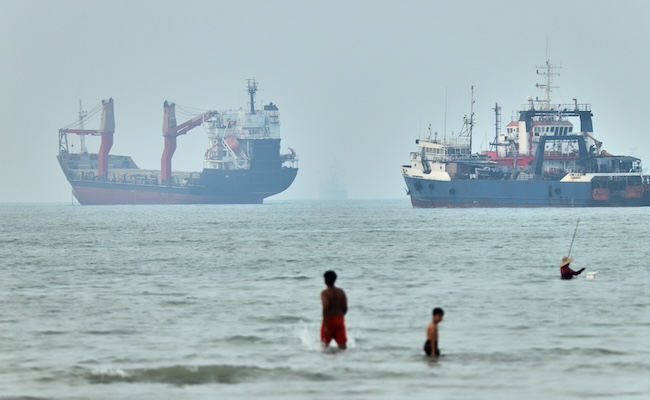
The latter ignored a request from Ramaphosa that the Iranian warships lurking in Cape waters not participate in the exercise “Operation Will for Peace”. The military leadership does have a deep sense of irony, choosing this Orwellian name for an operation involving the world’s most militarised and violent countries, with Russia entering the fifth year of its illegal occupation of Ukraine and Iran supplying it with swarms of Shahed drones, which are used against supposedly deadly civilian enemies in apartments in Kyiv and elsewhere.
Less will than wilt – on peace, human rights, democracy and much else, including the prospects of jobs and growth through investment and trade for the South African economy.
When it dawned on Ramaphosa, who is not always the quickest political wit, that holding such an exercise with Iran was not a good idea, die koeël was deur die kerk, to borrow the Afrikaans saying. The Iranian warships had already made their journey to False Bay, and Ramaphosa had to try to limit the damage by suggesting – sotto voce from the wings, as his style – that they not actually join the actual exercises.
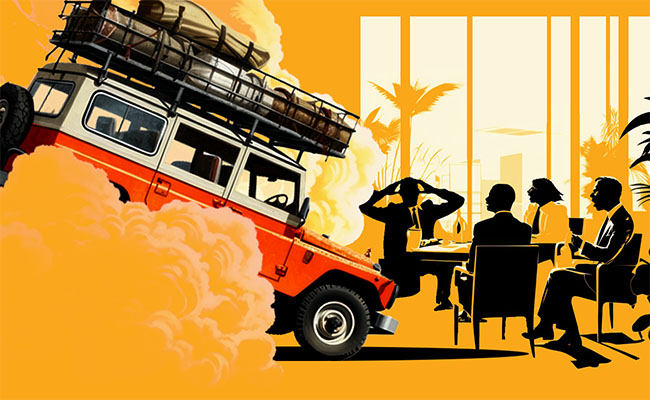
This appeal was simply ignored by the military top brass, who had already donned their 5XL uniforms and staggered their way onto a podium to take the salute.
The Iranian corvette IRIS Naghdi – a battered old ship gifted to prerevolutionary Iran in 1963 by the US – simply sailed out with the others on the exercise despite Ramaphosa’s entreaties. There should be severe consequences for this if Ramaphosa wants to honour the title “commander in chief”.
Imagine similar insolence while Thabo Mbeki was president. He would have had those responsible in civvies queuing for construction jobs while the Scorpions (for younger readers, an independent corruption-fighting force that was disbanded by the ANC) poked around their personal finances.
A provocative game plan
The geopolitics, already toxic following countless missteps by the hapless department of international relations and co-operation, are becoming dangerous for South Africa.
The gameplan seems to be to provoke US President Donald Trump and then, when he reacts, attack him for failing to bow to the “new world order” being cooked up by South Africa, Russia, China and Iran.
Aside from the obvious problem of the less-than-democratic bedfellows, this strategy is dangerous and risks harming the country’s standing and influence instead of enhancing it. It’s one thing to tell the US to suck eggs, it’s another to navigate the consequences which will surely come.
Trump has just toppled the president of Venezuela because he wants to dominate the hemisphere. South Africa, with its Atlantic seaboard, has been entertaining Iranian, Russian and Chinese warships as if deliberately seeking to annoy him further.
False Bay would have harboured a false dawn to a more prosperous national future, one which depends on improving relations with our most important trading partners, not further alienating them.
The next US step is likely to be to impose further trade restrictions and then consider imposing sanctions against leading South African figures. This might be a bridge too far for most, but in Washington, the playbook is to hit perceived enemies hard where it hurts them most.
South Africa’s insistence on playing high-stakes poker with its international relations is a costly mistake. We must return to our core values of democracy and embrace nations that uphold freedom of expression and democratic accountability. It’s time to say goodbye to the dictators’ club before it drags us down with it.
Ray Hartley and Greg Mills are with the Platform for African Democrats.
ALSO READ:
- South Africa has chosen a risky approach to global politics: Three steps it must take to succeed
- South Africa’s hypocrisy is not just laughable – it’s Trumpian
- Trump’s tough talk echoes an era of American imperialism
Top image: People gather during protest on January 8 2026 in Tehran. Picture: Anonymous/Getty Images.
Sign up to Currency’s weekly newsletters to receive your own bulletin of weekday news and weekend treats. Register here.


‘This appeal was simply ignored by the military top brass, who had already donned their 5XL uniforms and staggered their way onto a podium to take the salute.’
Greg and Ray – you left out “medals and ribbons” after the uniforms ….