

New year, new glut of series and films out there for your viewing pleasure – especially if you’re on a post-December budget and are seriously lacking motivation but excelling at work avoidance.
It’s also awards season, so there’s plenty of hype and speculation about what is good, great or just meh on the silver screen. We’re slowly making our way through recommendations from friends and the international press, and figured that you, our enquiring reader, would like to know about these new films too.

One Battle After Another
Written and directed by Paul Thomas Anderson, One Battle After Another is a genre-bending, fast-paced action thriller with a darkly comic twist. Leonardo DiCaprio stars as ex-revolutionary Bob Ferguson, a beer-guzzling, weed-smoking hot mess whose daughter Willa is kidnapped, forcing him to confront his past, fatherhood, old enemies and redemption.
The film just received 13 Oscar nominations, and is packed with off-kilter, fascinating characters. DiCaprio is his usual brilliant self. Sean Penn is terrifying as Colonel Steven J. Lockjaw, while Teyana Taylor as Perfidia Beverly Hills is hectic, layered and undeniably magnetic. Some critics have called the character overly sexualised, but her performance earned a Golden Globe. Benicio del Toro brings comic relief as the Sensei, and newcomer Chase Infiniti more than holds her own among this heavyweight cast.
Quirky, weird and sharp, the film sneaks in political satire with eerie relevance, featuring ICE-reminiscent detention camps and the “Christmas Adventurers Club” – a fictional secret white supremacist society that mirrors real-world Christian nationalism.
Visually and sonically, it is a treat. The vintage 1970s vibe – especially during the car chases – pairs brilliantly with an old-school soundtrack featuring Steely Dan’s Dirty Work, Tom Petty’s American Girl and even Ella Fitzgerald’s surprisingly fitting Hark! The Herald Angels Sing. The score, a chaotic mix of piano plinks and jazz, is unsettling in all the right ways.
This is a compelling, watchable movie. My only gripe is the length. At two hours and 42 minutes, it is packed with characters and nearly two decades of narrative. This seems to be the problem with many of today’s cinematic epics. Edit it down, chaps!
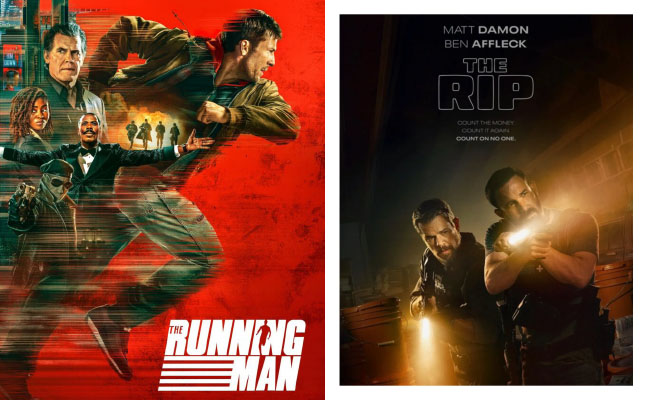
Running Man
Set in the near future, The Running Man follows Ben Richards (Glen Powell), an ordinary guy who joins a deadly televised game show to pay for his daughter’s life-saving medication. The rules are simple: survive 30 days on the run while hunted by professional assassins, all for a cash prize and the nation’s entertainment. The film skewers a culture all too willing to turn human suffering into prime-time spectacle.
Based on Stephen King’s 1982 novel (published under the pseudonym Richard Bachman) the story was first adapted into the 1987 cult classic starring Arnold Schwarzenegger. This new version is directed by Edgar Wright, mastermind behind Shaun of the Dead, Hot Fuzz, Scott Pilgrim vs. the World and Baby Driver.
While it doesn’t reach Wright’s peak brilliance, the film is a fun, fast watch. The production design mixes gritty, overcrowded dystopian streets with retro-futuristic gadgets, neon accents, and a distinct 80s/90s punk vibe.
This is a straight-up action romp and Powell is a likeable, physically convincing lead with sharp one-liners. Josh Brolin is suitably sinister as a ruthless TV executive, and Michael Cera steals scenes as Elton, a quirky revolutionary helping Richards spark a rebellion.
Fast, entertaining and visually striking, The Running Man is pure escapism with a dystopian edge.
The Rip
We heart Matt Damon and Ben Affleck, Hollywood’s longest-running bromance, so Netflix’s The Rip was an instant watch. The childhood pals famously broke out with Good Will Hunting in 1997, winning an Oscar in their mid-20s, and have been weaving in and out of each other’s careers ever since. This time, they return as both stars and producers.
The film centres on a tight-knit Miami narcotics team still reeling from recent tragedies. During what should be a routine raid, they uncover a fortune in hidden cash, and for reasons that we still don’t understand, counting it on site is apparently mandatory. As threats close in, the officers wrestle with greed, loyalty and trust, all wrapped up in plenty of Miami-style action.
On paper, this fliek sounds perfect. But while it’s undeniably entertaining, it’s not ground-breaking. And the action can be confusing, with constant back-and-forth over who’s good, who’s bad and who’s morally flexible. In an interview on The Joe Rogan Experience, Damon and Affleck said Netflix encouraged them to repeat plot points a few times in dialogue so viewers scrolling on phones could keep up. Even then, it can still be a little perplexing – though perhaps I just need to get off my iPhone.
Now for the complaint that will age me: much of the film takes place at night. Daytime scenes are oversaturated CSI: Miami meets Bad Boys, while the night sequences are so dark it’s genuinely difficult to make out what’s happening.
The supporting cast, including Steven Yeun and Kyle Chandler, is strong. A few promising female characters, notably one played by Teyana Taylor, are underwritten and largely sidelined. This is very much a movie made by big boys for more boys. Of course, if that’s your thing, this is a shoot-’em-up to enjoy.
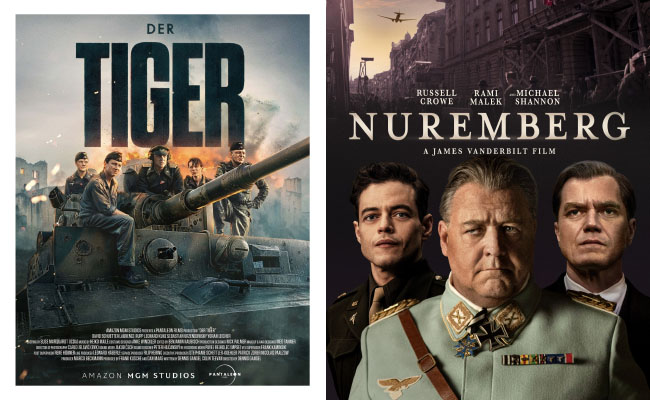
Der Tiger (The Tank)
Der Tiger is a German (anti-)war film set during the final, brutal stretch of World War II. It follows a worn-down five-man tank crew sent on a doomed mission as the Third Reich collapses around them.
This movie stands out in several ways. Told in German and from the perspective of German soldiers, so frequently cast as faceless villains in Hollywood, it largely unfolds inside the claustrophobic confines of a tank – a setting rarely explored on screen.
And from an industry perspective it has been a hit, becoming the most-streamed original German movie on Prime Video. It launched in 240 territories on 2 January this year, following a local theatrical run, marking the first time a Prime Video Germany production received a cinema release.
Tonally, it’s bleak, slow, and often quiet. The soldiers talk about their lives before the war, having been everything from a wine farmer to a train driver or a teacher, while the story examines morality, loyalty and the psychological cost of conflict. Sudden bursts of brutal violence punctuate the thoughtful, measured pace.
This is a strong, rewarding war film, far removed from the spectacle of Hollywood. It will appeal to viewers looking for something serious and contemplative. Der Tiger is not what you expect, and we will leave it at that to avoid any spoilers.
Nuremberg
Nuremberg is a historical drama set in the aftermath of World War II, centred on the Nuremberg Trials during which leading Nazi officials were prosecuted for war crimes. The film divides its focus roughly 50/50 between the tense build-up to the trials and the courtroom battles themselves.
At its centre is psychiatrist Dr Douglas Kelley (Rami Malek), tasked with assessing whether the accused are fit to stand trial. Most notably they include Hermann Göring (Russell Crowe), Hitler’s second-in-command. The film wrestles with questions of responsibility, guilt and the moral complexities of prosecuting atrocities.
This is a Hollywood-style epic, complete with sweeping music, melodrama, star power, and an obvious Oscar bid from writer-director James Vanderbilt (yes, he’s one of “those” Vanderbilts). Crowe shines as the charismatic, narcissistic Göring, but Malek’s wide-eyed portrayal of Kelley often makes him seem more unhinged than insightful. Oddly, the most grounded and human performance comes from Leo Woodall of White Lotus and One Day fame. He plays Sergeant Howie Triest, a young German-born translator, proving that supporting roles can steal the show.
Where Nuremberg succeeds is in its historical lessons. Beyond a basic primer on the trials, it draws parallels to the present. There’s rising nationalism, scapegoating of minorities, attacks on democratic institutions and the press, and leaders exploiting economic insecurity and nostalgia for past glory. Sound familiar?
The film reminds us that ordinary people can become complicit in atrocity and that vigilance against propaganda and dehumanisation remains vital today. It may not be a standout piece of art, but it is worth watching for its sobering perspective and historical insight.
For more of Jo Buitendach’s pop culture commentary, go here.
Top image: Rawpixel/Currency collage.
Sign up to Currency’s weekly newsletters to receive your own bulletin of weekday news and weekend treats. Register here.