
These days, the JSE’s mining sector is more like an old-age home for the once-great than a serious contender for prospectors jostling for capital. Unlike Canada, say, with its 175 mining stocks, our bourse counts just 46 contenders, including Sappi, Omnia and Mondi among its ‘basic materials’ segment. But there are a few more upstarts making their home here, including Shuka Minerals.
The company listed on the JSE’s AltX in May 2025, the last miner to do so since Copper 360 went public in 2023. (Its primary listing is on the Alternative Investment Market (AIM) of the London Stock Exchange).
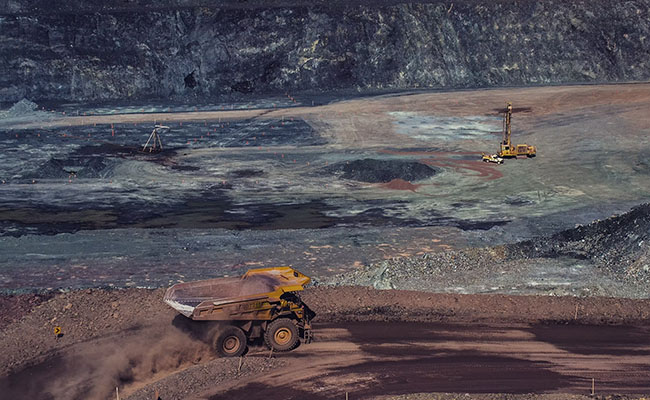
And it has just became the owner of Zambia’s Kabwe mine: one of the world’s richer zinc deposits, with an estimated 5.7 megatons of resources remaining underground. At prevailing metal prices, these resources should have a value of over $2bn.
Alongside a loan from Gathoni Muchai Investments, Shuka raised the $4.5m needed to buy the mine and the Leopard Exploration company by placing 25 million new ordinary shares on the market.
“We raised £1m, which is a pretty good going for a company with a market cap of £4m,” says Richard Lloyd, Shuka’s CEO.
What’s more, he says: “We raised it pretty much at the share price at the time, so we didn’t have to do a great big discount.”
Casting the net wider
Still, the company hasn’t exactly had a rapturous reception. While it listed in the hope of garnering attention from a community that is well informed about mining, so far, this has fallen short of expectations.
“I’m a little disappointed in the volumes on the JSE,” says Lloyd. But, he says: “I think that’s inherent to how people invest here, you know, most people invest in unit trusts. Until you get onto that radar, your volumes will remain a little lower.”
Shuka’s two-largest shareholders are AUO Commercial Brokerage, based in Dubai, which owns 26.3%, and Shuka’s lender, Gathoni Muchai Investments, which holds 20% of the shares.
It has five institutions on board – most being British financial services firms. As of yet, no South African institutional investors have backed the miner.
Lloyd is hoping to use the African Mining Indaba, which kicks off in Cape Town today, to attract more institutional interest.
‘Pretty buoyant’
“I think with the commodity boom at the moment, everyone’s in a pretty buoyant mood,” he tells Currency in an interview.
Given its small-fry status, Shuka will need to push the Kabwe promise story, hard. Not least given Kabwe’s reputation as one of the most lead-contaminated places on earth.
Lead was unsafely mined at Kabwe for years – largely by Anglo American – and there are still millions of tons of lead-contaminated waste on the site.
Still, you can see why the numbers are beguiling.
Kabwe’s ‘ore body No. 2’ area could make up to $1.85bn in pre-tax cash flow, says Lloyd.
He points out that while Kabwe is the current focus, Shuka is also running the fully functional Rukwa coal mine in Tanzania, a cash generative asset that keeps the company going while it gears up to tackle Kabwe.
“The main priority is getting the drilling going,” Lloyd says, which he hopes to get started by his next visit to Zambia. “That is the biggest bank for our buck, because you’ll see a return on share price.”
There are a host of things to do – including cleaning up after the mine’s previous owners. An environmental base study has to be done to determine the measure of damage done to the environment – and to the people – around the mine.
Playing nice with Lusaka
And then there’s the government.
The governments of resource-rich countries are frequently prone to raising royalties from mining projects; most recent of these is Ghana, which has slapped on a new 5-12% sliding scale system thanks to the surging gold price.
“There is always a risk when government authorities see massive profits, and they want a part of it,” Lloyd admits.
But he insists that Zambia’s mining cadastre system is “very robust” with a “rigorous tax royalty regime.”
Of course, re-investment in Kabwe can only be a good thing: the mine previously employed 5,000 people, not counting the thousands of support jobs it created in the town of Kabwe itself.
Until then, there is a lot more investment to garner, pits to dewater, and mines to re-open.
Top image: www.shukaminerals.com.
Sign up to Currency’s weekly newsletters to receive your own bulletin of weekday news and weekend treats. Register here.