


While the opera world is still rolling its eyes at Timothée Chalamet’s dismissive remarks about ballet and opera – “no one cares” he said, in a way that sounds clever only if you have never met a soprano, a répétiteur or, for that matter, a ticket queue – South African opera is quietly holding its own internationally.
Enter Alessandro Talevi
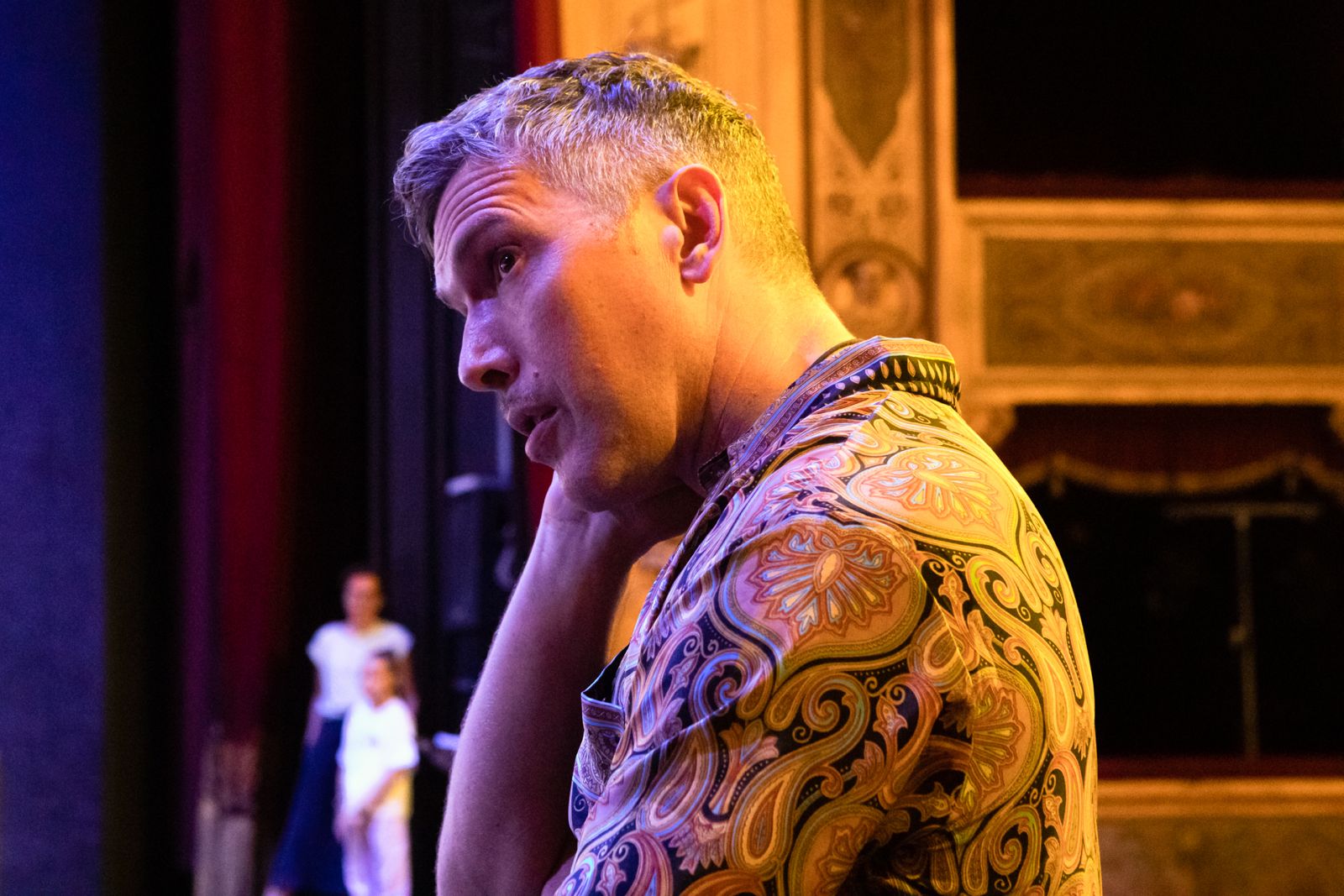
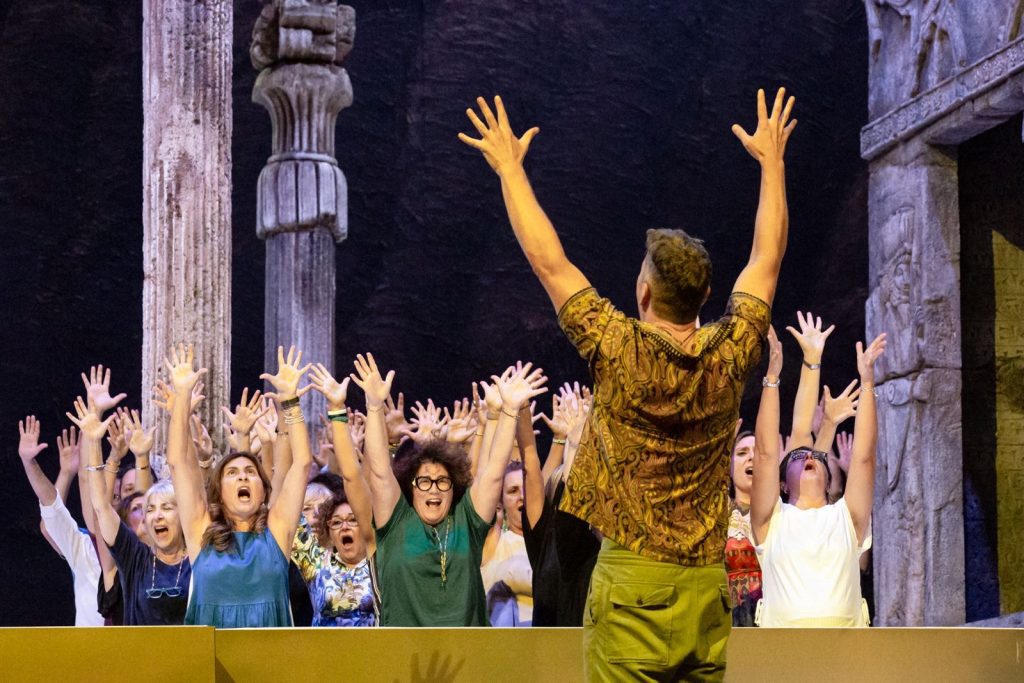
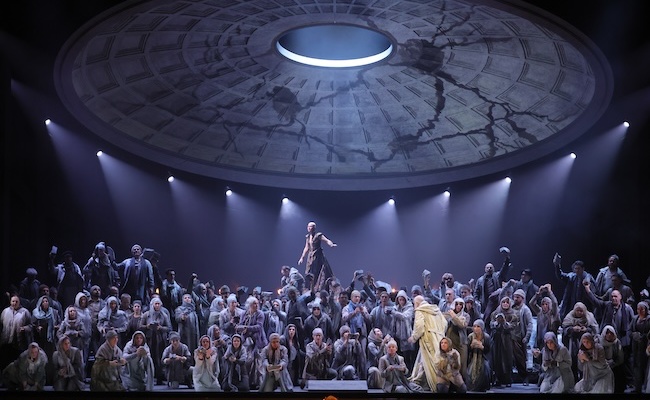
The latest example is Alessandro Talevi, the Johannesburg-born director who will make his Teatro alla Scala debut in Milan in May, staging Verdi’s Nabucco in a new production conducted by Riccardo Chailly, with Anna Netrebko and Luca Salsi in the cast from 16 May to 9 June 2026.
That alone is a splendidly inconvenient fact for the high priests of cultural decline. La Scala is where opera goes to remind the world that it has outlived empires, ideologies, several forms of recorded entertainment, and now the attention span of movie stars. The official season page notes that most of the run is already sold out or down to the last seats – after being available for 20 minutes!
Talevi, who was born in Johannesburg and studied at Wits before going on to the Royal Academy of Music in London, has the faintly improbable but actually rather South African air of someone who belongs in several worlds at once: Italian by family, South African by formation, and thoroughly international by career.
He did not, by his own account, set out with a neat plan to become an opera director. He began as a pianist, became interested in stage design and theatre, and then did the artistic equivalent of a corporate pivot: the sudden realisation that directing opera was the one job that would allow him to combine all the things he loved at once.
When he started out in London, he says, there was a tendency to box people into categories, and he was designated “pianist”. South Africa, by contrast, was more forgiving, more improvisational, more willing to accept ambition before certification.
Johannesburg, he says, is a fertile place to “fake it till you make it” because if you say you can do something, people are inclined to say: fine, show us.
That, in miniature, is also his theory of South African opera.
The Chalamet argument
The Chalamet argument, beneath all the social-media foam, is really about two old questions dressed in new clothes: is opera elitist, and does anyone under pension age still care?
Chalamet’s actual remark, made during a CNN/Variety town hall with Matthew McConaughey, was that he did not want to work in ballet or opera, “where it’s like, ‘Hey, keep this thing alive,’ even though it’s like, no one cares about this anymore”.
The backlash was immediate. Playbill reported responses from the Met, Los Angeles Opera, Vienna State Opera, Paris Opera and the Royal Ballet and Opera, several of them noting strong ticket sales or near-sold-out runs, which is the institutional equivalent of saying: thank you for your concern, but the house is full.
Talevi is not especially impressed. In the interview, he calls the comment “unfortunate”, “superficial”, and reflective of “a terrible lack of curiosity”. He thinks the danger is not merely that a film star says something silly – film stars, being film stars, do that all the time – but that younger people may hear the remark and accept it as received wisdom without ever having set foot inside an opera house.
But the more interesting part of his response is not the scolding. It is the South African counterexample.
Europe, he says, is forever worrying about how to make opera “accessible”, often by stripping away some of the ceremony: under-25s in jeans and sneakers, discounted casual nights, the desperate search for youth by means of studied informality.
South African opera hits different
South Africa, at least in his telling, has often done the opposite. He still remembers the opening night of his 2011 La Traviata for Cape Town Opera: packed house, audience age around 30, everyone dressed up, selfies being taken, champagne being drunk, and a sense not of dutiful cultural consumption but of excited participation in an event.
“Dress up to the nines, turn it into a fabulous evening,” is more or less his argument. Make it feel special, and people respond to the spectacle.
The observation reverses the usual patronising script. The standard anxiety in arts management is that younger audiences must be coaxed in gently, preferably in trainers, perhaps with explanatory notes and beanbags. Talevi’s South African experience suggests something else: not everything needs to be dumbed down; sometimes people want the grandeur. They do not need permission to enjoy opera. They need exposure, confidence and a reason to feel that the evening belongs to them too.
His broader explanation is cultural. South Africans, he argues, are less burdened by inherited rules about who is allowed to like what. The country’s musical culture is porous and absorptive. People take from here, from there, from the colonial archive, from the church, from the choir, from the street, and turn it into something of their own. That, he says, is why opera in South Africa does not always carry the same suffocating baggage it does in Europe: it is not overly burdened by history.
One of the striking things about South African opera is how often its talent pipeline begins not in elite drawing rooms but in choral culture, churches, schools and communities where group singing is ordinary social life rather than specialist accomplishment.
Talevi says South African singers are now spread across the international opera ecosystem, from the top ranks to the ensembles of Germany’s many regional houses, and that what is prized about them is not just vocal quality but “expressivity” – an openness, an unboxed quality, something emotionally available that can be harder to find in more tradition-bound cultures.
SA meets La Scala
Talevi’s directorship isn’t even the first involvement of a South African born artist in a La Scala opera: William Kentridge staged his Magic Flute at Scala in 2011, although the renowned artist is known more as a stage designer than for his work as an opera director. Talevi is, however, the first SA born director to tackle an opera by Verdi or Puccini which are considered somewhat ‘sacred repertoire’ in Italy.
Cape Town Opera, which describes itself in its 2024 annual statements as the continent’s only full-time opera company, delivered a record 203 performances last year. That does not mean money is plentiful; far from it. It means the art form survives in South Africa not because the state has wrapped it in cotton wool, but because institutions and artists have had to become inventive, hybrid and stubborn all at once.
And then there is Talevi himself, who is refreshingly free of the upholstered solemnity that can make opera people sound as though they were born wearing velvet curtains.
Asked what it takes to mount a La Scala production, he gives a brisk tour through two years of preparation, budget approvals, rehearsal studios, stage traffic, orchestra calls, lighting builds and the six-week rehearsal sprint before opening night. By the end, he says, you are “quite frazzled”, and “that’s when you drink the beer. Not before, preferably.” After opening night, the director leaves. Stay too long, he says, and you start fiddling. The show must become a machine and continue without you.
For all the grandeur of La Scala, Talevi talks about opera as work: exacting, collaborative, technical, faintly insane work – but work, nonetheless. Not sacred mist. It’s not, he says, an embalmed relic; it’s an art form that still grips people when it is done well.
Which brings us back to Chalamet, who in one sense was obviously wrong. Plenty of people care. La Scala’s Nabucco run is real, major houses pushed back with receipts, and opera remains very much alive outside the small American bubble from which his remark seemed to emerge. But in another sense, the comment was useful, because it forced the arts world to answer a question it hates being asked. Why do people still come? Why should they?
Talevi’s answer is they come because singing cultures matter. They come because spectacle matters. And in South Africa, perhaps more than in some older, more anxious cultural centres, people are still capable of approaching opera not as a museum exhibit but as a sensation.
Which is how a Joburg-born director ends up in Milan, wrangling Verdi, Riccardo Chailly, Anna Netrebko, Luca Salsi and the ghost of the Risorgimento, while Hollywood is still busy explaining why nobody cares.
Alert readers will notice that Talevi has the same surname as Currency senior editor Giulietta Talevi, and they are indeed siblings, demonstrating that Currency does not consider anything as trivial as nepotism to get in the way of an important interview.
For more of Currency’s cultural coverage, go here.
Top image: Rawpixel/Currency collage.
Sign up to Currency’s weekly newsletters to receive your own bulletin of weekday news and weekend treats. Register here.


Love this article. Bravo, Alessandro!