
It’s necessary to state from the outset that the current legal battle between Aeon Investment Management, Fossil Free SA and shareholder activist Just Share on the one side and coal producer Thungela on the other, is about requiring Thungela to disclose climate-related information to its shareholders.
It is not, as Thungela suggests it could be, about the three applicants compelling its shareholders to vote on the company supporting trans-athletes in sports events or its confidence in the coach of the Springbok team.
The coal company doesn’t stop there.
In its recently released affidavit it warns the court that if Just Share, Aeon and FFSA have their way, it will surely open the floodgates to all manner of demands.
“Two shareholders could also compel an opinion to be voted on regarding positions on complex geopolitical situations, such as voting for or against positions regarding Palestine\Israel and South Africa’s case before the International Criminal Court, the United States’ actions in relation to Venezuela, Russia’s invasion of Ukraine, the war erupting in the Gulf, etc.”
That’s all a bit of a stretch, although perhaps inevitable in legal battles.
As it happens, all that the three protagonists want is to use the powers they believe they’re entitled to, in terms of Section 65 of the Companies Act, to file shareholder resolutions on climate-related issues. This does seem reasonable enough in the context of Section 65, which states that “any two shareholders of a company may propose a resolution concerning any matter in respect of which they are each entitled to exercise voting rights” and the two shareholders “may require that the resolution be submitted to shareholders for consideration at the next shareholders’ meeting.”
Sweeping concerns
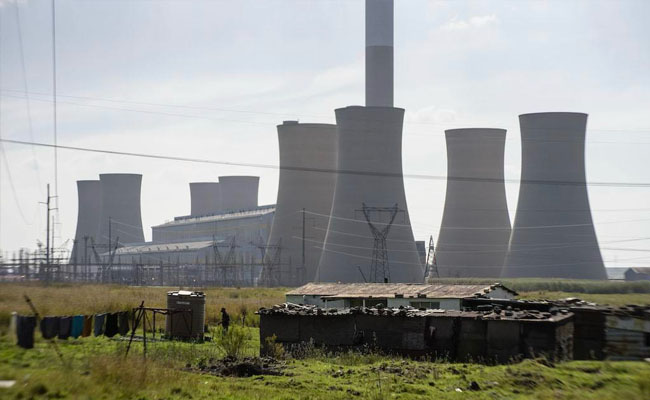
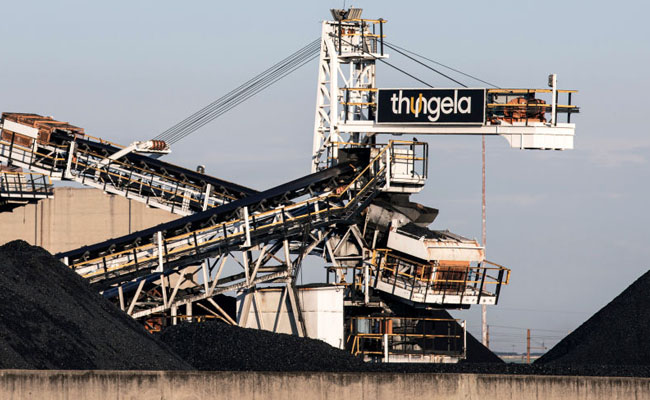
Reasonable also in the context of sweeping global concern about carbon emissions. David Lepaige of FFSA refers to University of California research estimating the economic damage done by one tonne of carbon dioxide at over $1 000. The coal Thungela digs out of the ground is responsible for 46-million tons of carbon emissions every year. It’s an issue Thungela shareholders should be alert to, Lepaige tells Currency.
As for shareholder rights, proposing resolutions has long been accepted in the UK, US and Australia, so a pro-applicant interpretation of Section 65(3) and 65(4) would seem in step with our peers.
So, it seemed reasonable enough that ahead of Thungela’s annual general meetings in 2023, 2024 and 2025 Just Share, Aeon and FFSA attempted to file resolutions. However, each year they were rebuffed by the Thungela board.
It’s useful to lay out the precise wording of the resolution Just Share, Aeon and FFSA attempted to file ahead of the 2025 AGM: “Shareholders request that Thungela Resources Limited adopt and publish in its 2026 suite of reports: short-, medium- and long-term greenhouse gas emission reduction targets across its full range of value chain emissions, and for its global operations, which are in alignment with the Paris Agreement’s 1.5 (degree)C goal requiring net zero emissions by 2050.”
So, absolutely nothing that might prompt thoughts of Springboks, Venezuela, Ukraine or the Gulf War.
As Just Share sees it, the resolutions deal with the significant impact that Thungela’s operations have on the environment.
“This is a matter of significant shareholder concern, and broader public interest, and implicates the section 24 constitutional right to an environment not harmful to health or well-being,” they say.
‘No legal right’
Nicole Martens, executive director of Just Share tells Currency that at its core the case is about shareholders’ rights to act in their own interests on material risks.
The matter has ended up in court because the last time around the company not only refused to table the resolution, it said the applicants have no legal right to propose the resolution and indicated it would refuse all future resolutions.
Before going to court Just Share did lodge a complaint with the Companies and Intellectual Property Commission (CIPC), which led to an alternative dispute resolution process with the Companies Tribunal. Nothing was resolved.
So, last December Just Share, Aeon and FFSA approached the Gauteng High Court looking for a declaratory order that Thungela had breached shareholder rights and its legal obligations by refusing to circulate and table shareholder-proposed resolutions.
Thungela’s replying affidavit essentially states in scores of different ways that shareholders do not have the rights the applicants are claiming. As the coal producer sees it: “Shareholders are only afforded legal rights to vote on matters expressly identified in the Act or a company’s MOI (memorandum of incorporation).”
Shareholders can’t vote on matters that fall within the exclusive competence of the board, says Thungela.
Board authority
The Act provides that the business of the company must be managed by or under the direction of the board which has the authority to exercise all of the powers and perform any of the functions of the company, says Thungela, “except to the extent that the Act or the company’s MOI provides otherwise.”
Thungela refers to the “narrow confines of matters which shareholders can propose for decision by resolution” but provides no details on precisely what matters would fit within these narrow confines.
As owners of the company, shareholders have the crucial right to appoint a board to oversee the company, says Thungela. “Those directors, in turn, have a legal obligation to act in the company’s best interests (not in the interests of some select, or even the majority of, shareholders) and can be held personally liable if they do not do so. Their liability is, potentially, unlimited,” says Thungela.
This is accurate, as we have seen from a number of high profile cases involving JSE-listed companies: Tongaat-Hulett, Steinhoff, EOH and VBS.
Thungela goes on to say that the board’s fiduciary duties cannot be diluted, ignored or replaced by shareholder views, “yet this is the endpoint seemingly contended for by the applicants – shareholders must be free to make entirely destructive proposals and to poll general shareholder opinion.”
‘Inappropriate’
This seems a rather exaggerated interpretation of what it is the three applicants are seeking. They want information about carbon emissions. Does the Thungela board, which says it is a responsible custodian of the environment, believe releasing such information would be potentially destructive? If so, surely all the more reason for shareholders to be made aware.
A spokesperson for Thungela told Curreny the application is inappropriate because it not only relates to coal sales (by Thungela) but also coal usage by its customers and the global environmental impact of climate change.
“Given the potentially wide-ranging implications for both listed and unlisted companies in South Africa, Thungela considers the applicants’ interpretation of the Companies Act to be incorrect and is taking steps to defend its position through appropriate legal channels.”
The spokesperson added that environmental stewardship and responsible climate risk management are matters the board and management are deeply committed to and actively measure.
Lepaige acknowledges that Thungela has a climate plan. But he says the plan is based on reducing just two percent of its current emissions to zero by 2050. “It has no meaningful targets for the other 98% of emissions, other than mine closures.” These are the Scope 3 emissions produced by Thungela’s customers when they burn the purchased coal.
Amazingly, Thungela even disputes the legal action is about the environment. “It is not limited to climate change issues, to coal-mining companies or to Thungela.”
Unfettered rights
No, the coal producer believes this is about establishing that any two shareholders have unfettered rights to interfere in the running of a company.
This vexed issue is not restricted to Thungela. Other companies such as Sasol and Exxaro Resources have used similar arguments to stymy shareholder efforts to file resolutions related to emissions.
So, what was the intent of the drafters of Sections 65(3) and (4) of the 2008 Companies Act? Thungela has certainly made clear what it believes the section doesn’t entitle shareholders to do. But it hasn’t clarified what it is they can do.
Hopefully the Gauteng High Court will.
Top image: Photo by Per-Anders Pettersson/Getty Images
Sign up to Currency’s weekly newsletters to receive your own bulletin of weekday news and weekend treats. Register here.