
It’s been a tough year for South Africa’s largest second-hand vehicle sales company, and the bruises showed in its latest financial results for the six months ended March.
“It’s been a one-way slide,” investment analyst Anthony Clark told Currency ahead of the results release. Ironically, WeBuyCars shares bounced almost 6% on Monday, though the stock is still 20% lower over one year. And nearly all its bottom-line figures are down, too.
While revenue grew 7.8% to R14.2bn, operating profit fell 4% to R701m, headline earnings per share slipped 2% to 119.7c per share and return on equity dropped 30%.
One unfortunate increase was in the company’s net interest-bearing liabilities, which surged 56% to R2.1bn. A large portion had to do with the opening of three major vehicle “supermarkets”.
Cash burn
“That was very close to R600m worth of capex in terms of the buildings that needed to be funded,” says WeBuyCars CFO Chris Rein. Then there’s the R376m it borrowed to pay for 49% of GoBid, a digital vehicle auction platform.
Growing inventory for the new warehouses meant borrowing some more cash.
“A lot of the cash was tied up in working capital and just filling these new warehouses with stock,” explains deputy CEO Wynand Beukes. “We were at 80% capacity when these warehouses opened, and at the end of March we were at 92%.”
But, as shareholder activist Albie Cilliers has pointed out: the net result of this is that WeBuyCars has increased its number of parking bays by 31% to sell all of 2% more vehicles.
Asian tsunami
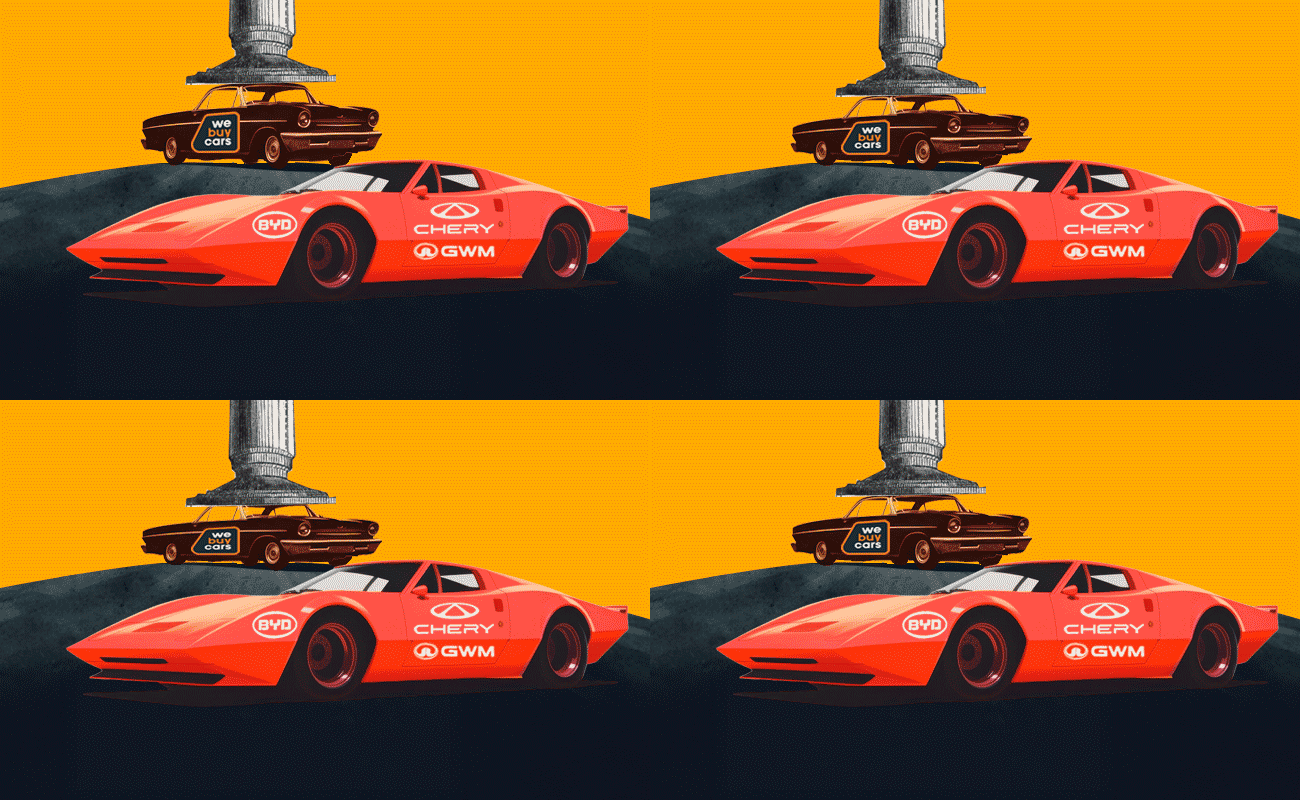
Like every carmaker with a local factory, WeBuyCars is grappling with a tsunami of extremely well-priced Chinese and Indian vehicles entering South Africa. Now comprising 55% of all new passenger vehicles sold in the country, they’re well priced, with reasonable financing terms and long-term warranties. It means new cars are far more accessible to buyers who would have previously only considered buying second-hand.
So to keep its stock moving, WeBuyCars had to sharply cut its prices, especially on models competing directly with these cheaper new cars. While this helped maintain sales volumes, it led to significantly reduced profit margins.
At the same time, established car manufacturers responded by lowering prices and improving their own offers to win back customers, further intensifying the local competition.
But Beukes maintains that, in the long term, it will be a good thing for the company as Chinese cars begin to enter the second-hand market. Ownership periods for these vehicles are shorter than most, meaning WeBuyCars can get more transactions out of them as they swap hands.
Clark, however, warns that the resale value on these cars may not be as good, and that is likely to put pressure on margins – one of the biggest worries investors have.
Growing pains
With the market the way it currently is, it might be time for WeBuyCars to consider other growth avenues if it wants to keep expanding as it has been. “The only way this company could end up keeping its momentum and market share growing is that at some point it would have to sell every second-hand car in the country,” Clark says.
That’s some ask.
Yet, according to management, there is plenty of market share to mop up. “There is still a long runway for us to go,” insists Beukes, who says the company is on track to hits its 2028 target of 23,000 cars sold per month.
As for GoBid, the digital auction business specialises in accident-damaged and “uneconomic-to-repair” vehicles. This, says WeBuyCars, “supports the group’s strategy of servicing the full spectrum of the vehicle market – ensuring that every vehicle that enters the WeBuyCars ecosystem, regardless of condition, has an optimal route to market.”
Then there’s Inspectify, the company’s in-house, AI-driven vehicle assessment business and main rival to Dekra, that WeBuyCars plans to offer to the wider used-car market in the next year. “We’re building this whole ecosystem around the automative sphere,” says Beukes.
Unfortunately, WeBuyCars may battle to reignite trust in its growth story – especially considering what Clark calls “the elephant in the room”: co-CEOs Dirk and Faan van der Walt’s decision to sell R886.4m worth of shares in the company in February.
That went over “like a lead brick” with investors, Clark says.
While the brothers explained the sale away as investment diversification and personal estate planning, it was hardly a good look. Still, as Monday’s rally suggests, the market may be willing to give WeBuyCars the benefit of the doubt.
ALSO READ:
- WeBuyCars crash wipes out R3.3bn, as Chinese influx bites
- WeBuyCars still bok on its growth targets
- Accept the WeBuyRMH bid, says independent board
Top image: Wikimedia Commons; Rawpixel; Currency.
Sign up to Currency’s weekly newsletters to receive your own bulletin of weekday news and weekend treats. Register here.