When Sanlam Investments handed roughly R400bn of single-managed active mandates to Ninety One, it was not simply outsourcing almost all of its stock-picking capability. It marked a strategic shift in what the business believes it needs to own in an industry being reshaped by passive investing, discretionary fund managers (DFMs) and global competition.
CEO Carl Roothman argues the move is less an exit from active management than a reallocation of effort towards areas where Sanlam believes it has a structural advantage.
“Traditionally, insurance companies are not known for their strength in active asset management,” Roothman tells Currency. The intention, he says, is to focus on distribution through Sanlam’s pervasive adviser network, Satrix – its large passive franchise – and a growing alternatives and private markets business, alongside its private wealth operations.
Under the arrangement, Ninety One now manages Sanlam Investments’ single-managed local and global active mandates as its preferred partner. Boutique active capability remains housed within Amplify Investments, while multi-manager and discretionary fund management – both of which involve selecting external managers – are retained in-house. Sanlam’s stake of about 12.3% in Ninety One ensures continued exposure to active asset management performance.
Active management fees have continued to compress, passive products have taken market share, and DFMs increasingly determine which underlying funds end up in client portfolios. At the same time, South African investors are allocating more capital offshore, a trend that left Sanlam’s own active platform too small to compete effectively in global markets.
Mass customisation
One asset manager, who asked not to be named, calls it a crowded bet. By “handing over its stock-picking engine to Ninety One, Sanlam is betting it can win on distribution and packaging”, he says. But in a world of cheap index funds and open platforms, that’s a strategy everyone is chasing. “The real question is: what’s left that clients can’t put together themselves?”
Roothman says that where financial advisers once stitched portfolios together fund by fund, they now want an integrated proposition built around a specific objective – income in retirement, inflation protection or globally diversified wealth preservation.
“The industry is moving from mass production of products and investment products to mass customisation, where you build solutions for your clients,” Roothman told the PSG Annual Conference this month, according to a report by Moonstone Information Refinery. “The solution has certain building blocks and [clients] are looking for very specific outcomes.”
Pure single-manager active, on this view, is being squeezed between passive on one side and DFMs on the other.
Four pillars after the handover
Post-deal, Sanlam Investments rests on four pillars. The multi-manager and DFM business oversees more than R500bn in assets under management and administration, pulling in roughly R20bn in annual inflows. Satrix manages about R300bn and commands close to 40% of the local ETF and index unit trust market.
Alternatives and private markets account for more than R200bn across private equity, private credit and infrastructure. This includes strategic investments that extend to climate finance, renewable energy, venture capital, healthcare, education, and green hydrogen – with climate exposure anchored by a stake in Climate Fund Managers, a Netherlands-based firm with about $3bn under management. Private wealth oversees more than R256bn and is growing fastest at the offshore end.
Regulation 28 reforms have lifted the offshore allowance to 45% and the money is moving. “You have to have a strong and compelling international offering to be relevant in South Africa,” Roothman says.
Sanlam also sees its insurance book as a structural advantage in alternatives. The group already originates substantial credit exposure through its insurance activities, which Roothman says provides a foundation for a scalable alternatives platform serving both institutional and retail clients.
Winning a mandate
The transaction was first announced in November 2024 and structured as a 15-year strategic partnership. Sanlam Investments appointed Rothschild & Co to evaluate strategic options and screened more than 400 asset managers before narrowing the field. Ninety One stood out because of its integrated South African and offshore platform, global scale and local roots.
“You can pick up the phone to the team there,” Roothman told the PSG conference. “If there’s a problem, we can call Hendrik [du Toit] and his management team.”
Scale, particularly offshore, was central. At the time of the deal, Sanlam Investments UK’s active book stood at about R50bn – a level Roothman has described as difficult to sustain in an increasingly globalised market.
Sanlam Investments deliberately avoided taking operational control despite the equity stake. “We do not sit on the board. We do not sit on the committees,” Roothman says. “Ninety One is a partner. They’re brilliant in what they do. We think we should leave them to do what they do.”
The Competition Commission recommended approval of the South African transaction in August 2025, subject to conditions. Those included employment protections, safeguards on competitively sensitive information, open-architecture access on Sanlam’s Glacier platform for third-party asset managers, and support for smaller and historically disadvantaged asset managers and stockbrokers. The conditions reflect the regulator’s concern that handing R400bn in mandates to a single manager not foreclose competition on the platforms Sanlam controls.
Ninety One CEO Du Toit has framed the deal as winning a mandate rather than buying a business. Stanlib’s Mark Lovett, in an interview with Currency, predicted more such tie-ups as South African consolidation catches up with Europe’s. Lovett also warned, from experience, that merging asset management teams is where these deals tend to come unstuck.
Top three
Sanlam moved the people across with the assets. Roothman puts mandate retention at about 90%. Two junior portfolio managers have left since the deal was announced, both more for career growth than because of the transaction itself, Sanlam says. No senior managers have departed.
The other objective, Roothman says, is to build Sanlam into one of the top asset managers in developing nations.
Sanlam Investments oversees about R1.1-trillion in assets after the Ninety One deal and is targeting to rebuild that to R1.5-trillion to R1.6-trillion over the next six years.
“Our ambition, after this transaction, is to be the number one, two or three largest emerging-market asset manager in AUM [assets under management], profitability, and impact on people and the planet,” Roothman says. The group currently ranks among the top five or six.
That expansion, Roothman says, will be driven primarily through organic growth, leveraging Sanlam’s existing partnerships across Africa, Europe and India – African Rainbow Capital, Allianz, Shriram and Absa.
The harder question is the one the unnamed asset manager raised. If solutions themselves commoditise – if every house assembles broadly similar multi-manager portfolios on broadly similar platforms – then owning the client relationship may not be the moat Sanlam thinks it is.
The deal closed during one of Sanlam Investments’ strongest performance periods in nearly a decade. Assets have grown. Mandate retention has held. And the firm has done something most South African asset managers have only talked about – concentrated active management with a specialist partner rather than trying to run everything in-house.
The harder test, as Lovett warned, comes next: whether the cultures and incentives that made the deal possible can survive the integration.
(This story was updated in the second paragraph under the “Four pillars after the handover” subheadline to reflect the latest assets.)
ALSO READ:
- Grim truth behind South Africa’s asset management consolidation
- Meet investment’s ‘Mr Fix-It’
- Who does Sanlam’s R3.2bn ARCI bet really serve?
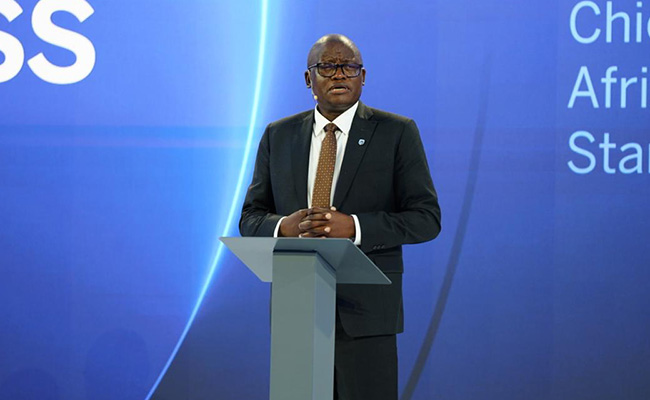
Top image: Sanlam CEO Carl Roothman. Picture: supplied.
Sign up to Currency’s weekly newsletters to receive your own bulletin of weekday news and weekend treats. Register here.