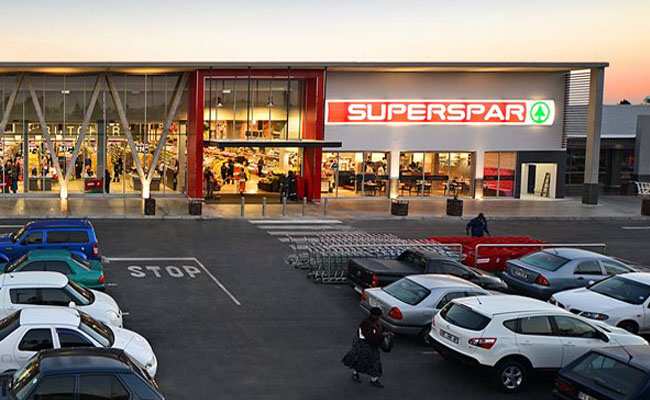

It’s fair to say that the loss of Spar would be a huge blow to swathes of people. Tens of thousands would lose employment, independent retailers could lose cumulative billions of rands of their own investments (though the best will survive in another format) and South African consumers would lose an important player in the grocery market.
Least important, but likely to take centre stage, would be the losses suffered by shareholders since Spar first admitted to some jaw-dropping corporate governance transgressions back in December 2022.
These – and a series of operational disasters – have led to a relentless slide in its share price since, notwithstanding efforts by its board to try and staunch the bleeding.
Allan Gray, Spar’s second-largest investor, topped up its holding to a little over 15% in mid-March. Much has happened since then, hardly any of it good. Asked for comment, a spokesperson for the fund manager tells Currency they would prefer not to. But comfortingly does say: “Allan Gray has had multiple engagements with the company, the board and the independent retailers in recent months.”
As for the Public Investment Corporation (PIC), which holds 18.6% of Spar, it provides the usual anodyne response, trotted out for all media queries.
“The PIC continuously engages with the board and management of its investee companies through established governance processes. As a responsible investor, the PIC must be mindful of the possible impact that its public statements on the performance and business operations of listed companies can have on the share value of investee companies, as well as the sentiments of other shareholders.”
Destroying Spar’s moat
In hindsight, it’s arguable Spar should never have been listed; its governance structure provides no role for the independent retailers and was thus not designed to cope with the pressure of conflict between them and the group. It’s that conflict more than anything, and whether it’s resolved, that will determine Spar’s future.
When you prod, few people actually believe Spar will disappear from our retail landscape, though the extreme pessimists reckon its days are numbered unless something dramatic is done – not least because of rapid changes in the South African retail sector.
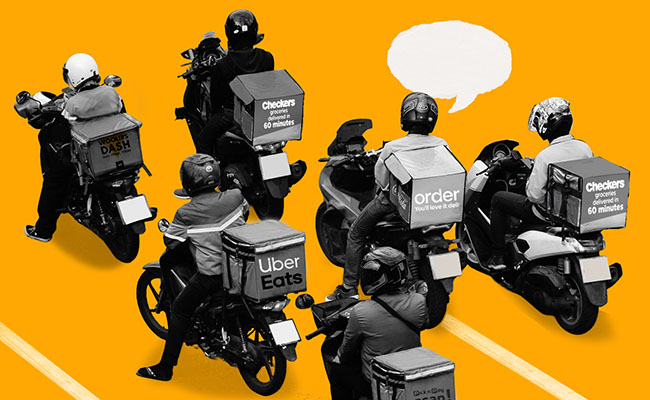
“Checkers Sixty60 destroyed Spar’s moat,” is Muneer Ahmed’s blunt assessment. The chief investment officer at Aeon Investment Management points out that Sixty60 laid waste to one of Spar’s key strengths: its convenience. The proximity of Spar retailers to consumers had long been a major advantage. Sixty60 represented an even more convenient option.
The irony is that Sixty60 owner Shoprite launched the one-hour, on-demand service at exactly the moment that Spar really took its eye off its local business by buying a controlling stake in Polish retailer Piotr i Pawel, in 2019.
As if that weren’t enough, that same year Checkers also launched a rewards programme, giving consumers access to cash savings and personalised offers.
That was, of course, great for consumers. But even greater for Checkers was the opportunity a rewards programme provided for vacuuming up ever more data.
As Jean Pierre Verster of Protea Capital Management says, the Shoprite/Checkers team understood the critical importance of data collection; Spar, not so much. “Spar was held back by its lack of investment; their systems and access to data is poor, they didn’t seem to realise how important the collection and harnessing of data is and how data can be monetised,” Verster tells Currency.
A new value proposition
Alec Abraham of Otto1890 says it really should have been Spar that first launched an on-demand delivery service. It’s about delivering in the community and that’s Spar’s comfort zone. Its retailers know more about the shopping habits of its community than any other of the grocery retail groups, says Abraham. “They should have done on-demand delivery; they’re at the centre of the communities they serve. The last-mile delivery is the crux of it all, and Spar offers the perfect decentralised hub.”
In fact, one of Spar’s independent retailers says there was talk of a delivery service back in 2019, but nothing came of it.
Spar group CEO Reeza Isaacs tells Currency the group has no intention of fighting the established online players on their terms, at this stage.
Instead, a platform will be built around the “My Spar, it’s personal” proposition, “which is the uniqueness and nuance of each individual Spar store, connected to its retailer and its local community”. Isaacs says that’s a value proposition that’s difficult for a corporate-owned national chain to replicate.
But that assumes it’s not too late and Spar can pull it off.
Verster believes data has become so important that Spar’s decentralised operational model, which slows down reaction time, will struggle to hold onto market share.
In contrast, Shoprite’s highly centralised model allows it to collect and analyse data extremely efficiently. Head office knows what stock is on shelves in every store, and this gets replenished automatically.
“In today’s world you need access to that level of information for integrated decision-making,” says Verster, adding: “Without it, things become existential”.
A foundation for improved performance
Spar’s catch-up problem is made considerably worse by its grim financial position. It has maxed out its debt capacity and is not generating anywhere near the sort of profits needed to undertake the level of investment needed. Plus, it’s not as though it has earned much of a reputation with implementing IT systems …
Yet Isaacs seems unperturbed about this prognosis.
The good news for independent retailers is that Isaacs believes Spar’s success is inseparable from their success. And, with a nod to where the weakness in the system is, he says the group is working hard to strengthen the wholesale side of the partnership: the part Spar controls.
He now reckons it has created a foundation from which to improve performance. “The group portfolio has been substantially simplified, the balance sheet has been materially strengthened, and management’s focus is now firmly centred around our core operations in Southern Africa and Ireland.”
At the centre of that focus is improving retailer profitability. Fortunately, Spar has a plan for that. It starts with stronger procurement to improve pricing competitiveness and product availability, while using the scale of the Spar network more effectively, says Isaacs.
While the plan also includes such platitudes as “improving service levels and supply chain execution”, “strengthening our private label offering to deliver greater value and differentiation”, and “modernising retail technology through initiatives such as SPAR IQ and SPAR2U”, there’s not much in the way of detail.
Still, it does seem this is essentially about doing what Spar should’ve been doing all along.
But few analysts seem persuaded.
Tech and entrepreneurship
More worryingly, the independent retailers who have most at stake are sceptical about what the current board leadership can achieve.
Not that they aren’t confident of a potentially tech-enhanced role for them.
“Technology doesn’t replace entrepreneurship, it strengthens it,” remarked one retailer, who believes the future of retail is not about choosing between technology and community ownership but combining both with world-class data capability.
But he warns that if the pessimists are right and the economics of the model continue to deteriorate, independent retailers will be forced to look elsewhere for alternative solutions.
“No entrepreneur can continue indefinitely in a model that no longer generates sufficient returns to justify ongoing investment,” he tells Currency.
This is a follow-up on Ann Crotty’s Financial Mail cover, out this week and available to readers here. Currency and the Financial Mail are part of the Financial Mail Group.
ALSO READ:
- Can Spar finally stop tripping over itself?
- 31 minutes, R18.9bn: Sixty60 is making Shoprite’s numbers sing
- Spar: it just gets worse
Top image: spar.co.za.
Sign up to Currency’s weekly newsletters to receive your own bulletin of weekday news and weekend treats. Register here.