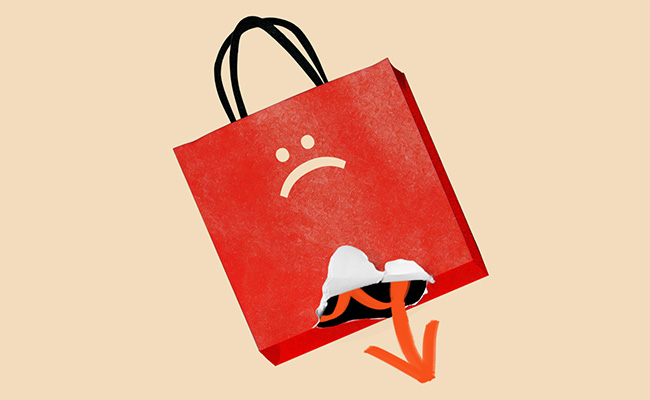

It was meant to be better. The government of national unity had been in place since July 2024, and interest rates were on the way down, as was inflation. Transnet was moving more cargo, Eskom had stabilised supply and there were a few encouraging signs with public sector investment.
For a few it was, but for most of the JSE’s consumer-facing companies calendar 2025 has been quite a disappointment.
And here’s a thought that mightn’t go down well with Mr Price management right now. The companies doing reasonably well are the ones that either didn’t head off into international markets in search of growth (and freedom from South Africa’s unsettling volatility) or, after years of losses and write-offs, are back home and focused on improving efficiencies in their base.
As Alec Abraham, senior equity analyst at Sasfin says: “Earnings growth didn’t come from volume increases but from a focus on expenses and operating efficiency.” To make those kinds of improvements, management can’t be distracted by foreign misadventures.
Foreign misadventures
Spar isn’t quite there yet. And given the share price performance in the week since it released financial 2025 results, Spar management has some way to go before it persuades the market that its European misadventure is behind it. This has not been a good year for the shareholders. The share price had strengthened for most of 2024, reaching a high of R151 in December of that year. From there it slumped pretty steadily to the current R90.10.
The financial cost of withdrawing from its operations in Poland, Switzerland and the UK is a chunky R7.5bn. But perhaps the costly SAP disaster should be added to the bill. It’s very likely a head office distracted by an existential threat from its European businesses didn’t have the capacity to give the project as much attention as was appropriate. Ask anyone who’s implemented an SAP rollout, it makes monstrous demands on management time.
The good news is the streamlined group – now focused on Ireland and South Africa – is, according to CFO Reeza Isaacs, generating decent cash. Thanks to the disposals and improved working capital management, net debt is down 40% on the year, from a whopping R9.1bn to a still hefty R5.4bn. Gearing is below two times, which must be a huge relief to management and shareholders.
But there’s still a lot of catching up to do if Spar is to lift its operating margin from 2.2% to the 3% it has targeted for the medium term and resume dividend payments. The 6.8% operating profit advance achieved on a barely discernible 1.6% nominal increase in revenue is encouraging.
Top line is key
However it will need to boost top-line performance with initiatives like SPAR2U, HealthSpar and Pet Storey, all of which will require a focused head office team. And then there’s the pressing need for sound management of its core relationship with the independent retailers who determine the group’s viability.
Eleven years after its initial foray into the international market, right now, and for the next three or four years at least, Spar cannot afford for anything to go wrong.
One can only guess what the Spar head office was thinking when it heard news of the R9.66bn European splurge by fellow Durbanite Mr Price. Ahead of the deal being finalised Mr Price’s exposure to international ventures was limited to unsuccessful acquisitions in Nigeria and Australia. CEO Mark Blair, who seemed to have little patience or appetite for international dalliances, shut these down in 2019.
Despite adding 92 new stores and undertaking heaps of promotional activity, group sales were only up 5.5%. You can sort of understand why the Mr Price board would ignore all the evidence and make a desperate bet on a European asset.
Investors are not happy.
Eye off the ball
Truworths’ trading update, released in early November, had an interesting twist on the usual story. The performance of its UK shoe business, Office, helped to counter dismal results from the African/South African operations. Until now, Truworths has taken multibillion-rand write-offs since it acquired the UK business in 2015. Analysts reckon management’s focus on sorting out Office meant it took its eye off the African ball. Like other retailers, Truworths’ share price enjoyed a strong 2024 reaching a high of R109 last December. It’s currently a smidgen less than half of that.
The Foschini Group (TFG), which has built up a portfolio of businesses in Australia and the UK, spooked the market in early November with news of its 21.3% drop in interim headline earnings. Nevertheless, it’s doubling down on its UK exposure with the recent purchase of fashion retailer White Stuff. After ticking up during 2024 to a high of R176 in November that year, the share has been on a steady decline to a current R79.34.
Woolworths’ November trading update reminded investors of just how much the Australian venture had cost and continues to cost. Even the group’s local Fashion, Beauty and Home division is making good contributions to group performance, along with the perennial outperformer Food. But Country Road in Australia continues to just chug along pretty much as the Woolies share price has been doing for the past two years.
Return to self
Outside of retail but consumer-related, Nampak and Tiger Brands show just what can be achieved when you return to core. These two former Barloworld subsidiaries burnt up sheds of money in their attempt to grow in Africa. The past 15 months have seen the businesses put into the hands of tough executives who have taken the hard decisions needed to unwind the previous appalling ones.
Unsurprisingly, investors are delighted. Tiger Brands has pumped loads of money back into shareholders’ hands through dividends and share buybacks. At Nampak, there is now at least the prospect of dividends being resumed.
And then there’s Clicks, Dis-Chem and Lewis, which prove it’s possible to generate sustainable and decent returns from the local market. (Though Clicks did have an unfortunate Australian venture decades ago.)
Green shoots
Sasfin’s Abraham has some sympathy for the urge to move beyond South Africa’s borders.
“The local economy has been in the doldrums for years, progressively eating away at consumer wealth and spending power, the political situation has been uncertain and, while there are pockets where the middle-class is growing, it’s quite limited,” says Abraham. But he adds that few South African executives seem to have realised just how complex these moves were. “It’s frequently been a case of ‘gearing up and collapsing’.”
That said, Abraham says with the visibility of an online dashboard of progress on government and policy initiatives (the BLSA Tracker) there is more talk in local investor circles that there are signs, albeit tentative, that things might improve on the local front. “Interest rates and inflation are still on the decline, though at a slower pace, South Africa’s fiscal position is stronger and we’ve had a ratings upgrade.” He thinks there might even be signs of government being a little more functional. “We haven’t seen much tangible improvement so far.”
Peter Takaendesa, chief investment officer at Mergence Investment Managers, agrees the listed entities provide little evidence of the expected improvement in consumer welfare in 2025.
Takaendesa believes there are two good reasons the improved environment hasn’t been reflected in retailers’ results – competition from Chinese online retailers Temu and Shein, and online gambling.
Another significant factor, says Takaendesa, is the enhanced comparative base created by the two-pot withdrawal in 2024. “In 2025 that impact was a headwind; it will be out of the system next year.”
As for 2026? He reckons we should do a bit better, though not in the early part of the year. “As long as there are no major shocks.” Here’s hoping.
ALSO READ:
- Shoprite splashes R26.8bn to fill the gaps left by major multinationals
- Pick n Pay’s vibe shift
- Mr Price faces shareholder revolt over R9.6bn NKD purchase
Top image: Rawpixel/Currency collage.
Sign up to Currency’s weekly newsletters to receive your own bulletin of weekday news and weekend treats. Register here.