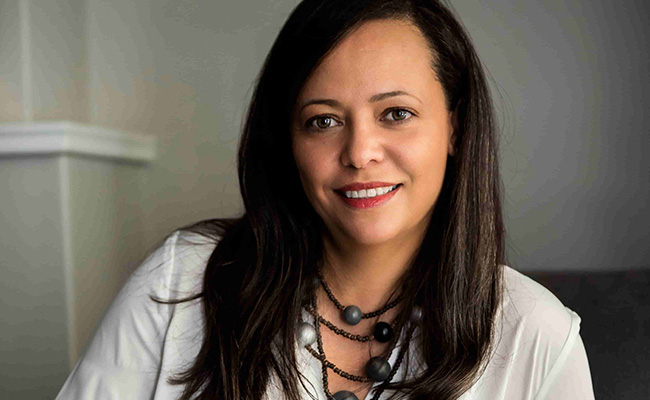

On the day that Currency spoke to Cartesian Capital founder and bond enthusiast Anthea Gardner, Google’s owner Alphabet happened to launch a 100-year bond.
A 100-year bond is a true rarity in the market, not to mention the ultimate expression of self-belief: after all, you’re promising to pay back your debt in a century. That’s some promise, considering the people running the company, not to mention the original investors, will be long dead by then.
Gardner, who cut her teeth at equity derivative trading desks in South Africa and London, before setting up Cartesian in 2014, is delighted by this novelty.
“It’s a really fascinating deal. Locking in funding for 100 years, at a time when the market is willing to lend for that long, gives Alphabet enormous flexibility to back big, ambitious projects without having to worry about refinancing or repayment any time soon,” she says.
But, as she points out, the world of AI is one of whipsaw change; how on earth can investors be sure the companies on top now will still be dominant in 100 years – or whether they’ll even exist?
“And if that isn’t an interesting enough bet to make, investors must also contend with inflation risk,” she adds.
That is because Alphabet is issuing fixed-rate bonds, not floating rates, “so if inflation or interest rates rise meaningfully over time, real returns could be eroded”.
In Alphabet’s case, the 100-year bond was issued in sterling and is for a relatively minuscule amount: only £1bn compared to its market cap of $3.85-trillion.
This isn’t the first such bond, however — IBM (remember them?) sold a 100-year bond in 1996 – but it is highly unusual. In fact, the only recent century-bond sellers were the governments of Austria and Argentina.
Nonetheless, it does appeal to some pension funds, which need very long-dated assets to match their liabilities. “Buying a sterling-denominated bond also means taking a very long-term view on the pound. Interestingly, we are currently underweight UK assets, and many hedge funds globally are actually short sterling at the moment,” says Gardner.
‘Risk aware, not risk averse’
Weighing up the risks of any trade really gets Gardner going. Not for nothing was the worst moment in her career watching people streaming out of Lehman Brothers with their personal effects from the third-floor window of the Morgan Stanley building where she worked in London, the morning that Lehman went bust in September 2008.
The fallout from America’s sub-prime debt crisis, and the ensuing global financial crisis “stayed with me”, she says.
“People will say I’m cautious or risk-averse; I’m not – I’m risk-aware. In our hedge funds we have to take risk but I always say: ‘Okay, what does the risk look like, what is our risk budget and if anything happens, where are we?’”
Gardner isn’t a doom mongerer – “otherwise I wouldn’t make money for any of our clients” – but she’s “acutely aware” that things can change in a heartbeat.
Which is especially true in the corner of the market she specialises in, which is, for most mortals, as intimidating as it is baffling. Yet the bond market – which dwarfs equities in terms of money traded – is her happy place.
Her firm, Cartesian Capital, is one of a few focused fixed-income asset houses in South Africa, and one of only a handful of women-owned asset managers.
“If you’re buying an equity do you know what yield you’re going to get other than the dividend that maybe they’ll pay you? You don’t. But let’s say you buy a bond and let’s say it’s yielding 10% – you know that every year you’re going to get 10%. What is so terrifying about that?”
Well, when you put it like that, it’s not. But then there’s the secondary trade in bonds, and the timing of when to buy and sell … it doesn’t have the binary neatness of equities.
Just maths
Gardner says what really intimidates people about bonds is the fact that the price you pay for a bond, and the yields you get, are inverted. “That’s the part that scares everyone. But it’s just maths,” she says.
Perhaps – but maths scares people. Still, Gardner argues that equities – such as shares in companies like Naspers or Woolworths – carry much more uncertainty. And there’s the risk of that company’s management doing silly things too (like buying a retailer in Australia).
“In my world, it’s more understandable. I understand how the price works, how the yield works and what I need to do to get the returns I want, whereas with equities I feel at the mercy of the market and management,” she says.
Bonds, on the other hand, take their cues from broader changes in the economy or, occasionally, from politicians.
Many investors would take company management over politicians any day. But, she says, “bond assets have to make up a portion of your portfolio because of the yield – the comfort of knowing what you’re going to get”.
Gardner is clearly a firm believer in letting the pros take the tougher decisions on a retail investor’s behalf; it’s one reason Cartesian has listed a new actively managed exchange traded fund (ETF)with a ‘multi-asset balanced’ mandate and an actively managed certificate (AMC), specialising in fixed income, on the JSE.
“I don’t think it should be the retail investor’s job to do the asset allocation,” she says. “I understand strategic asset allocation, I understand macroeconomics, I like to think I know which asset classes are going to outperform.”
An active ETF revolution
However poorly bonds are understood, the fact is that actively managed ETFS are the new hot thing in low-cost investing, having burst onto the scene locally in 2023.
As the name suggests, these are ETF-like products, but actively managed by fund managers. ETFs, by contrast, are a pure passive play on the underlying constituents of a fund.
Like unit trusts, actively managed ETFs are classified as collective investments. But while you would buy a unit trust directly through a platform, an actively managed ETF is a listed instrument on the JSE that you can trade through your broker.
As RMB’s Roland Rousseau explains: “Listing an ETF is like selling your product on Amazon – compared to a mutual fund, which can only be found in a physical store.”
Actively managed ETFs are also cheaper than unit trusts, though more expensive than pure ETFs.
“Obviously the more effort the asset manager puts into managing the money, the more they get to charge,” says Gardner. “Passive ETFs should be cheap because all you’re doing is a mathematical spreadsheet that says: ‘Today, Naspers has rallied and its weight in the index is 1% more so I must buy 1% more into my fund and re-weight it.’”
Gardner is an unmitigated advocate for active management – but she’s also an evangelist for retail investors getting stuck in.
Getting stuck in
“I just want people to invest – I don’t care if it’s fixed income or money market or equities – just invest. Learn the habit of putting it away and not under the mattress. Go out and buy a share and see what happens,” she says.
This evangelism is one of the reasons she was persuaded to write a book – Make Your Money Work For You – back in 2019.
Gardner had been doing radio and TV interviews for some time, and publisher Jonathan Ball was dead keen on letting ordinary people into the world of “high finance”.
“We have a terrible habit of using jargon and it scares people. There isn’t enough [financial] education in South Africa and we also have a terrible savings rate – we’re one of the worst in the world,” she says.
Jonathan Ball wanted a voice that was going to speak “people”. Still, Gardner initially turned down the idea. “They asked and I said no, and then they asked again and I had to say yes,” she laughs.
Just as well. The book was a bestseller.
Asked whether she thinks it might have prodded a few more people into investing, Gardner fears that too much of South Africans’ income is still being spent rather than saved.
“The minute we get a little bit of money we want the nice bag or the nice car; it’s an emerging-market consumer problem and so, even if you are middle class and earning enough to save and invest, I guarantee that the larger percentage of the South African population would rather buy something nice,” she says.
Gardner is an example of how it doesn’t have to be like that. She still drives her 12-year-old Honda Jazz, for instance.
“I take a lot of flak for it and call me a miser if you like, but I hate spending on liabilities. I want to see my money grow. I don’t care what you think of my car – but that’s not the general consumer attitude,” she says.
She does enjoy spending money on travel and experiences, though. Like getting her pilot’s licence, or running a marathon in Reykjavik – but avoiding debt is one of her foundational money philosophies.
“The one thing you have to understand is that compound interest works the same way on the downside as it does on the upside. When you understand how it works, you do not want debt. You want to invest your money.”
From wine to derivatives
To some, Gardner’s career in finance seemed pre-ordained. Her father was the first Coloured bank manager in Standard Bank, in Athlone.
As it turns out, it was far more a matter of chance.
“I thought I was going to be a teacher. My aunt was, and my father worked so hard, non-stop that I thought: ‘When I grow up, I don’t want to be him,’” she says.
In the end, she studiedy psychology. Then, like many South Africans in the 1990s, she gravitated to London on a two-year working visa and ended up working at a wine merchant.
She soon earned a higher certificate in wine from the Wine & Spirit Education Trust in the UK, but ultimately couldn’t see herself becoming either a sommelier or a négociant.
As luck would have it, one of her bosses at the wine merchant was a former trader at Tradition, the derivatives stockbroker, who asked whether she’d thought about trading. Gardner had no idea what a trader did, but went home that night, looked it up, and thought: “That sounds vaguely interesting.”
Her father might have been a banker, but there was no JSE investing in her family. Nonetheless, she came back to South Africa, did her Registered Persons exam and, after meeting someone who worked at HSBC, “basically blagged my way into an interview”.
Funnily enough, it was Gardner’s experience in the wine industry that caught their eye; she gave her interviewers some wine advice and they hit it off. Off the bat, she was offered a job as an equity sales trader.
It wasn’t an instant attraction, but, she says, she got there soon enough.
“I used to go to bed with CNBC on, and as I learnt more about investing and trading I fell in love with the market because it rewards discipline and punishes ego,” she says.
It was especially freeing for Gardner as a Coloured woman because, she says, “the stock market doesn’t care what your gender or colour is”.
She was with HSBC for three years, and then a large chunk of the trading team moved to RMB where they started the client derivatives desk. Soon after, she moved to Morgan Stanley in London (a unique vantage point from which to watch the financial crisis unfold), which she followed with a stint at the African Development Bank in Tunis during the Arab Spring in 2011.
In 2014, though, she set out on her own, starting Cartesian Capital through a partnership with Anchor Capital’s Peter Armitage.
“In the beginning, I did it because I love this job – I really love the market, I’m an adrenaline and information junkie,” she says.
But there’s a deeper layer to it all. “I’m not one to talk about race very often, but I do realise that we’ve got a problem in South Africa. I do have two nieces and a nephew and they’ve got to see that women of colour can do this,” she says.
This article was produced in partnership with Stanlib.
ALSO READ:
- Keeping his shorts: Hedge fund OG Jean Pierre Verster
- The robot soccer fundi revamping South African investment
- High yields, less drama: The case for South African bonds
Top image: Alet Pretorius/Fair Lady.
Sign up to Currency’s weekly newsletters to receive your own bulletin of weekday news and weekend treats. Register here.