
I love reading. It forces me to slow down and think. I recently picked up Sven Beckert’s Capitalism: A Global History, a monumental history (42 hours on Audible) of how capitalism emerged from scattered commercial practices into the dominant global system that structures our modern lives.
Whether we like it or not, the past millennium has been the story of capitalism. Few economic systems have so profoundly shaped how societies organise themselves, how power is distributed, and how human beings relate to the natural world.
Beckert’s central insight is that capitalism was forged through global networks of merchants, imperial expansion, slavery, resource extraction and state power. Long before the modern corporation existed, merchant capitalists connected continents through trade, finance and speculation.
There is no denying the scale of capitalism’s positive impact. It has lifted billions of people out of poverty, driven unprecedented technological innovation, and dramatically increased life expectancy and material prosperity. However, it has also generated extraordinary inequality, slavery, environmental degradation and periodic financial crises.
The debate about capitalism often becomes ideological or moralistic: defenders praise its efficiency and wealth creation, while critics condemn its injustices and excesses.
But perhaps a more productive approach is to step back and examine what capitalism actually is and how its underlying dynamics might be guided towards better outcomes.
At its core, capitalism can be defined simply as private capital invested with the primary goal of generating more capital.
That definition strips away the rhetoric and reveals the essential mechanism. Capital seeks expansion. Investors deploy resources – money, labour, technology – in the expectation that those resources will return greater value in the future.
The imperative of accumulation
InThe Selfish Gene, evolutionary biologist Richard Dawkins proposed a provocative way of understanding life. Genes, he argued, behave as if they are driven by one imperative: replication. Organisms, from bacteria to human beings, are vehicles through which genes attempt to reproduce themselves as successfully as possible.
The analogy with capitalism is powerful and strikingly similar. If genes seek replication, capital seeks accumulation. And competitive pressures play a role remarkably similar to natural selection.
Capitalists, particularly the early merchants described by Beckert, function much like biological carriers of these replicating units. They deploy capital across trade routes, shipping networks, and financial markets, attempting to expand it amid competition. Those who succeed grow larger and more powerful; those who fail disappear.
Just as species must adapt to survive in a competitive ecological environment, businesses must innovate, reduce costs and identify new opportunities to remain viable. Over time, inefficient firms collapse while more productive ones expand. The result is an evolutionary process that drives extraordinary levels of innovation and productivity.
But here we encounter the central problem. Biological evolution operates within ecological limits. In nature, growth is constrained by finite resources, predator-prey relationships, disease and environmental balance. A species that expands too aggressively often triggers feedback mechanisms that eventually curb its expansion.
Capitalism, however, does not naturally contain the same stabilising forces. Capital seeks growth without inherent limits. If extracting more resources, lowering labour costs or externalising environmental damage increases profits, the system encourages exactly those behaviours. Competitive pressure can push firms towards increasingly aggressive exploitation, not because individual capitalists are uniquely immoral, but because survival within the system demands it.
This dynamic is not hypothetical. The historical record is clear. Economic expansion has contributed significantly to slavery, climate change, biodiversity loss and environmental degradation. None of this should surprise us.
This is not a one-way street
If capital’s primary imperative is to generate more capital, then, without constraints, it will naturally seek the most efficient path towards that goal, even when that path harms workers, communities or ecosystems. This is precisely where the state becomes essential.
Contrary to the popular myth that capitalism flourishes best when governments step aside, capitalism has always depended heavily on state power. Capitalists relied on states to protect shipping lanes, enforce property rights, invest in infrastructure, maintain legal systems and issue stable currencies. Modern financial markets function only because governments guarantee contracts and regulate institutions.
In other words, capitalism does not exist independently of government; it is embedded within political systems that support and enable it. This reality suggests a simple but powerful principle: if capitalism depends on the state, then the state has both the authority and the responsibility to shape the outcomes of capitalism.
The relationship should not be one sided. If governments provide the legal and institutional framework that allows capital to flourish, capital should, in return, contribute to the protection and wellbeing of society.
But capitalists will only do so if the rules of the game, for all competitive players, are defined to do so.
Labour laws, workplace safety standards, collective bargaining rights and social welfare systems help ensure that the benefits of economic growth are shared rather than concentrated. Progressive taxation and public spending redistribute some of the wealth generated by capitalist activity, funding education, healthcare and infrastructure that benefit society as a whole.
These policies do not undermine capitalism. On the contrary, they stabilise it.
A question of structure
Effective environmental regulation is the next frontier; carbon pricing, biodiversity protection and sustainable resource management can help align market incentives with ecological realities. Rather than suppressing economic activity, these policies can redirect investment towards cleaner technologies, renewable energy and sustainable industries.
In this sense, the role of the state is not to eliminate capitalism’s growth impulse but to channel it. This perspective moves us beyond the simplistic ideological battle between defenders and critics of capitalism.
Capitalism is neither a moral virtue nor a moral failure. It is a powerful mechanism for organising investment, production and innovation. The question is not whether capitalism should exist. The question is how it should be structured.
If left entirely unchecked, the competitive dynamics that drive capitalist growth will continue to reward exploitation of both people and our planet. But with carefully designed guardrails – defined by strong institutions, fair taxation, labour protections and environmental safeguards – those same dynamics can generate remarkable progress and become a force for planetary regeneration rather than depletion.
The need for political will
Achieving this outcome will require political courage and institutional creativity.
Governments must resist the temptation to simply protect incumbent interests and instead design rules that reward long-term value creation. Businesses must recognise that sustainable prosperity ultimately depends on healthy societies and ecosystems.
The easiest place to start is with shifting the terms of the debate. Rather than arguing endlessly about whether capitalism is good or bad, we should ask a more pragmatic question: how can we harness its extraordinary power to improve the lives of all creatures on earth?
That question does not demand ideological purity. It demands imagination, discipline and a willingness to build institutions capable of guiding capitalism’s immense energy towards shared prosperity.
In the next century, the success of our economic system will not be measured solely by the amount of wealth it produces. It will be measured by whether that wealth sustains the planet and all human potential.
Capitalism, properly guided, may yet prove capable of doing exactly that.
Thomas Brennan is a co-founder of Franc, a South African fintech that helps people invest easily and affordably.
ALSO READ:
- The economic fix: Sarupen’s roadmap to faster growth
- Why markets – not BEE – lift people from poverty
- The poor continent
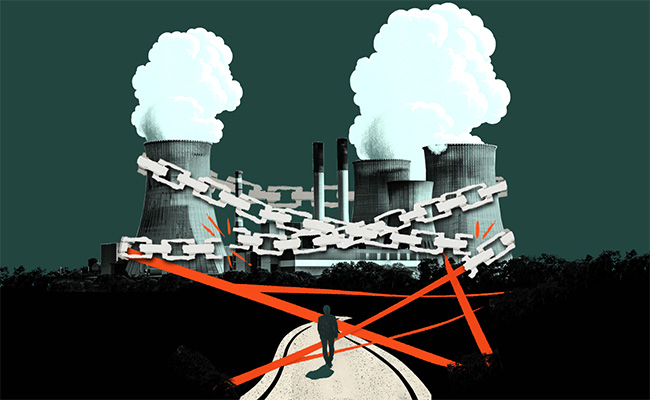
Top image: Rawpixel/Currency collage.
Sign up to Currency’s weekly newsletters to receive your own bulletin of weekday news and weekend treats. Register here.