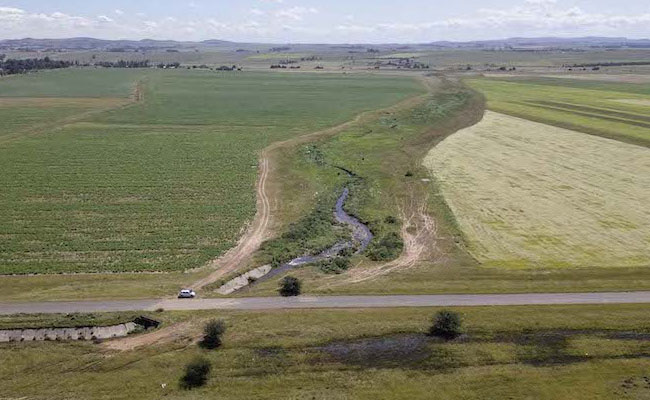


Steve Tshwete local municipality in Middelburg used to be one of South Africa’s top municipalities, boasting an average 95% rates collection.
Today, it is bleeding revenue as Mpumalanga’s coal sector contracts, and is struggling to pay its own service providers within the mandated 30 days.
The municipality’s chief financial officer, Puselletso Melato, says that as retrenchments accelerate and coal-related activity slows, the effects are showing up in falling rates payments and growing arrears.
In November 2025 residents owed the municipality more than R604m – a fall of more than R200m in just one year. Applications for indigent support have also increased, with 889 applicants qualifying between September 2024 and December 2025, Melato says.
Once sustained by mining-linked jobs, electricity sales and industry rates, the municipality is now struggling to collect payments as retrenchments ripple through households and businesses. The growing financial strain on one of Mpumalanga’s most coal-dependent economic hubs offers an early warning of how coal-dependent towns across the province may be affected by South Africa’s energy transition.
Five coal-fired power plants and 15 coal mines are expected to close by 2030, and another four plants and 23 mines by 2040. This will impact the livelihoods of 2.5-million people, most of them in Mpumalanga, according to 2024 research by the Southern African Institute of Mining and Metallurgy.
Revenue decline
The job losses unfolding across the coal belt are occurring alongside major commitments by the government and international partners to support South Africa’s just energy transition (JET).
However, workers, civic groups and municipal officials say support has yet to materialise at local level.
The JET Investment Plan has allocated nearly R2.7bn for reskilling programmes nationwide, including R750m earmarked for youth-focused initiatives in Mpumalanga and R5.6bn for supporting coal workers.
The plan also includes R1.6bn for pilot skills-development centres in Mpumalanga, the Eastern Cape and the Northern Cape. Despite these commitments, retrenched workers and affected communities say they have seen little direct benefit.
Johannes Silas, director for development and strategic support at the municipality, warns that the cumulative impact of the downturn could hollow out the local economy. He says there is growing concern that, without effective intervention, Middelburg risks becoming a “ghost town”.
The municipality is attempting to diversify the local economy by integrating existing coal-linked activities with new industries, he adds, but is struggling to ensure service delivery in the midst of municipal revenue decline.
“We fund most of our infrastructure projects in-house through payments from residents but if there is no money coming in, it becomes difficult to implement those projects,” Silas says.
Jobs bloodbath
This investigation found that mass retrenchments across the sector have resulted in more than 4,000 job losses at major coal operations such as Seriti and Glencore, as well as at their local suppliers.
Michael Nkosi, responsible for economic development at the municipality, says the slowdown has affected small and medium-size enterprises that service the mining sector, as well as informal traders operating in mining villages – including suppliers and street traders who depend on mining-related demand.
Unemployment among men in the municipality used to be lower than that among women, but now the rate is almost equal, Silas points out.
The layoffs across the coal sector over the past two years have resulted in the loss of almost 1,000 members at the National Union of Mineworkers (NUM), according to Tsheka Hlakudi, NUM regional secretary in Mpumalanga.
“These are just the ones who were our members — other unions might have different numbers,” he says.
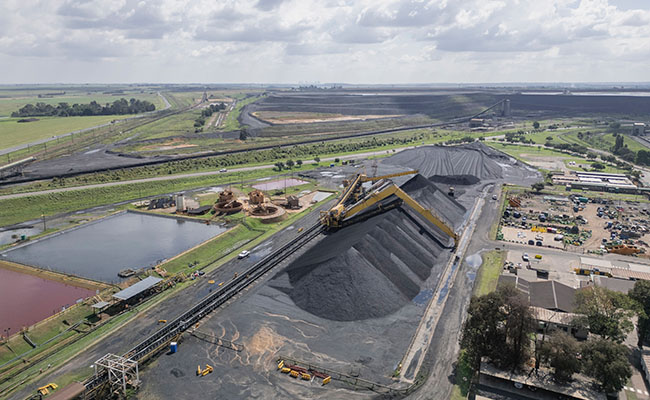
In 2023 and 2024 Seriti Resources retrenched more than 1,137 employees across its Middelburg Mine Services and Klipspruit operations, following earlier retrenchment processes in which the company had considered laying off about 600 workers at Klipspruit alone. Glencore also reduced its workforce, announcing plans in 2023 to retrench up to 214 employees at its iMpunzi coal mine.
According to NUM, further retrenchment processes under section 189 of the Labour Relations Act are under way at other coal operations in the province, including Thungela’s Isibonelo, and another mine retrenching 167 workers.
At the time of reporting, unions and municipal officials said additional retrenchments were anticipated at Goedehoop Thungela Mine, though the company has not confirmed whether those job cuts have been finalised.
Ghost power station
Hlakudi warns that the increasing casualisation of work – when retrenched employees are re-hired or appointed as temporary contract workers – is deepening poverty among former mine workers and contractors.
“An employee who was earning R50,000 a month could afford to pay for a house, a car and their children’s school fees. Now their earnings have been changed from R50,000 to R10,000,” he says.
Hlakudi points to Eskom’s Komati Power Station, which was decommissioned in October 2022, as an example of what he described as failed promises around retraining and reskilling.
According to Eskom, approximately 360 contractors lost their jobs at Komati, while 185 workers remained on the books. The facility now employs 162 people, down from a peak workforce of almost 400.
“Komati was supposed to serve as a pilot station to show whether this transition would work or not, but the answer is that it’s not working,” Hlakudi says. “When they closed Komati, they said they were going to retrain and reskill our workers, but no-one has been retrained as we speak now. It’s a ghost power station.”
He says the impact extends beyond the power station itself: “The community around that power station is suffering. The school around that power station is suffering.”
When the bills pile up
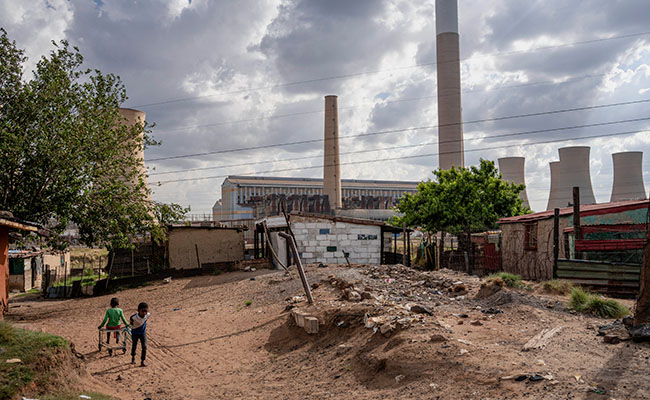
Behind the revenue figures are households struggling to survive without coal-linked income.
Mariah Nkosi* (real name withheld at her request), a former control room operator at Seriti’s Klipspruit Colliery, says she lost her job in July 2023 after 15 years at the mine. She says workers were offered voluntary separation packages during the section 189 retrenchment process.
“Our employer used a strategy that would make them look good on paper,” she said. “We were promised first preference if contract workers were rehired, but few people were re-employed.”
After using her retrenchment payout to settle her bond and other debts, Nkosi says she now owes up to R30,000 in municipal rates.
“I owe the municipality because I had hoped that I would be employed by now, and I’ve unfortunately been handed over to their lawyers,” she says.
Simon Matekola, a retrenched former safety officer at Seriti’s New Largo and Pegasus mines, says his wife is now the sole breadwinner. He has taken Seriti to the Labour Court over his retrenchment.
“They don’t care about the wellbeing of employees and lack [compassion],” Matekola says.
Reskilling
Investment in renewable energy projects and employment is ramping up in the province, and 188 projects are currently recorded on the Oxpeckers digital tracking tool.
Seriti Green’s Ummbila Emoyeni wind farm is averaging more than 1,200 jobs during construction, with 54% of these positions filled by people from local communities, for instance.
Another 6,971 jobs are expected to be created through the Renewable Energy Independent Power Producers Procurement Programme bid window 7, and the South African renewable energy masterplan indicates that localising 70% of components, and 90% of operations and maintenance in wind and solar value chains could deliver 36,500 new direct jobs by 2030 across the country.
But those affected by the job losses in the coal belt question whether these projects will provide equivalent employment, and point out that many of the renewable energy projects require a workforce with different skills. Municipal officials acknowledge that transition-related projects are still at an early stage.
Sifiso Mochitele, a co-ordinator in the executive unit for Steve Tshwete local municipality, says that while partnerships with training colleges and sector education authorities exist, many reskilling initiatives remain “at an infancy stage” and have yet to translate into large-scale employment opportunities.
Civic groups shared similar concerns. Themba Marabe, regional chair of the South African National Civic Organisation, says communities frequently hear about upskilling and transition programmes, but see little evidence of them being implemented on the ground.
“Most of these programmes target young people, and communities want to know how many people have actually been trained and where they are working,” he says.
This article was originally published by Oxpeckers Investigative Environmental Journalism. The investigation was supported by the Ford Foundation.
ALSO READ:
- Billions pledged, no playbook: South Africa’s climate finance problem
- Win for energy transparency in murky solar battle
- Consultants guzzle millions in just energy grants
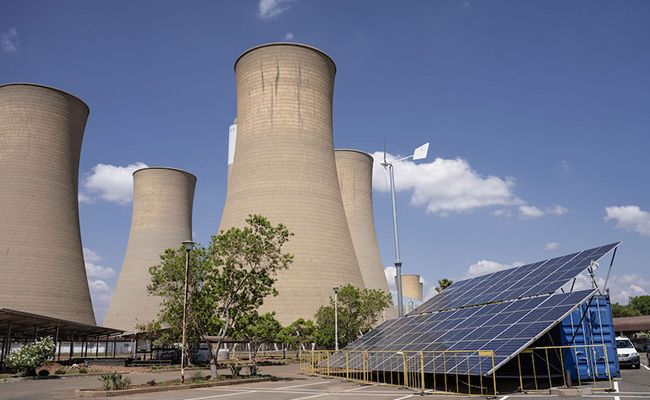
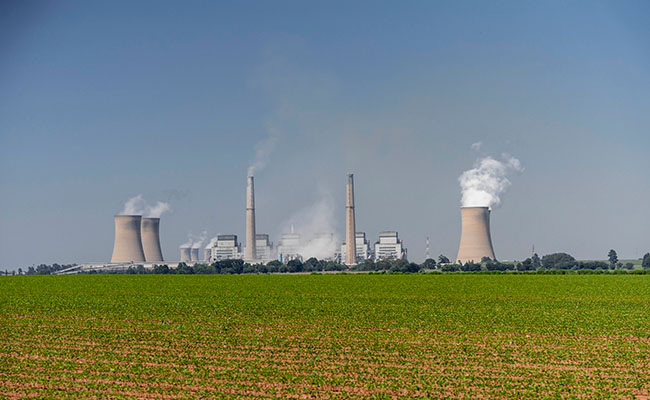
Top image: Eskom’s decommissioned Komati Power Station, shut down in 2022. Picture: Ihsaan Haffejee, courtesy Oxpeckers.
Sign up to Currency’s weekly newsletters to receive your own bulletin of weekday news and weekend treats. Register here.