


One doesn’t like to brag. Though … saying one doesn’t like to brag is a kind of brag in itself. It is also often a precursor to an actual brag. Or at least a humblebrag. So … allow me to both say “I don’t like to brag”, and then just go ahead and brag.
I think it’s correct to say I’m one of the few mainstream journalists who confidently, in print, predicted Donald Trump would win the 2024 US election. I can prove it, because it’s, you know, in print. Nobody else (that I know of) in the entire journalistic fraternity around the world put their names to public prediction. I did. And I was right. Just saying.
The mainstream media almost unanimously thought Democrat candidate Kamala Harris was going to win. The conventional wisdom in polite society was that she was ahead. Opinion polls put the race close, but most had Harris in front to the last moment. On October 20 2024 – the day my prediction came out – the New York Times and the CNN polls had the race tied, but two days previously, the ABC New Poll and the YouGov/Economist polls had Harris winning outside the margin of error.
The reason I was so confident was that I was following prediction markets – online platforms where traders wager on the outcome of real-world events. Particularly, I was following a market called PredictIt, which was the go-to poll at the time for political punditry. It had, for the first time, Trump clearly winning outside what would be considered the margin of error in formal polls, as I mentioned in the story. I also said, incorrectly as it happened, that Trump had “virtually no chance of winning the popular vote”. Actually, he came pretty close, winning 49.8% of the national popular vote.
Rewarded for being right
After the election, I kinda expected to be lauded by someone – anyone – for my predictive brilliance. Sadly, no bananas. Urban sophisticates from around the world were so appalled at the prospect of a Trump victory, rightly in my opinion, that they confused hope with fact.
But this is precisely the point. No election demonstrates the utility of prediction markets as emphatically as the 2024 US presidential elections, because polite society didn’t want it to happen – but it should have known better.
Why is it that prediction markets are so successful? In many ways it’s obvious. You have a binary choice. You are only rewarded for being right – or, in other words, for what you think will happen, not what you hope will happen. It doesn’t matter to the market whether your views are compatible with your friends, logic or even common sense. You are not rewarded for that; you are only rewarded for being right. And you have skin in the game.
The utility of prediction markets should be blindingly obvious to everyone, because entire economies rely on them. Capital markets are really just prediction markets in a different guise. They notionally don’t “predict” the future, but a rising stock price tells a very specific story; people with skin in the game think the company is going to succeed. Or the opposite. They are not perfect, just better than everything else.
Regulatory hassles
Yet, oddly enough, the attitude of authorities around the world to prediction markets has ranged from vociferously against, to indifferent, to mildly pro.
PredictIt was closed down by the Commodity Futures Trading Commission (CFTC). Its sponsor, Victoria University of Wellington, New Zealand, had to appeal to a US court to reopen it. It won the case, which is why US citizens can now log on, but nobody else around the world can.
Regulators just don’t know what to do with prediction markets: the CFTC allowed PredictIt to operate in a very, very limited way. Then it withdrew its support, then was forced to drop his objection after the court case.
The CFTC under the Joe Biden administration had entered into a settlement with market leader Polymarket whereby the company agreed to wind down US operations after being accused of running an illegal exchange. But now the Trump administration, presumably thrilled that the markets correctly predicted the US president’s win, have changed their position, and Donald Trump Jr has taken a job as an adviser (totally predictable).
Proving the case
So what were regulators so worried about? Well, all the stuff everybody worries about with markets in general; low liquidity which could enable manipulation. In this case there is also bot exploitation and addiction risk. But these are germane everywhere, in every market. And these risks are obviously manageable, because if they weren’t, we wouldn’t have capital markets.
Just take bot exploitation: bots can take advantage of inefficient pricing. But isn’t that exactly what traders are paid to do? And by the way, they are not always right: prediction markets suggested Harris would choose Josh Shapiro rather than Tim Walz as a running mate. Actually, the prediction markets were right: she should have!
Really, what happened is that the US presidential election demonstrated unequivocally the utility of prediction markets. Mainstream publications have started to quote them more. And with the change in sentiment, regulators are catching up, presentation is better, more bets are available and, importantly, sports betting has migrated onto prediction markets.
So this past year and a bit has been an absolutely breakout year for prediction markets. One of the market leaders, Kalshi, which operates at an approximately 1% effective take rate, told investors last month it’s on an annualised pace for between $600m and $700m in net revenue, with trading volume growing sixfold over six months. Its revenue will be up more than 1,000% on 2024. Market leader Polymarket now regularly does turnover of $500m a week.
Collective intelligence
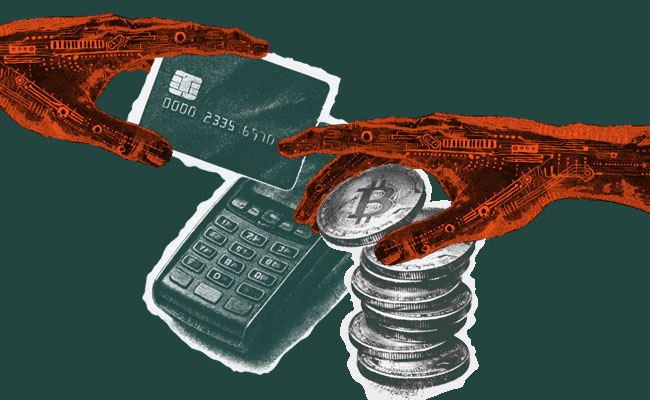
But there is another big advantage to prediction markets: they dovetail well with crypto and “defi”, or decentralised finance. Polymarket operates in USDC cryptocurrency, a “stablecoin” linked to the value of the dollar, through the Polygon blockchain network.
Why does it do that? Blockchain provides the underlying infrastructure for secure, transparent and tamper-proof operations, while cryptocurrency serves as the medium for transactions, enabling borderless participation without traditional financial intermediaries. The integration of blockchain and cryptocurrency has transformed these markets from centralised, regulated systems into decentralised, global ones. But the point is that they are comparatively cheap to operate since the infrastructure – the internet – is already up and running.
It’s also created a whole new financial paradigm: “event-driven finance”, where trading, hedging, and speculation are centred on the outcomes of specific real-world events, such as elections, geopolitical developments, economic indicators, sports results or even cultural phenomena. This is different from traditional finance, which often focuses on asset prices or corporate performance, because it treats events as tradable assets.
Platforms like prediction markets aggregate crowd wisdom to price these probabilities, turning them into tools for risk management, forecasting and investment.
I got a taste of this recently at Binance Blockchain Week in Dubai, where Opinion Labs research lead Nicki Lee said she came out of a formal financial analyst background. Research firms would spend weeks compiling each individual piece of economic data, like inflation or macro signals. “Previously, getting quality inflation and real economic data was very labour-intensive for research firms. With the right incentives, collective intelligence now updates probabilities constantly,” she said.
At last, at long last, an actual, real-use case for crypto and blockchain!
ALSO READ:
- In cryptoland, you can bet on Taylor Swift – or The Rapture
- Alternative investments: Time to look beyond the stock market?
- Remember NFTs? They’re all grown up now
Top image: Rawpixel/Black Ice/Currency collage.
Sign up to Currency’s weekly newsletters to receive your own bulletin of weekday news and weekend treats. Register here.




i have logged into my account and unable to download content.
apreciate a reply soonest.
thanks you
Hi Ian, I’ll email you.
in my neck of the woods – Northern Suburb Joburg – suggesting Trump might win was a no-no.
Thought provoking article as always Tim. Keep ’em coming