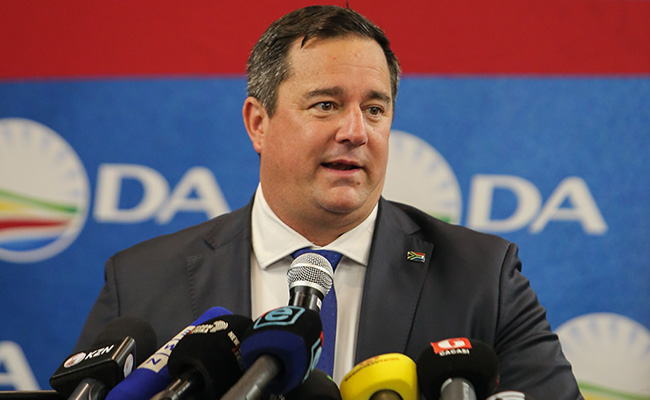

It was hardly a surprise when DA leader John Steenhuisen announced his decision not to stand for re-election as party leader on Wednesday. Not only was the decision well-telegraphed, but Steenhuisen has drawn plenty of flak recently – whether for the axing of environment minister Dion George, a default judgment on a R150,000 personal credit card debt, or his handling of a devastating foot-and-mouth disease breakout. His decision also comes in a critical year for the DA, where votes in crumbling cities countrywide are its to lose in the upcoming local government elections. Currency spoke to Jonathan Moakes, former DA CEO, and co-founder of The South Africa Brief, for some insight into what Steenhuisen’s departure means for the party and the government of national unity (GNU).
What did you make of Steenhuisen’s messaging in his briefing?
The speech was intended to show that this was a decision he had full control over and agency on. And, of course, for him to demonstrate what he’d achieved. I think, as he summed up, it was “mission accomplished” in what he achieved by being the first DA federal leader to bring the party into national government.
And then it was very important for him to shape the agenda that he wants to put his full attention into: addressing the foot-and-mouth disease issue. Not contesting the federal congress would enable him to focus on that for the next three months, and without having to run a campaign for the local government elections.
There’s been speculation that he may have been pushed. Do you think there were tensions in the background that forced his move?
Obviously we don’t know, and one is not behind the scenes. I think he was enabled and empowered to make this announcement, but I don’t think he was entirely always going to resign … John would have made some sort of calculations based on whether he was going to ultimately be pushed. He probably ended up making this decision himself, but I think on the understanding that his position was becoming incredibly tenuous, and would have been exacerbated by the events of the past few months.
What is your assessment of Steenhuisen as a leader?
I think on balance he’s done a solid, decent job.
One doesn’t want to get involved in mathematical nitpicking, but he did inherit the DA when it had declined in a general election for the first time in its history, and in percentage terms he was able to increase the party’s support. But it does bear noting that, in absolute terms, the DA dropped in terms of its vote numbers in 2024, and then if you look at the local government election in 2021 the party dropped from what it had achieved in 2016.
That said, he has delivered in how he’s positioned the party to take advantage of the ANC falling below 50%, and he deserves credit for leading the party’s negotiations and getting it into national government, and being able to forge a grand coalition with the ANC and a GNU with other parties.
I think convention would show worldwide that junior coalition partners tend to suffer support loss or support drift. The DA, according to the public polling that is available but also according to some of its by-election trends, has consolidated and certainly seems to be increasing support ahead of the local government election.
He’s also been able to weave a very careful line between projecting the DA as a party of national, provincial and local government, but at the same time being able to maintain and drive opposition positioning. That has enabled the party, in the absence of any serious, credible opposition in parliament, to still be seen by some as the primary opposition to the ANC.
There are ideological fractures in the DA, and tensions in terms of how to participate in the GNU. How central has Steenhuisen been to holding things together?
I think he was very central to holding and motivating for the DA’s continued participation in the GNU. As he made clear, that was central for him – for the DA to get into national government, to stay in national government, and show what it can do as a party of national government.
I’m sure, as part of the negotiations inside the DA that preceded this announcement, there probably were some assurances that the DA will seek to stay in the GNU for the foreseeable future. But obviously, with the local government election looming and potentially some ideological issues coming down the way, in terms of National Health Insurance in particular, it remains to be seen whether the forces in the DA that are opposed to the GNU will gain momentum.
It also bears noting that any new leader would probably not have been involved intensively in the negotiations to form and maintain the GNU, so that, by its very nature, might cause a bit of fluctuation.
What’s next for the DA?
They go to a federal congress [in April]. One of the key objectives of this announcement and process is to avoid a bruising leadership battle and factional differences coming out into the open. I think the DA, above all else, wants their federal congress to be an uncontroversial or unifying opportunity to show the progress they’ve made, and to present a new leader who has overwhelming support.
Obviously, there will be a lot of jostling and intrigue as to who’s going to put their name forward, but I would suspect that whoever does [win] will largely be a consensus candidate. Ideally the DA would not want the position to be uncontested, because I think parties always want to show that there is some form of contest, but they would want to make sure that whoever prevails wins by a comprehensive margin, so it is seen that the majority is behind that person, and that the party is ready to roll out in formation behind its new leader ahead of the local election.
Speculation is that Geordin Hill-Lewis is that person …
My presumption would be that Geordin is the presumptive contender. One of the complexities is that he is the incumbent mayor of Cape Town and, by all reports, is seeking to contest for a second term as mayor. If that is the case, one of the difficulties will be: can the DA have a federal leader who is not in parliament and not part of the GNU?
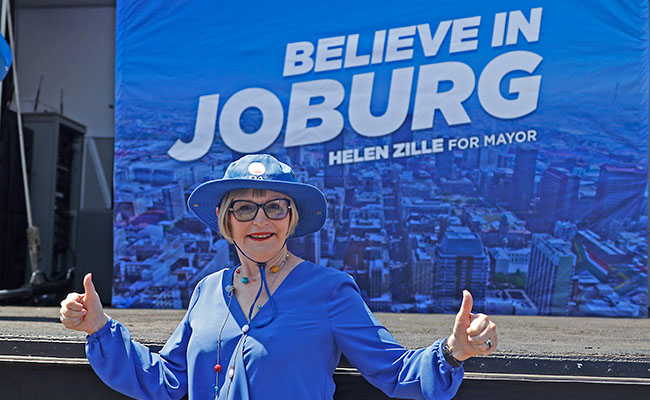
Obviously, there is precedent: Helen Zille became leader of the DA when she was mayor of the City of Cape Town and also led the DA as premier of the Western Cape. What that did, though, was create another centre of power in parliament in the leader of the official opposition. That may be slightly less complex with the DA as part of the GNU, because it becomes less of a focal position, but I think there would still be a lot of pressure for a DA leader to be in national parliament, and certainly as we get closer to the 2029 general election, the DA would want their leader to be projected as a prospective president.
It may provide in the short term an electoral advantage for the DA to have someone leading the party who is a mayor, and being able to have a little bit of distance from the GNU, and allow the contestation with the ANC to be at local rather than at national level. It may enable a little more collegiality during the election campaign.
Assuming it’s going to be Hill-Lewis, what would be your assessment of his leadership style and what that might mean for the party?
I think he will bring an energetic leadership style, and probably a different, more youthful flavour that may fit the current times. I think he comes across as a very personable leader who also backs that up with demonstrating competence.
What remains to be seen from Geordin, because obviously he’s very focused on the City of Cape Town and was a Western Cape member of [national] parliament, is how national-oriented he’s going to be. Will he be a federal leader of the DA who seeks to build where John has left off in really trying to cement the DA as a true party that is a national alternative? I sense that he will.
How do you see his leadership – or at least a change in leadership in the DA – playing out in terms of the party’s relationship with the ANC?
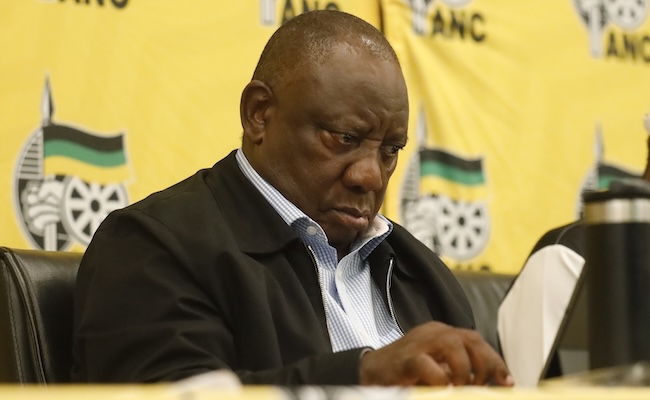
John has forged a decent (maybe fractious at times) working relationship with Cyril Ramaphosa and the ANC. My understanding is that Geordin Hill-Lewis has a good relationship, and there is respect within the ANC for him. And, obviously, by virtue of his position as mayor, he has had to work with the president.
I think there will be a lot of catching up to be done to get to the level at which John left off. That said, there is potential for Geordin to be maybe a little more oppositional, and maybe dig in his heels a bit more on ideological issues. And I think that’s the area one needs to watch, because if Geordin does stay as mayor of Cape Town and is the federal leader of the DA, he’s not as vested in the GNU by being outside it. So probably he will fight a little more vigorously and hold onto the so-called red lines a bit more strongly. So I think there will probably be a continuation of a decent working relationship with the ANC, but I suspect it may become a bit more combative.
This interview has been edited for length and clarity.
ALSO READ:
- Unhappily ever after: The big GNU divorce tease
- Is ANC support below the DA? Well sort of, but not really …
- Local polls, the GNU and Trump shocks: Politics in 2026
Top image: DA leader John Steenhuisen addresses the media at the Riverside Hotel in Duran on Febuary 4. Picture: Gallo Images/Siyabonga Sokhela.
Sign up to Currency’s weekly newsletters to receive your own bulletin of weekday news and weekend treats. Register here.