
It is perhaps fitting that a company created in Joburg’s central business district 108 years ago nearly had its best-laid plans derailed by two huge potholes, the defining structural feature of the city’s roads today.
Anglo American, founded in 1917 by Ernest Oppenheimer, this week pushed its $60bn merger with Canada’s Teck over the line, scoring an emphatic 99.2% approval from shareholders.
If that seems a breeze, it belies the fact that last month its Australian rival BHP popped up with an 11th-hour takeover bid for Anglo American, which threatened to derail the Teck merger. Anglo’s board, however, wasn’t biting, so BHP slunk away, saying it is now “no longer considering a combination of the two companies”.
Then, two days before the vote on the Teck deal, Anglo was forced to withdraw a controversial pay proposal which would have seen CEO Duncan Wanblad walk away with £8.5m just for making the deal happen.
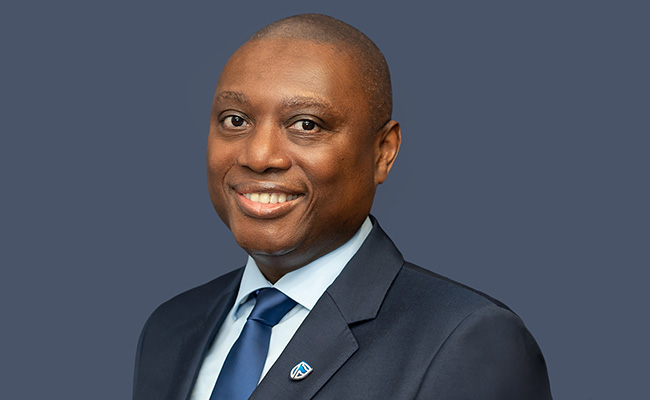
Shareholders hated it. “We sought assurances and a clear indication of direction of future performance-based incentive plans that would have enabled us to support these [pay] amendments. The company was not able to provide those assurances,” said one shareholder, Legal & General.
So Anglo, with an eye on the bigger picture, pulled the pay proposal.
The result was that the vote lasted only 15 minutes. Wanblad was justified in a touch of smugness as he welcomed this as a “clear endorsement from our shareholders” to create a “global critical minerals champion, headquartered in Canada and offering more than 70% exposure to copper, underpinned by a world-class portfolio”.
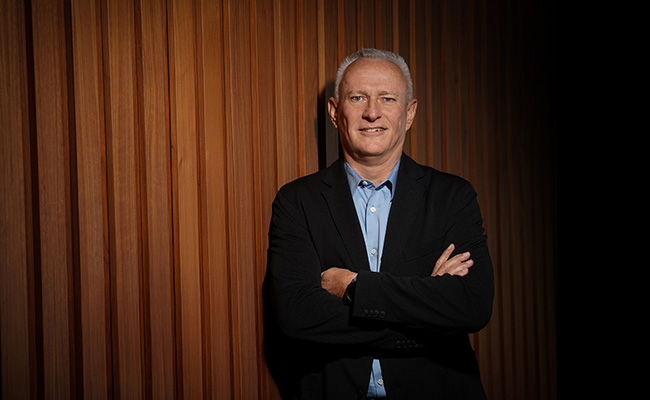
Dawid Heyl, portfolio manager at Ninety One, says the successful shareholder vote on the Teck deal is a personal triumph for Wanblad.
“Among large, diversified miners, no-one has created more value in the last 18 months. When you look at where Anglo was when BHP first launched its bid, you’d have to say Duncan is the player of the year,” he says. “To get a deal agreed with Teck, where the controlling Keevil family has resisted earlier transactions, and pivot the group so fast towards copper, is exceptional.”
It is billed as a “merger of equals”, but this is essentially sophistry. Anglo will effectively account for 62.4% of the new entity, while Teck gets 37.6%, and Wanblad will lead the new group, with Teck’s boss, Jonathan Price, as his deputy.
It’s not quite done and dusted, of course. Canada’s regulators must still give it the green light, but that is unlikely to pose much of a hitch, since Anglo has offered a slate of commitments to mollify Prime Minister Mark Carney’s administration, including shifting its headquarters to Vancouver.
At this point, says Coronation Fund Managers portfolio manager Nic Stein, the likelihood of the deal failing is small. “There may still be some sabre-rattling from the regulators given that copper is such a critical mineral, but I don’t think this will be derailed at this point,” he says.
Symbolic loss for South Africa
The vote had immense symbolic importance, however, as it takes Anglo that much further away from the country of its birth.
This, after all, is a company that, at the time of the country’s first democratic election in 1994, controlled companies that accounted for 43% of all the value on the JSE, including Mondi, Tongaat, AECI and First National Bank. After listing in London in 1999, it scaled back, but even then, it still controlled businesses worth about 18% of the stock exchange’s total value by 2010.
Now, its South African presence is a shadow of what it once was. It has no more gold, and last year it spun off its platinum arm, now known as Valterra, while it is desperately trying to flog its diamond arm, De Beers, to anyone with an equivocal view of lab-grown diamonds.
Stein says this is more a reflection of corporate trends than a specific desire to quit South Africa. “It’s obviously true that ‘Brand Anglo’ and the heritage of the company isn’t what it was a few decades ago,” he says. “Back in the 1990s, it was all about conglomerates, but as the mood changed, those got dismantled. So many of those Anglo companies are still around in some shape or form – but they’re just wearing a new corporate hat.”
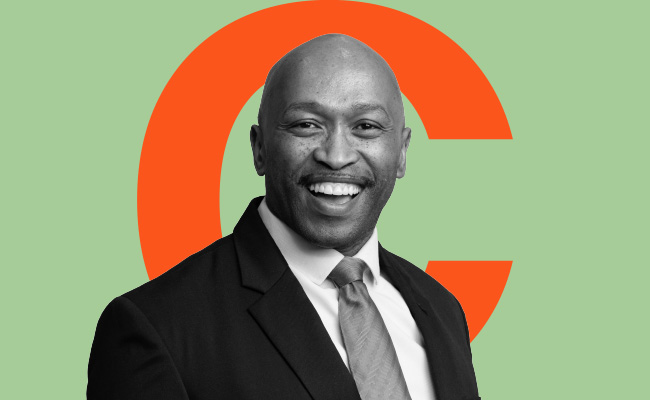
Duma Gqubule, an economist and journalist, believes that within a few years, Anglo won’t be in South Africa in any form. He says that if JPMorgan’s analysts are right and it eventually sells its iron ore company, Kumba, it will have zero local assets.
“If you consider that even after democracy, their companies accounted for more than half of the South African assets on the JSE, it’s a huge symbolic loss. But they’ve been quitting on the country in stages for many years,” he tells Currency.
A decade ago, Anglo employed more than 88,600 people in South Africa. But for this to plunge to zero illustrates a shift in corporate power that has almost happened by stealth.
Anglo would argue, with some justification, that it handed over many of its mines to Black South Africans – such as Johannesburg Consolidated Investments (JCI), coal miner Thungela and Exxaro – in deals worth more than R71bn. In this sense, Anglo would say, its corporate mission advanced South Africa’s national project.
But for Gqubule, as notable as many of these deals have been, this rings hollow. “For more than a century, Anglo has extracted minerals from the country. They were central to all the major corporate events in South Africa over that time. So now, this deal with Teck feels very much like the middle finger,” he says.
Actual synergies
No matter how few South African assets it may have, Anglo will remain listed on the JSE and will retain a clutch of South African shareholders, including many pension funds. So, for those investors, how good an investment will a new Anglo Teck really be?
The answer is twofold: over the longer term, the company’s exposure to copper – the most desirable clean mineral for future energy markets – would make most asset managers swoon; in the near term, Anglo’s shares have already rocketed 36% this year, which makes it pricey.
“The Anglo Teck combination is compelling,” said SBG Securities in a research report last week, citing its valuable profit potential, margins and production prospects. “On all measures, Anglo Teck will be the ‘go to’ and, in effect, becomes one of the world’s pure-play copper [companies] from being a diversified miner.”
This seems to be the consensus of most experts.
Nick Stansbury, head of climate solutions at Legal & General, told Bloomberg in recent days that the combined entity will be in a class of its own.
“It is exposed to commodities on the right side of the energy transition with very attractive growth prospects, and only owns really high-quality assets,” he said. “It’s very hard to compare the combined Anglo Teck to any other company.”
The potential is “enormous”, said analysts from Freedom Brokers in a recent research report. “Anglo Teck will offer more than 70% copper exposure, while retaining iron ore, zinc and other growth assets,” they said.
The real prize is that this merger will allow the two mining companies to combine their most promising assets which, as luck would have it, sit just 15km apart: Collahuasi and Quebrada Blanca in northern Chile.
It’s a cliché that in any deal you’ll find CEOs trumpeting “synergies” that are more speculative than anything, but in this case, because of the proximity of these two copper mines, Anglo’s ambition of saving $800m annually by 2030 from the combination, while lifting earnings by $1.4bn, is less of a pie-in-the-sky promise than most.
So, operationally, it is compelling; valuation-wise, the picture is murkier.
As Coronation’s Stein points out, Anglo’s share price has already factored in much of this future potential. “Anglo Teck will provide you with greater copper exposure than rivals such as Glencore, but you’re paying a lot for it at this price,” he says.
This is reflected in the analysts’ recommendations. Of the 21 analysts who cover Anglo, 10 rate it a buy, 10 a hold, and only one – Morningstar – calls it a sell. On average, they see the price rising just 3.5% over a year to £29.78.
The copper gambit
Ninety One’s Heyl argues that as much as Anglo’s share price has risen faster than its peers this year, there is a reason for this. “Copper prices have risen a lot, but the outlook for copper still looks good until the second half of next year at least.”
The rally in copper prices has been spectacular. This week, copper futures hit a record $11,700 a tonne, underscoring a 34% surge this year amid expected demand from data centres needed for the expansion of AI.
In this sense, Anglo has made an exceptionally smart deal, putting itself at the centre of where energy demand is likely to come from. As Stein says, the Teck deal is a proper unicorn in mining – the right commodity, the right price, the right timing and real synergies.
“If this dilutes its South African exposure, and takes their head office to Canada, it is likely worth it in the end,” he says.
You can understand why this would stoke the fires of jealousy in rivals like BHP and Rio Tinto which, the Australian Financial Review said, will be watching what happens “with a mixture of fascination, frustration and wistfulness”. Wistfulness because both BHP and Rio were themselves far too demure in chasing copper deals, even though BHP came the closest.
“Will their risk aversion to copper M&A – and big deals more broadly – mean they’ve missed the chance to dominate next decade’s mining boom?” the publication asked.
Wanblad has much to do still – finding a buyer for De Beers, a company whose value has been written down by $4.5bn over the past two years, will be fraught – but the Anglo Teck deal has given the company a much-needed facelift and brought him a degree of immunity from another takeover for a while.
He is a survivor, and with the crucial step of getting shareholder approval for the deal with Teck, Anglo, too, will now live to fight another day as a standalone entity.
ALSO READ:
- Why Canada wants Anglo for itself
- Anglo’s trek to Vancouver underscores South Africa’s slide
- Anglo: Leaving the party before the champagne arrives
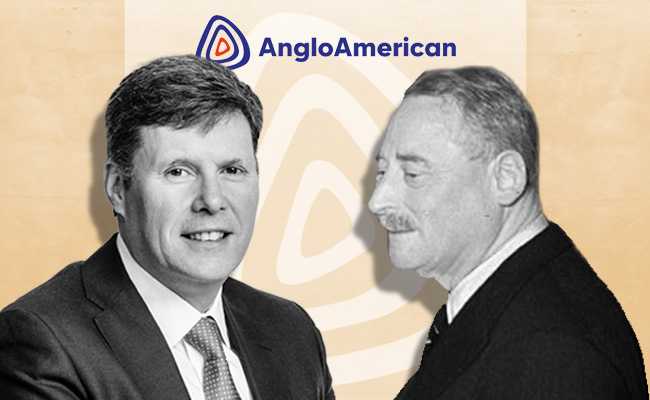
Top image: Duncan Wanblad and Ernest Oppenheimer. Supplied; Wikimedia Commons/Dutch Nationaal Archief.
Sign up to Currency’s weekly newsletters to receive your own bulletin of weekday news and weekend treats. Register here.