
South Africa’s new expropriation law and the police’s inability to tackle construction mafias are major deterrents for foreign investors keen on renewable energy projects, says the world’s largest fund manager of green projects.
These red flags, raised during a discussion at the African Markets Conference in Cape Town last week, risk thwarting South Africa’s bid to capitalise on its geographical advantage for producing solar and wind energy. This is critical, since the Presidential Climate Commission warned in October that the flow of climate funding to South Africa, including for renewables projects, is “well below” the R499bn needed every year.
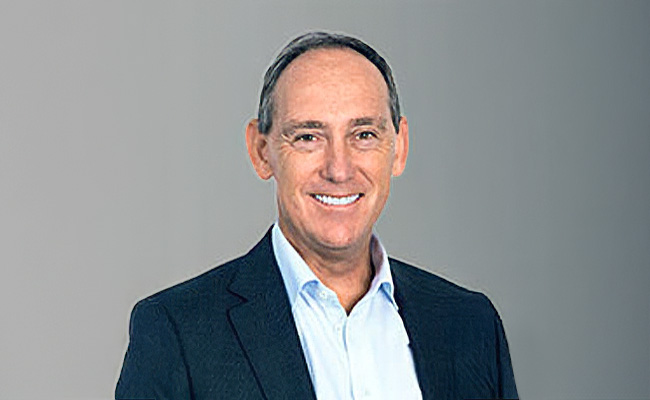
But Fred Thoring Flagstad, a director of Copenhagen Infrastructure Partners (CIP), the world’s largest dedicated fund manager of renewable energy projects, said that while the Expropriation Act, passed last year, may only be used in “extreme cases”, it still spooks would-be investors. “I can understand that there is a historic background to this, and I can understand that there might be a rationale, but as a foreign investor coming in here, hearing that property can be taken without just compensation is a very scary thing for us,” he said.
This is something CIP has had to wrap its head around, since it paid $200m for a majority stake in Mulilo – one of South Africa’s largest renewables firms – in 2023. Flagstad said Cape Town-based Mulilo has since allocated R100bn for green energy projects in all nine South African provinces. The company has lofty goals: a 5GW portfolio of solar, wind and battery storage projects by 2028, powering 14-million households.
Fears of Zimbabwe 2.0
Flagstad is not the first investor to draw attention to the chilling effect of the expropriation laws. But while officials have tried to reassure investors that the act is little more than an update to existing legislation governing unused land, the mixed messages sent by leaders like President Cyril Ramaphosa have only sewn confusion.
Speaking at the Zimbabwe Agricultural Show in August, for instance, Ramaphosa praised the “ambitious reforms” instituted by Robert Mugabe’s government in 1998 to “facilitate the entry of black Zimbabweans into productive agriculture, including support to small-scale farmers”.
Ramaphosa’s tone-deaf comments raised fears that South Africa may seek to emulate Zimbabwe, where the fallout from the violent seizure of 6,000 white-owned farms by Mugabe loyalists led to its economy shrinking by an average of 6% a year between 1998 and 2008, while inflation soared to 79-billion percent.
Other leaders, including public works minister Dean Macpherson, tried to calm the waters by pledging that the “guarantee of property rights under the constitution is not up for debate”, but this has failed to meaningfully placate foreign investors.
Flagstad said that while the Expropriation Act “may make sense in the context of the current government, one could fear that we could see a less judicious government in the future that might abuse those rules and laws”.
AK47s on site
Equally worrying for investors in renewable projects, he said, has been the advent of “construction mafias”, which often arrive on building sites in the guise of “local business forums” and typically threaten to shut down projects unless they are paid off.
At the National Construction Summit in November, Ramaphosa pledged to use an iron first against these extortionists. “We will not negotiate with construction mafias [and] the law enforcement agencies will deal with those who break the law,” he said. Yet the embarrassing spectacle of the Madlanga commission of inquiry into the police has illustrated that those law enforcement agencies have themselves been deeply infiltrated by criminal elements, raising sharp questions about their ability, and will, to deal with the “mafias”.
For CIP, which will oversee more than 20 local renewables projects this year, the prospects of being extorted by these criminals is deeply worrying.
“It’s not going to be helpful for further investments in the country if I have to explain to my investment committee that people with AK47s rocked up to our sites and threatened the staff,” said Flagstad. “Serious steps taken by the government to address construction mafias is something we would welcome, and I think would be a nice improvement [that would encourage us] to deploy assets into this country.”
Flagstad said the CIP’s investment committee was initially wary about green-lighting the investment in Mulilo in 2023 but, despite problems including the difficulty of obtaining visas for his staff, “it has gone better than we hoped”.
Intra-Africa rivalry
Were South Africa to address these issues, it would likely accelerate the impetus of a sector growing rapidly but in need of more funding to allow the country to truly capitalise on its solar and wind resources.
Rentia van Tonder, the head of power in the corporate banking unit of Standard Bank, said R300bn has already been invested in South Africa’s renewables sector. “We don’t see it scaling down soon – we see a lot of momentum.”
Several other energy companies that attended the Cape Town conference attested to the speed at which projects are moving on the African continent – which implies that if South Africa doesn’t get its act together, it risks losing out to its regional rivals.
Christopher Clarke, the managing partner of Inspired Evolution, an advisory company focusing on clean energy investments, says there has been a spike in interest in these projects in the past five years.
But whereas South Africa used to be the dominant market for investment, this is no longer so. “This has shifted completely around to a situation where 75% of our deal flow is now outside of South Africa and even the common monetary area. And that is based on low-carbon integrated energy policies of progressive governments,” said Clarke.
Karel Cornelissen, the CEO of the Noa Group, an independent power producer and energy trader, said that, over the past 18 months, his company had finalised deals for nearly 1,000MW of projects, with $1.5bn having been committed to its trading platform. “There is no end to the demand we’re seeing in the market. The next 12 months will be an acceleration of that,” he said. If South Africa can demonstrate progress in enforcing the law, while guaranteeing property rights for investors, it can still rightfully expect to win a large share of that.
ALSO READ:
- Billions pledged, no playbook: South Africa’s climate finance problem
- Behind Trump’s $1bn energy blow to South Africa
- Coal’s slow death in Mpumalanga
Top image: Rawpixel/Currency collage.
Sign up to Currency’s weekly newsletters to receive your own bulletin of weekday news and weekend treats. Register here.