Recently, I began hearing Hotel California in the most unlikely corners of my week. The opening chords would catch in my car speakers at a red light, the hooter of the taxi behind me impatient before the song had found its rhythm. Another time, a lyric drifted from a venue in Newtown as I passed along Ntemi Piliso Street. It kept resurfacing, the refrain quietly taking up residence in my thoughts, circling arrival, checking in, the idea of never quite checking out.
Gradually, it stopped feeling incidental. The song stopped being background. It gathered weight, widening and complicating how I was thinking about Joburg. Shifting the light under which I was seeing it. The city, in that quiet recalibration, started to suggest a different shape.
Joburg, for me, had taken on the contour of a hotel with many doors. You enter through one threshold, and behind it waits an entirely different mood, a different key of the city. Some rooms are velvet and smoke. Others are fluorescent and earnest. Some ask you to listen. Some ask you to look. The trick, perhaps, is not to rush toward the exit, but to choose another door.
#504 Velvet and smoke: Nine Lives, Rosebank
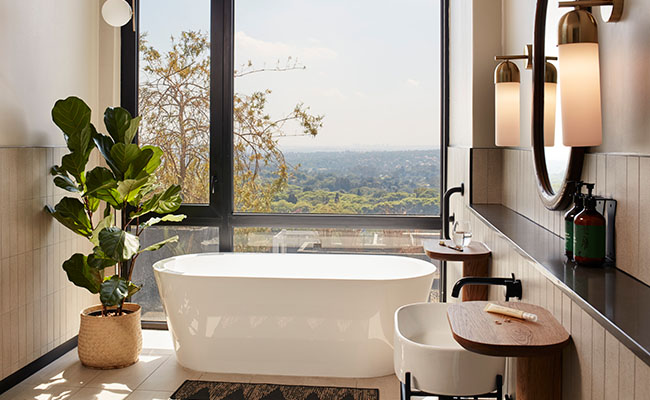
Nine Lives is tucked between the fourth and fifth floors of the Hyde Johannesburg Hotel in Rosebank, concealed just enough to feel discovered. The lift opens onto low light and lacquered surfaces. The door clicks shut behind you, and the city falls away by degrees. Precision mixology anchors the bar, carbonated martinis beside clarified classics, those crystal-clear negronis and margaritas stripped of haze but not character. Smoky bonito risotto, tuna tostada and pork dumplings move across the table with easy confidence.
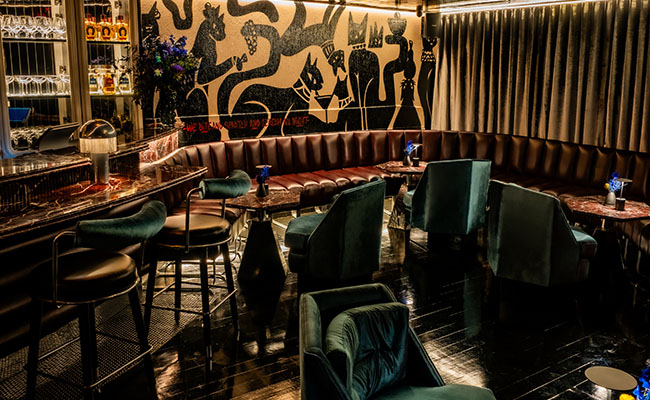
Chef Marc Robert describes the philosophy as elevated dining without intimidation, global influences folded into dishes that remain accessible. It is a place to slip into your other self, the after-work self, the one that leans into sound and shadow. Based in the Hyde, in the old Bank Building, the hotel hums with a laid-back luxe energy, its art collection spotlighting emerging Joburg talent.
In this wing of Hotel Joburg, the temptation is obvious: once you have checked in for the evening, why not stay upstairs and let the night stretch into morning.
#101 Learning to look: MaNdebele Photo Gallery, Braamfischerville
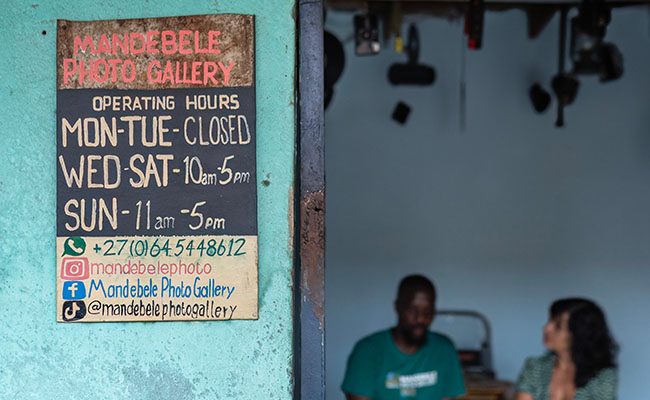
Braamfischerville holds a very different key. MaNdebele Photo Gallery, founded and operated by photojournalist Gopolang Ledwaba, stands rooted in its neighbourhood rather than orbiting established art districts. The gallery hosts four major exhibitions a year and recently brought together South African photographer William Matlala and Zambian Alick Phiri in I’ll Be Your Mirror, examining how black expression has been policed and constrained.
Beyond exhibitions, Saturday mentoring sessions take place here with local children. Small fingers adjust focus. Last year an exhibition showcased their photographs, images of streets and lives they know intimately.
Ledwaba funds the space through his own practice, supported by informal partnerships with institutions locally and abroad which donate books and resources.
In Hotel Joburg, this is the room where you learn that seeing is an act of belonging.
A photo walk through Braamfischerville is planned for March 28; details are shared via @MaNdebelePhoto.
#625 Coffee and confrontation: Troy’s Café and Asisebenze, Marshalltown
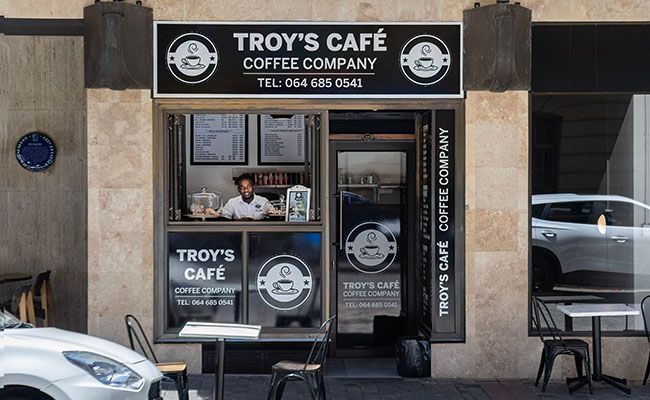
The inner city’s revival often feels incremental, one door at a time. Since Cramers Coffee left Marshalltown, a reliable cup in this part of the city felt scarce. Troy’s Café, which opened late last year in the refurbished Aegis Building on Loveday Street opposite the Rand Club, restores that ritual. From the team behind The Troyville Hotel, it serves strong coffee, cakes, sandwiches and the city’s best pastéis de nata. Barista Olwethu Sishuba swears by the smooth neutrality of the Italian Kimbo beans he uses.
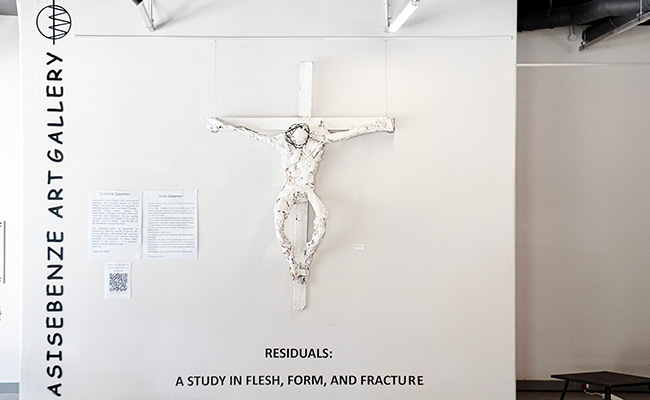
Right next door, Asisebenze Art Gallery shows Residuals by Thokozani Mthiyane. Over four years, Mthiyane accompanied young men caught in cycles of nyaope, documenting fractured masculinities shaped by addiction and urban neglect. Murky, used syringes surface again and again in the works, forcing your gaze to settle where the natural inclination is to rather turn away. The works refuse spectacle; they ask for proximity. On the lower level, smaller Mini Masterpieces offers an accessible entry point for new collectors, fragments of the same careful witness. Coffee and confrontation share a wall.
In Hotel Joburg, comfort and consequence occupy neighbouring doors.
#321 The shared frequency: Non-Club Showcase, Selby
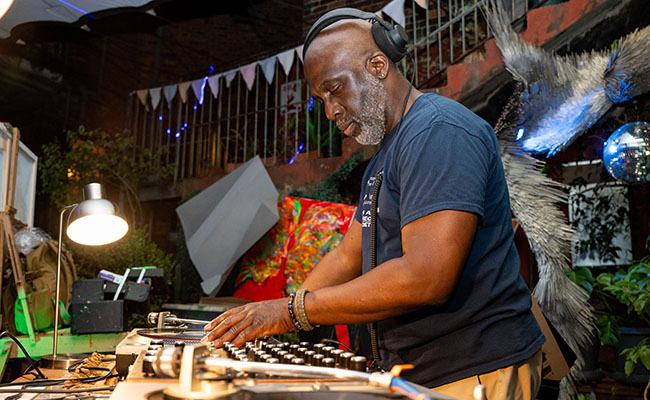
Since late last year, on one Sunday every second month, secreted in a building in Selby, Non-Club Showcase reshapes Sundays around vinyl. Running from mid-afternoon into late night, it gathers people around a central courtyard dance floor, with listening corners and quiet spaces radiating outward. At its centre is a shared devotion to the depth of records played as they were meant to be heard. The music, drawn from new pressings and older finds, some from the Non-Club record store in Melville, moves through house, deep house, techno and jazz-inflected sounds.
The crowd, largely between 30 and 50, gathers less for spectacle than for immersion. There is something deliberate about lowering a needle onto vinyl and allowing a side to unfold fully. It creates a community not through trend but through a shared affection for the sound and ritual of vinyl. No-one is rushing.
In this quieter lounge of Hotel Joburg, time bends slightly. The city outside continues at pace, but here, for a few hours, listening becomes the main event.
Details of the next gathering are shared via @nonclubrecordbar.
#1301 Skyline listening: Hugh’s, Braamfontein
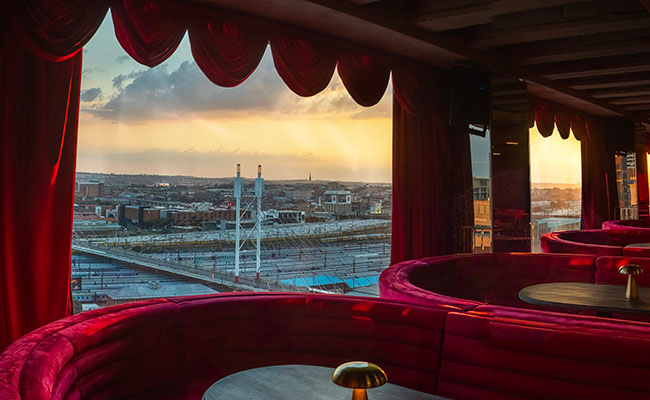
Thirteen floors above Juta Street, Hugh’s opens onto a skyline that has witnessed Joburg’s many reinventions. Conceived in collaboration between Adam Levy and the Hugh Masekela Heritage Foundation, it carries forward a belief that music should remain open and in conversation. Dark timber, amber light and velvet frame a stage positioned close enough for breath to matter. Through glass, the city remains visible, lights flickering below.
From this height Joburg appears almost composed. Descend the lift and it is restless again. The pavement reminds you. Hugh’s is not nostalgia; it is continuation. Emerging musicians share the stage with established voices, honouring a lineage without fixing it in place.
In Hotel Joburg, this is the penthouse where sound and skyline briefly align, reminding you that the city can be heard as well as seen.
The Thursday line-up unfolds weekly via @hughs_jazz_club.
Keep moving
Perhaps that is the point: Joburg does not resolve itself into a single story but opens into a sequence of rooms, each carrying its own temperature and tone. A speakeasy in Rosebank. A gallery in Braamfischerville. Coffee and art in Marshalltown. Vinyl in Selby. Jazz above Braamfontein. Move between them and you begin to understand that this place offers less a fixed identity than an unfolding invitation to inhabit it differently. Not all of its rooms are comfortable. Not all are polished. Some doors require more than curiosity. But each reveals another facet of its character.
The aim is not to secure the best suite or declare allegiance to one wing. It is to keep moving, attentive and curious, because every door alters the Joburg you think you know.
ALSO READ:
- Joburg, step by step
- Joburg now: Newish spots, events and exhibitions
- The surprising firsts that shaped Joburg
Top image: From Hugh’s, the Nelson Mandela Bridge and inner city unfold at sunset, velvet seating framing Joburg’s restless horizon. Picture: Ryan Enslin.
Sign up to Currency’s weekly newsletters to receive your own bulletin of weekday news and weekend treats. Register here.