

When Russia invaded Ukraine in 2022, the government softened the blow to fuel prices by temporarily cutting the fuel levy. If you’re hoping for a similar lifeline as oil prices surge again amid the Iran conflict, don’t hold your breath – there simply isn’t enough money.
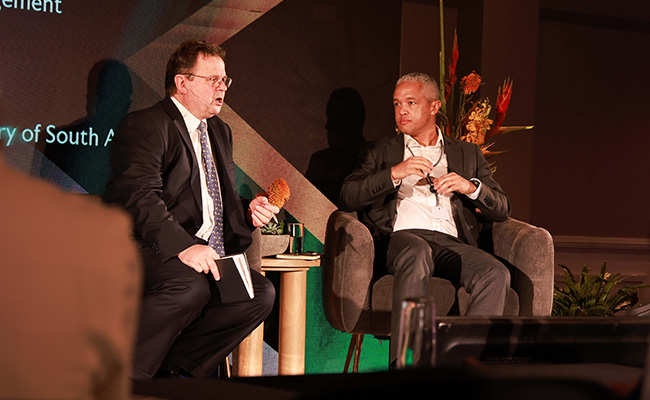
Speaking at Stanlib Asset Management’s inaugural Impact conference, National Treasury director-general Duncan Pieterse told the firm’s chief economist, Kevin Lings, that “if there’s any kind of relief, it will have to be temporary and, as far as possible, funded within the existing fiscal envelope”.
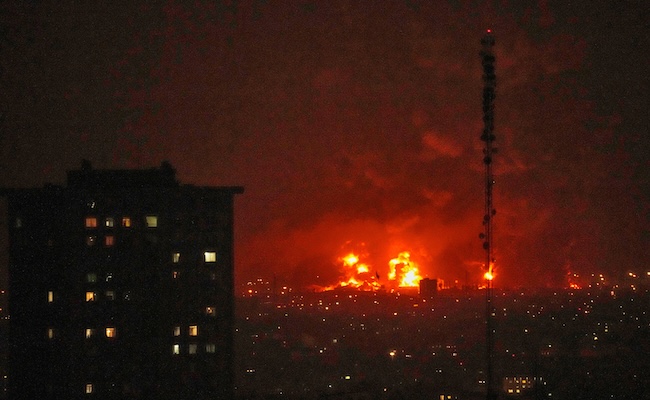
All indications are that the petrol price will rise by between R3 and R4 from early April, while diesel could jump by more than R7 – the result of a more than 40% surge in oil prices since the US and Israel began air strikes on Iran on February 28. Offsetting those increases would cost “tens of billions of rands”, Pieterse said.
“Unless you have those kinds of resources, which currently we do not have available as part of our fiscal buffers, you are either looking at no relief, or you’re looking at a very small amount of relief.”
Unfortunately, R4 per litre may be too optimistic.
Speaking to Currency after the conference, Lings said the problem lies in how South Africa’s petrol price is calculated – it’s the average of every day’s under- or over-recovery. “Month to date, if the petrol price is to go to the right price, it will have to go up by R4.74 a litre, and the diesel price will have to go up by R7.83 a litre.”
Gulp.
That would only take it to the month-to-date average. “If you look at the daily under-recovery for diesel, that’s R11.76.” In other words, today’s diesel price should technically be R11.76 higher, and petrol R7.23 higher.
The calm before the storm
February’s inflation data – where CPI hit exactly 3%, smack on the new target of the South African Reserve Bank (SARB) – now looks like a goodbye wave. Fuel had actually fallen 3.1% over the month, underpinned by a firmer rand at the start of the year, pushing fuel inflation to minus 10%.
“We’re still enjoying that in terms of its impact on our data,” says Lings. “So, this is going to hit us in April, and when it hits us, if the oil price and exchange rate stay exactly where they are, it’ll move inflation up to 4.7%.”
Investec treasury economist Tertia Jacobs agrees that February marks a trough. She expects inflation to reach 3.3% in March before a more pronounced jump in April – the extent of which hinges on whether the government waives the fuel levy or lets the full under-recovery pass through.
Four years ago, the Treasury cut the general fuel levy by R1.50 per litre following the Ukraine invasion. This time, it has budgeted for fuel-tax increases, after keeping the general fuel levy unchanged for three straight years.
From April 1, the general fuel levy increases to R4.10 per litre for petrol (from R4.01) and to R3.93 per litre for diesel (from R3.85). Together with the Road Accident Fund levy and carbon tax, this brings the total fuel-tax burden to R6.58 a litre on petrol and R6.45 on diesel, up from R6.37 and R6.24, respectively.
Standard Bank’s Elna Moolman says the February data “largely predate the war on Iran”. If the conflict is short-lived, the spike should prove fleeting. But the longer oil prices stay high and the rand remains weak, the greater the risk that inflationary pressure broadens well beyond the fuel pump.
Rate cuts: gone for now
Before the strikes, markets were pricing in at least 50 basis points of cuts this year. No longer. “People have completely done away with the possibility of a rate cut now,” says Econometrix chief economist Azar Jammine.
He reckons the SARB, which meets next week, should hold at 6.75% until the picture clears. At $100 a barrel, he estimates inflation will clock in at 4%-4.2% – uncomfortable, but within the SARB’s one-percentage-point tolerance band. His panic threshold is $120-$150. “A week is a long time now. A lot can change,” he says.
Kristof Kruger, head of fixed-income trading at Prescient Securities, says markets aren’t repricing for an oil shock – they’re repricing for a credibility one.
South Africa absorbs 90%-95% of every move in Brent crude into domestic fuel prices; the US absorbs less than half. The Fed can afford to wait and watch. The SARB cannot.
The rand reacts more sharply to shifts in global risk appetite than to oil prices directly – meaning even if crude stabilises, a souring global mood keeps the pressure on. The risk, Kruger warns, is the SARB being forced into a reactive hike that it later has to reverse. A policy U-turn, he says, is more damaging to credibility than either holding or hiking with conviction.
Silver linings and fiscal guardrails
Despite all of this, Pieterse remains relatively upbeat. “It would take a very big shock to global growth to dislodge” the country from its present fiscal path – restrained spending, with tax revenues performing as expected. There are also genuine upsides: the longer liquefied natural gas terminals remain shut in the Middle East, the higher coal prices climb. “From a core fiscal point of view, the most important thing is what this war means for our terms of trade,” he said. Coal revenue is “a very big positive for the economy”.
Nedgroup Investments head of multi-management Trevor Garvin points to another buffer: gold hovering near $5,000 an ounce is cushioning the rand, which – despite weakening since the start of March – still sits at roughly R16.60/$, well below the R18-odd of a year ago. Brent is trading at about $100-$103 a barrel, up from $73 before the February 28 strikes.
At these levels, Garvin notes, oil “becomes a macro and inflation shock, complicating central-bank policy, pressuring growth and amplifying volatility across markets”, not only in South Africa, but globally. If it stays above $100, the probability of slower growth with stickier inflation through 2026 rises sharply.
South Africa’s 10-year bond yield has broken through 8% and is now trading near 8.8%.
The growth imperative
South Africa did not cause this crisis and cannot end it. The rand, the petrol price and interest rates are all hostage to decisions made in Washington, Tel Aviv and Tehran.
But what South Africa can control is how it grows through the turbulence. Lings argued that the country needs to drive investment in capital formation to 30% of GDP from about 15%. “In world terms, growth of 3% is common,” he says. “It’s not like we’re asking for a miracle. One hundred countries achieved 3% GDP growth. Sixty countries achieved 4% – this is not a rarity.”
That makes the Treasury’s failure to pencil in GDP growth above 2% within three years all the more galling. What is the missing ingredient? The Gulf crisis has pushed that question back into sharp focus.
Pieterse’s answer is that there are no silver bullets, only the implementation of the reforms already under way. “We forget how far behind our peers we are – if we look at reforms in electricity and Transnet, countries like Brazil and India implemented these reforms 20 years ago. And then once you do these reforms, they translate into higher growth.”
The pre-condition, he insists, is macro stability. “If no-one believes that public finances are sustainable or what future tax regimes look like, they are not going to invest and hire people.”
The oil price will eventually fall. The rand will find its level. The SARB will hold interest rates and, in time, ease them. But the real test is whether South Africa uses the pressure of this moment to accelerate the reforms that have too often been delayed.
ALSO READ:
- These are shaky times for oil markets. What will a prolonged war mean for prices?
- Countries tap oil reserves amid Iran fallout
- What Iran’s war means for African economies
Top image: Stanlib’s Kevin Lings and Treasury director-general Duncan Pieterse. Picture: supplied.
Sign up to Currency’s weekly newsletters to receive your own bulletin of weekday news and weekend treats. Register here.