
Late on Friday two weeks ago, a bloodless statement popped onto traders’ screens, speaking blandly of a reshuffle in “executive responsibilities” at Copper 360, the only JSE-listed pure-play mining group focused on the hottest metal in town.
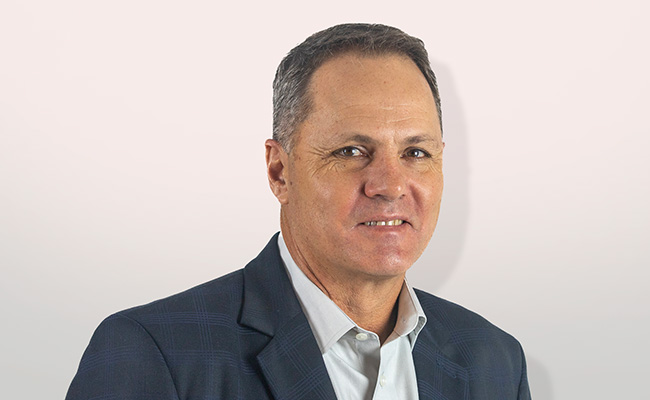
CEO Graham Briggs, a geologist who led Harmony Gold, and Stephan du Plessis, a former Deutsche Bank executive, would be taking a “leave of absence with immediate effect”, while chief operations officer Gordon Thompson would act as CEO. This week, company secretary, Philip Venter Attorneys, also resigned.
Yet behind this sterile announcement lies a deeper story of a boardroom coup, which speaks to the competing ideas of how to best capitalise on the renewed vigour for copper – a metal whose price has risen 26% in a year as the realisation has dawned of just how little supply there is to feed a growing thirst for it in data centres, electric vehicles and basic electrification.
Copper 360, which has clustered together a group of mines in the Northern Cape dating back to 1935, is in the sweet spot to capitalise, based on geological reports which say there is at least 140,000 tons of copper in those mines, and possibly up to 750,000 tons.
Provided the company can sort itself out, that is.
Briggs didn’t want to reveal too much when contacted, other than to say: “There was a difference of opinion with the controlling shareholders, who are investment companies with specific priorities and aren’t necessarily aligned with the needs of a resources company.”
Though Briggs won’t say, the smart money suggests that his “leave of absence” is likely to become a permanent departure.
Of course, these sorts of board ructions are not uncommon for a company that has had its fair share of drama, like Copper 360.
Since it listed on the JSE in 2023 with big plans of developing up to 60 copper mines, its stock has shed 84% of its value, as costs rocketed, leading to a R1.15bn recapitalisation in December. Shareholders put in R400m in new capital as the number of shares in issue tripled, while those owed more than R700m in debt agreed to either convert this into equity, or restructure those loans.
Still, Rupert Smith, Copper 360 chair who has invested a large amount of his own money, says the management shake-up is “not destabilising” in the least.
“We’ve had technical hiccups, but all our targets are practically attainable,” he tells Currency. “We will be up and running in the next few months, and this thing is going to shoot the lights out, I assure you,” he says.
By later this year, Copper 360 aims to process 40,000 tons of ore per month at a relatively high grade of 1%, which will translate to about 5,000 tons of copper on an annual basis.
Smith says the proven copper deposits are vast, but the size of the resource hasn’t been the company’s problem. “If we were Anglo American, and we had a massive chequebook, this thing would be the Concord by tomorrow. Rather, our problem has been that we’re a start-up, and we need to tie our production schedule to our capital structure – and that’s what we’ve now done,” he says.
Using shareholder muscle
The largest shareholder in Copper 360, which holds 25.3%, is Differential Capital, an ambitious investment company run by former analyst Vincent Anthonyrajah, which also recently bought Murray & Roberts’ mining business.
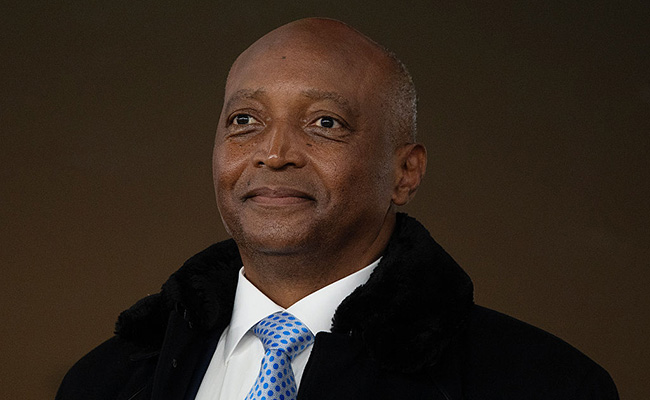
It is understood the demand for an overhaul of the executive came from a group of shareholders led by Differential and including Patrice Moyal’s Visio Capital.
When contacted, Anthonyrajah would not reveal too much, though he did concede there have been some hard talks over some time with the company around instilling greater “discipline” in how to spend money.
“There is enormous potential here, but some of its capital allocation decisions haven’t covered it in glory. It bought Nama Copper in 2023, for instance, and a new plant, which took its focus off bringing the existing reserves to production. Then it ran out of money and had to ask shareholders for new capital – and no-one was going to sign a blank cheque,” he says.
Anthonyrajah says that Differential manages money for pension funds, so it was determined to make sure that the proceeds from the rights issue would be used to ensure those copper assets proceed towards production.
One of the sticking points for a number of shareholders, it is understood, was that Copper 360’s management team had allowed its designated adviser, Bridge Capital, to charge 2.5% in fees. The circular shows that Bridge’s fee of R28.6m accounted for the majority of the R35m in costs for the deal.
Differential declined to comment on whether it saw this as extortionate.
Pieter Veldtman, a director of Bridge Capital, says the fee was “not only market-related, but probably at the bottom end”, given that the value of the total restructuring it advised on was R1.15bn. On this score, the fee was about 2.4% – but if you look at it as only relative to the R400m rights issue, then it was 7.1%.
“Our fees were accepted by the board and were never contentious,” he tells Currency. “Of course, if you misinterpret this as just being for the rights issue, then it would look steep. But our work was for far more than that – raising cash through the rights issue, the restructuring of the debt, and getting agreement from the debt holders,” he says.
Nonetheless, Bridge has agreed with the company’s management to restructure the payment terms, Veldtman says – though he won’t say how. But he says the board ructions were, to some extent, part and parcel of a mining company in this phase of life.
“You have shareholders, board and executives who aren’t necessarily in conflict, but it’s natural that there are differences of opinion and areas of friction,” he says.
While it appears that Differential Capital has decided to play a far more muscular role as a shareholder, Veldtman says Bridge has “nothing but the highest respect for Differential, which has been a loyal shareholder and very much sees the underlying opportunity”.
Asked about the payment to Bridge, Briggs says its fee was “relatively small, after it had been renegotiated”.
Start of something big
While it’s clear that, as Veldtman says, there are competing ideas on how to exploit this resource, everyone involved sings off the same hymn sheet when it comes to Copper 360’s potential.
Briggs, for instance, says that Copper 360 sits right in the sweet spot of contemporary mining – a pure-play copper company in an economy awakening to the realisation that the world’s current supply isn’t nearly enough for a future premised on technological innovation.
“On paper, the reserves may not look that impressive because the mine wasn’t drilled with copper production specifically in mind. But those assets – those on the surface, near the surface and those waiting to be exploited – have incredible potential,” he says.
But those mines, he warns, require people with “good mining experience” to grow them, rather than simply financial engineers.
Veldtman, for his part, speaks almost lyrically about Copper 360.
“It’s really a beautiful story whose time has come. At the centre is this metal, which has changed from being an ugly duckling that nobody wanted into a commodity reborn in a world with renewables, electric vehicles and massive demand for electrification, where there isn’t enough supply.”
For Anthonyrajah, the economic potential makes this investment a no-brainer, provided it is managed right. He says that Copper 360, worth R2.1bn on the JSE right now, could easily be worth five times that, based on the reserves confirmed by the geological mineralisation reports, according to data from the previous owners, Gold Fields and US company Newmont.
“This is not just based on what is underground in those mines already, but also on what we believe is likely to happen to the copper price in the next few decades as the world reaches a copper cliff,” he says. “There is so little copper supply available globally to meet the demands not just for renewable energy, but also for basic electrification. And where there is supply, it is often deep underground and hard to extract.”
This isn’t his view alone.
India’s government, for instance, last year warned of a potential “copper shock” as it is wholly reliant on copper imports to provide electricity for its expanding middle class.
And in 2024, diversified miner BHP spoke of how copper has become “indispensable” to the world’s energy systems and modern technology as the most conductive industrial metal, while forecasting that demand would grow by 70% to over 50-million tons per year by 2050.
No new supply is “likely to come cheaply, easily or, unfortunately, promptly”, BHP warned. “Against optimistic supply forecasts, which include the development of all probable copper projects, a significant gap to expected demand in 2035 is evident, even with our positive view on copper scrap supply,” it said.
In other words, for companies like Copper 360, the opportunity is clear.
But, says Anthonyrajah, Copper 360 cannot afford any management slip-ups. “There is of course risk in any mining project. But for us, we’d like the risk to relate only to what happens to the copper price – not on whether management can capitalise on that,” he says.
ALSO READ:
- Inside the scramble for copper: Can prices rise another 50%?
- Copper 360’s R1.15bn restart
- Why the copper market short-circuited
Top image: worthpoint.com; Rawpixel/Currency collage.
Sign up to Currency’s weekly newsletters to receive your own bulletin of weekday news and weekend treats. Register here.