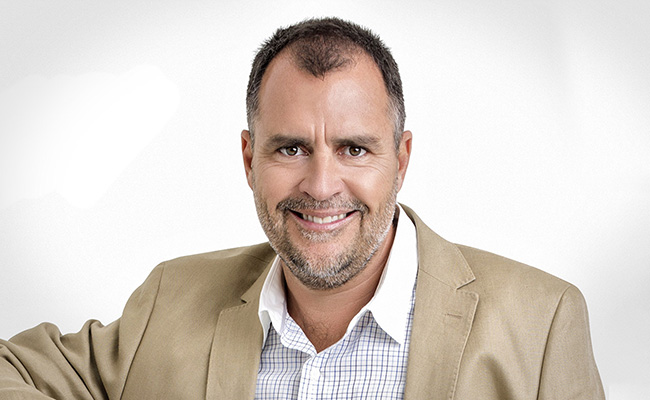

André Kriel, general secretary of the Southern African Clothing and Textile Workers’ Union (Sactwu) has called on “Iqbal Survé’s entities” to pay back the workers’ money that was used to help fund the purchase of Independent Media from the Irish-owned Independent Group in 2013.
For the past 13 years Sactwu has received neither interest nor repayment on the R150m that it lent to Sekunjalo Independent Media (SIM) to help purchase what, at the time, was the largest English-speaking newspaper group in the country.
The union says it needs the money to help protect workers’ jobs and fund funeral benefits, and the very good news for Sactwu and its members is that the Supreme Court of Appeal (SCA) has confirmed that SIM has to repay the union a boatload of money. R458.6m to be precise – which is what the loan is now deemed to be worth, plus interest from August 2023 and legal costs. The not so good news is that, given the history of this deal, finding that cash will be almost miraculous.
Total reversal
The ruling represents a total reversal of an earlier high court decision that SIM had no immediate obligation to repay the R150m loan. That’s because a controversial subordination agreement signed by Kriel in late 2017 let SIM off the hook, said the court. In terms of that agreement SIM would only have to repay Sactwu once its assets exceed its liabilities which, at no stage since 2017 has been the case, and so will likely never happen.
With sales of its main newspapers (Cape Times, Cape Argus, Star) in low single-digit figures and falling, there’s little chance of SIM ever being solvent. One industry executive estimates SIM needs a monthly injection of about R5m just to keep the business going. “But it’s hard to know for sure. It’s quite a Byzantine organisation; it’s difficult to know where it begins and ends,” he tells Currency.
In fact, it is possible SIM is now little more than a shell company. Does it even hold the newspaper assets? All in all, it’s difficult to know what value, if any, Sactwu will get out of the court order.
The Sagarmatha unicorn
To understand the latest development we need to go back to 2017 when, after receiving no interest payments on its R150m loan to SIM, Sactwu Investment Group (SIG) decided to seek early repayment (the agreed maturity date was August 2020).
According to the SCA, SIG held discussions with Survé about a possible exit strategy. At the time, Survé was working on the listing of Sagarmatha, an entity intended to hold all the Survé/Sekunjalo electronic and technology businesses as well as media interests. So, in October 2017, Survé made a formal proposal that Sekunjalo Investment Holdings would acquire SIG’s loan in exchange for Sagarmatha shares.
At the time Survé told SIG that “Sagarmatha had attracted to its advisory board and as shareholders, some technology billionaires from the USA, Holland, China, Singapore and India”, said the SCA.
Survé claimed the company would be Africa’s first unicorn – valued at more than $1bn – and compared it to companies like Uber and Amazon.
Even so, there was little indication that SIG or Kriel was swayed by all the talk of “unicorn” value and the great prospects claimed for Sagarmatha. They made no secret of their intention to sell the Sagarmatha shares as quickly as possible after the listing – planned for April 2018, though SIG did eventually agree to a three-month lock-in period (down from the six months Survé wanted).
Survé’s Sagarmatha offer was accepted by SIG for its claim (by then valued at R334m) and the sale agreement was signed on November 22.
Left holding the loan
As we all know, for technical regulatory reasons, Sagarmatha was not listed. Consequently, the agreement did not take effect, so SIG was left with its SIM loan. Except now its value was a little more uncertain because on December 1 2017 – 10 days after the sale agreement had been signed – SIM had persuaded Kriel to sign a subordination agreement.
At the time, SIM’s chief financial officer, Takudzwa Hove, explained to Kriel that subordination of the SIG loan was needed for the Sagarmatha listing and that it would lapse one week after the listing. (Remarkably, according to the SCA papers, SIM also managed to get the Government Employees Pension Fund to subordinate its claims in favour of SIM’s other creditors.)
After Sagarmatha’s listing was blocked, it was apparently assumed by all concerned that the sale agreement and the subordination agreement had fallen by the wayside. Survé discussed ways to repay the R150m loan, though nothing came of those talks.
Eventually, in April 2019, SIG sued SIM for repayment.
It was then that the subordination agreement came roaring back into life. SIM argued that in terms of the agreement, SIG was not entitled to demand or sue for repayment until SIM’s assets exceeded its liabilities. Furthermore, said SIM, Kriel had the authority to conclude the agreement and had been assured this authority by the same SIG board resolution, signed November 22 2017, that had granted him the authority to sign the Sagarmatha agreement. That resolution had entitled Kriel to take all “reasonable and necessary” action needed to implement the Sagarmatha deal.
No authority
SIG argued that Kriel had no such authority and that the agreement was unenforceable or voidable on the doctrine of reasonable mistake or misrepresentation. But the high court agreed with SIM that the resolution gave Kriel the authority, and that Kriel had read the subordination agreement and so could not claim error.
The SCA took an entirely different view. It describes the almost furtive manner in which the subordination agreement came to life. There were no discussions or negotiations about it between SIM and SIG before it was abruptly presented to Kriel for his signature. When Kriel asked Hove about its intention, purpose and duration, he was told the subordination agreement was necessary for the Sagarmatha listing and would lapse days after the listing.
In her ruling, SCA judge Thandi Norman pointed out the purpose of the all-important resolution was to enable SIG to exit the loan agreement by authorising its directors (chiefly Kriel) to ensure that the sale agreement was given effect to. “That was its sole purpose … Nowhere in the sale agreement is there any mention of the subordination agreement,” Norman wrote.
“Most importantly,” she added, “both the sale agreement and the resolution were signed on the same day, November 22 2017. A subordination agreement that was placed before Mr Kriel on December 1 2017, some nine days after the passing of the resolution could not have been within the contemplation of SIG’s board when the resolution was passed.”
Worse off than before
In other words, an open-ended subordination agreement, which would continue indefinitely even if the listing failed, said Norman, “cannot be described as ‘reasonable and necessary’ to implement a transaction whose entire purpose was to enable SIG to exit the loan through the listing”.
On the contrary, “such an agreement would ensure that if the listing failed, SIG would be left in a worse position than before, unable to recover its loan, remediless and without the Sagarmatha shares that it had bargained for”.
The subordination agreement, said the SCA, had nothing to do with the Sagarmatha sale agreement. Therefore, the resolution granting Kriel the authority to complete the sale agreement did not extend to the subordination agreement and Kriel “lacked actual authority to bind SIG to the subordination agreement”.
No authority meant no subordination agreement. SIM had to repay the loan without delay.
And now for the appeals
More good news for SIG is the agreement, entered into with SIM in August 2023 ahead of the SCA appeal, that if SIM lost the appeal, it would pay R458.6m to SIG. In addition, it would pay interest from August 2023. This means SIG gets around the in duplum rule, which would cap the amount of interest it would ordinarily receive.
An evidently relieved Kriel told Currency that the SCA has clinically cut through all the lies and confirmed the truth. “From us, posed directly to Dr Iqbal Survé’s entities, only one question remains: when will you pay back the workers’ money?”
Not soon, would be the likely answer.
In a statement on the IOL website, SIM chair Lucien Jacobs said it was important to clarify that “this matter does not involve Independent Media as an operating business”.
Sadly, for SIG and its workers, it’s likely that SIM will appeal the matter to the Constitutional Court, which means this long battle has a few more years to run. The only alternative course of action would probably involve the liquidation of the insolvent Sekunjalo Independent Media – a potentially equally fruitless outcome.
ALSO READ:
- Ayo: A pathetic end to a shameful beginning
- Johnny Copelyn, the union and the activist investor
- Ayo’s legal headaches mount
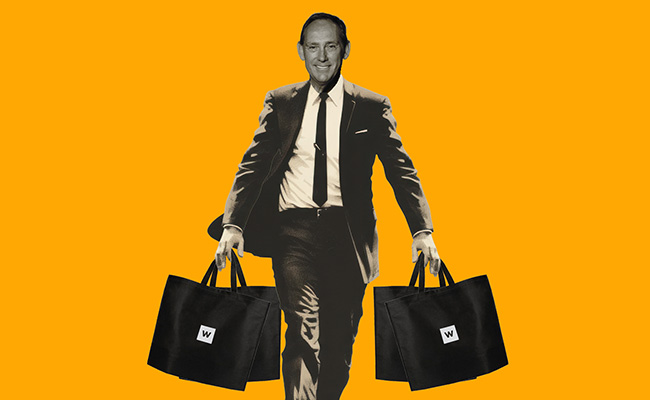
Top image: Iqbal Survé. Picture: Gallo Images/Wessel Oosthuizen.
Sign up to Currency’s weekly newsletters to receive your own bulletin of weekday news and weekend treats. Register here.