
I love Joburg. That was not always an easy sentence to write. A year ago, I had reached a point of fatigue, worn down by the daily grind of dysfunction. So, I wrote about my city, a kind of reckoning. In interrogating my frustration, something shifted; I fell back in love with her. Not with an idealised version of the city, but with her stubborn, unfinished reality. What I had not yet understood was that loving her meant learning to see differently.
That piece opened conversations with people committed to correcting course in my home city. One was David van Niekerk, CEO of the Johannesburg Inner City Partnership, who introduced me to the Walkable Network, a long-term rethinking of how the inner city might function if movement, safety and coherence were taken seriously.
Practically, the team have looked at how pedestrians in Joburg use the city, and where they walk. From that they’ve mapped an actual set of routes that they are focusing on, but it’s a partnership-based model so it requires buy-in from everyone, from actual walkers to property owners, the city, even waste management.
A first step
The chat with Van Niekerk and the idea stayed with me. Soon, walking began circling my thoughts, alongside a sharpened attention to the city itself.
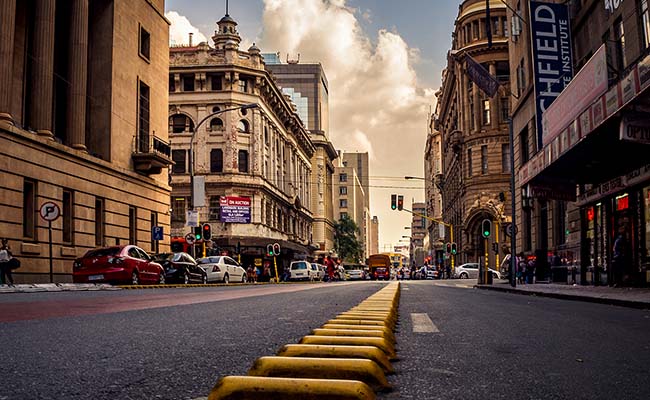
Every now and then, I chose to walk instead of drive. Living in town, it was a possibility I had long ignored. So, I did. Not habitually, just occasionally. Enough to alter my engagement. Enough to experience the city at street level rather than through a windscreen. These walks were not about mapping routes. They became about paying attention.
Walking opened space for encounters that lingered long after we parted. The reactions I encountered revealed something I had been insulated from: a white guy walking around town was unexpected enough to be remarked on. Walking placed me inside the city’s assumptions. Hers about me, mine about her.
The Walkable Network became, and remains, a lens through which my movement makes sense. Recently, I revisited that conversation to understand its ambition more clearly.
Logic, not beautification
The Walkable Network is not a beautification scheme. It is a planning logic, a corrective lens that asks a city with limited resources to invest deliberately. In the right things, in the right places, at the right time. It prioritises pedestrian routes linking transport hubs, housing, employment and public spaces, not to impose order, but to concentrate effort.
Walking with this in mind sharpens perception. Pavements dissolve without warning. Traffic lights remain dead at busy intersections, forcing uneasy negotiations between pedestrians and motorists. Lighting works just long enough to suggest care before falling away. These moments shape how you move, where you pause, what you avoid.
The thinking behind the Walkable Network treats walking as both literal and symbolic. Streets where people move safely matter. Globally, walkability signals urban health. Cities that function well are places where walking is ordinary and unremarkable.
New York City’s High Line offers a useful precedent. An abandoned freight rail line was transformed into a linear public park threading through dense neighbourhoods. Targeted public investment restored confidence in a neglected spine of the city, unlocking housing, commerce and public life around it. The lesson was not aesthetic spectacle, but disciplined alignment.
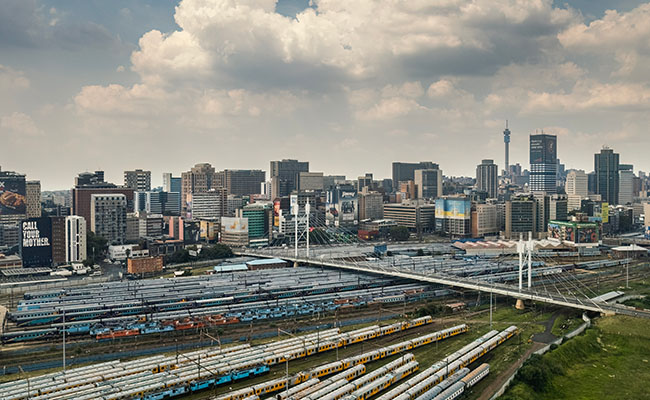
That alignment matters particularly in Joburg, where housing has arrived faster than community infrastructure. Buildings convert, residents move in, yet public space lags. The Walkable Network responds by identifying where effort can accumulate, including small, adaptable public spaces carved from overlooked corners, places designed to evolve rather than calcify. Not monuments, but spaces that hold people.
Alignment, and its absence
Seen from the pavement, Joburg’s struggle with alignment is obvious. The Walkable Network has been adopted into the city’s transport masterplan, yet buy-in remains uneven.
This becomes apparent block by block. Care accumulates, then evaporates. Momentum builds, then stalls. Yet commitment is evident in parts of the inner city through the work of local city improvement districts, which repair pavements, pay for security and CCTV facilities, and liaise with the city. These efforts, funded by local property owners, bring a sense of order to those city blocks.
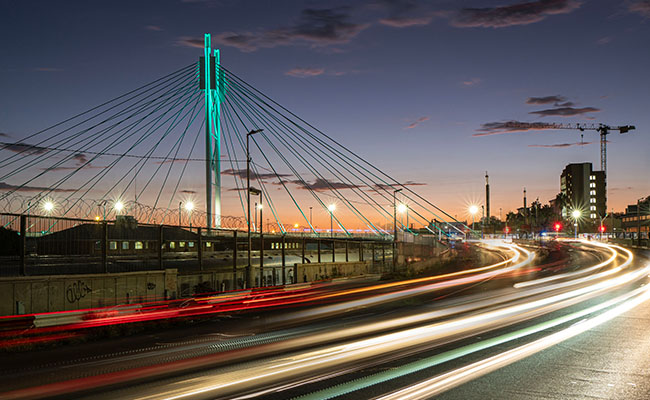
Still, there are examples of what focus can achieve. Jozi My Jozi’s strategic lighting and infrastructural interventions, including upgrades to the Nelson Mandela Bridge and the Ellis Park precinct, have shifted how parts of the city are perceived and used. Play Braam’s cultural anchors, from a rooftop basketball court to new jazz club, Hugh’s, in Braamfontein, have drawn people back into the inner city. The Braamfontein improvement district co-ordinates services that allow streets to feel held and navigable. These efforts echo the same principle: sustained, deliberate care changes how space is experienced.
The long view
When I ask how far along the Walkable Network is, Van Niekerk is candid. “We are at the first 1%,” he says. It is not defeatist. It is precise. Five to 10 years for meaningful investment. Decades to repair what is broken.
At the heart of the initiative sits a simple premise. Solutions that do not involve people actively will not work. The sequence is consistent: clean first, then safe, then welcoming. Walking the city, that order reads less like theory and more like lived truth.
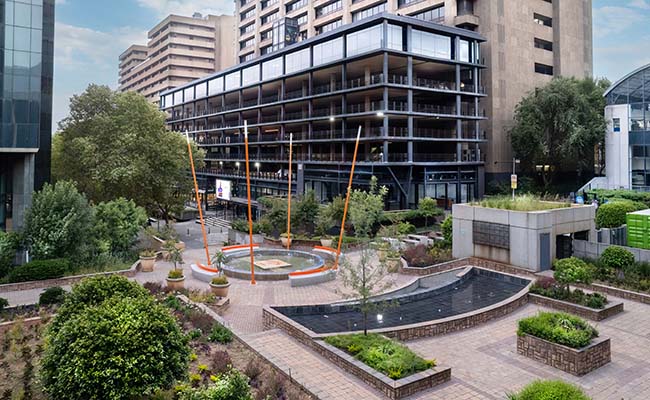
On reflection
Walking the streets now, I realise what has shifted is not Joburg herself, but the terms on which I meet her. The Walkable Network gives language to something I have sensed for some time: regeneration does not arrive fully formed, nor announce itself. It begins in alignment, in choosing where to focus, in investing care where it can accumulate.
Walking teaches patience. It tempers expectation. It reveals how change happens in Joburg, block by block. Perhaps that is why the launch of Main Street Sundays on April 12 feels timely. Led by Jozi My Jozi, the open-streets initiative will, for a day a month, return sections of Main Street to pedestrians, inviting walking, cycling, music and gathering to take precedence over traffic. For a few hours, the city will rehearse a different rhythm. If the Walkable Network is the long view, Main Street Sundays is a glimpse of that view in motion, streets not merely passed through, but inhabited.
Joburg remains difficult. She always has been. But perhaps that is why these moments matter. When we walk her streets with intention, when we choose alignment over drift, something begins to gather. Not a grand transformation, not yet, but a steady insistence that the city belongs to those who show up for her. In that insistence, I find something steadier than optimism. I find belief.
ALSO READ:
- Joburg’s centre cannot hold. And yet it does
- Hidden in plain sight: Why you must visit JCAF
- When business becomes government’s crutch
Top image: Ryan Enslin.
Sign up to Currency’s weekly newsletters to receive your own bulletin of weekday news and weekend treats. Register here.