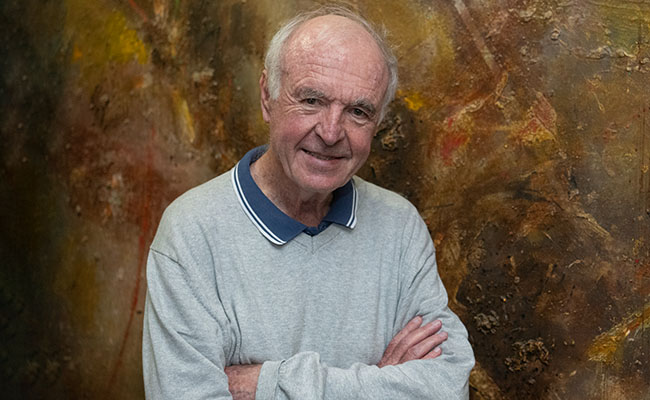

Clem Sunter, who died last week at the age of 81, left South Africa and the world with a conundrum: was he himself a hedgehog or a fox?
Sunter was deeply influenced by one of his Oxford university dons, philosopher Isaiah Berlin, who famously wrote a throwaway essay called The Hedgehog and the Fox in 1953, which subsequently became one of his most popular books. The foundational idea was that a fox knows many things, but a hedgehog knows one big thing.
Sunter will forever be known as the country’s most respected and adored scenario planner, and in that sense he was a hedgehog in Berlin’s classification; scenario planning was his one big thing.
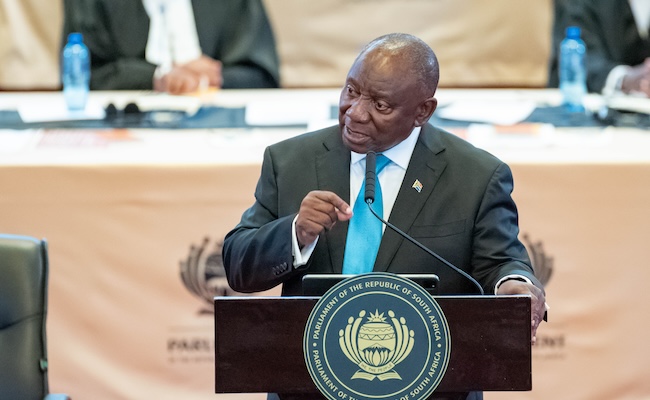
His history of scenario planning went right back to before the democratic transition, and was acknowledged this week by President Cyril Ramaphosa, who described Sunter’s “high road, low road” scenarios as “focusing the attention of political movements, of his peers in the economy, and of ordinary citizens on the character and future of our nation”.
It continued for his whole life through the “Mont Fleur Scenarios”, more than 15 books and a life as a speaker, corporate consultant and thinker.
Channelling the fox
But despite the hedgehog-like focus on scenario planning, Sunter’s own personality was more like that of a fox, an entrancing mix of caution, curiosity and opportunism. His co-author of the Fox series of books, Chantell Ilbury, says a core part of his philosophy was an idea introduced when Sunter was part of Anglo American, by oil company Shell’s scenario planner, Pierre Wack.
At the time Anglo was trying to make sense of crazy commodity price movements, just as Shell was doing the same with the vacillating oil price. Wack, Ilburg says, made the point that it’s better to be vaguely right than precisely wrong. As soon as you accept that fundamental starting point, you can’t build a single projected future, you have to build scenarios.
One of the critiques of the “high road, low road” scenarios is that the model is essentially simplistic; the choice is obvious: who in their right mind would choose the low road? Yet, Ilbury says, typically for Sunter, this was deliberately part of the construction; in very complex situations, the initial decision should always be a bracingly simple fork in the road; a choice made visible. Simplicity was the point, says Ilbury, because it was “simplicity on the other side of complexity”. He wasn’t standing at the lectern telling South Africans what to think so much as showing them, with disarming clarity, what different choices would likely produce.
“Clem Sunter’s ‘high road, low road’ scenario during the late 1980s had a major impact on thinking within the National Party government at the time,” says Roelf Meyer, politician and chief negotiator for the National Party government during the constitutional negotiations.
“I can recall a presentation he made to senior security officials, probably around 1987, which influenced thinking towards the acceptance of the need for change. For the politicians, his message was that the ‘high road’ scenario will liberate white people and in particular the Afrikaner too.”
A ‘pop star on the sociopolitical talk-show circuit’
But it wasn’t just the message, it was also the messenger.
Ilbury’s son Mitchell, with whom Sunter wrote his last book, Thinking the Future, wrote in a News24 tribute that thousands of South Africans can remember precisely where they were when they first heard Sunter give one of his many thousands of speeches, which he would deliver with infectious enthusiasm, humour and great warmth.
Sunter loved telling jokes, fraternising and playing the guitar. In his tribute on Facebook, writer Gus Silber said Sunter, in his sleeveless cardigan, with his tie slightly askew and his shirt unknowingly untucked at the back, was a reminder of the kind of teachers whose classes you looked forward to in high school, even when you didn’t have the faintest clue about the subject.
His delivery was just consummate, and part of the reason he became a “pop star on the sociopolitical talk-show circuit”. But, writes Silber, he didn’t want people to sit there, nodding their heads and agreeing with the scenarios he sketched, his felt-tip pen dancing across the slides for the overhead projector.
“Consensus can be a dangerous thing,” he told Silber when interviewed for a feature in Style magazine in 1987. “Some people would rather be wrong than different. It doesn’t necessarily give me a warm feeling when other people agree with our scenarios. That’s not the point.”
The point was the ability to make decisions on the basis of the scenarios: “And that’s where we brought the fox: adaptable, agile, don’t have the single projected outcome but you do need to be able to change your decisions if you can see flags that are happening around us.”
Not prediction but preparedness
In contrast to his earlier life as a public figure, Sunter – with Ilbury – spent the past decade consulting largely behind the scenes to something like 800-1,000 organisations, especially in sectors forced to make long-term decisions under high uncertainty – mining, agriculture, manufacturing, water, and climate-linked work in South Africa and abroad. Their focus was not prediction but preparedness, not confidence but adaptability, not the brittle fantasy of one projected future but the fox-like discipline of watching the flags and changing course when reality changes.
Sunter spent a lifetime warning us against the arrogance of certainty and teaching us instead the discipline of alternatives, the moral seriousness of consequences, and the civic necessity of imagination.
He leaves his wife, Margaret, children Katy, Dave and Rob, and seven grandchildren.
Top image: Clem Sunter. Pictutre: Gallo Images/Die Burger/Jaco Marais.
Sign up to Currency’s weekly newsletters to receive your own bulletin of weekday news and weekend treats. Register here.