
You’ve all seen the memes by now: videos of elderly gents dancing in jubilation while the wags on social media say rude things about the (very) long wait that silver bulls have endured since the Hunt brothers tried to corner the market in 1979.
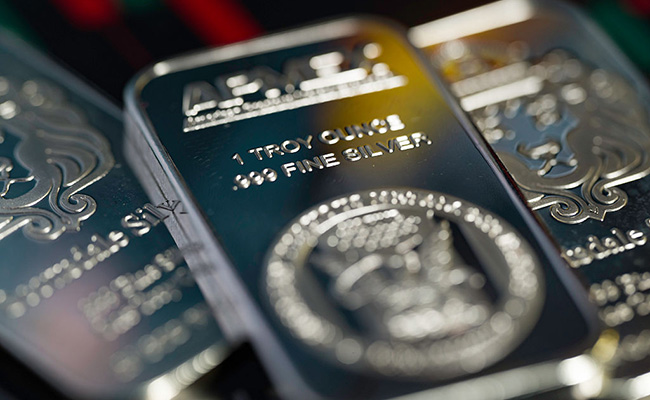
For now though, die-hard fans of the precious metal are having the last laugh, for it is silver, not gold, that has truly gone parabolic in price in the past year, rallying from $28 an ounce in January 2025 to $113.
That’s not to say that there hasn’t been a longstanding relationship between the two metals.
The earliest known formal valuation of gold relative to silver dates to around 3100 BCE, during the reign of Pharaoh Menes of Egypt’s first dynasty. Menes established a ratio of approximately 2.5:1 (2.5 units of silver equalling one unit of gold). For the Egyptians, silver was relatively scarce, while gold was more abundant from Nubian and Ethiopian sources along the White and Blue Niles.
Over time, the ratio shifted with supply and demand. In Mesopotamia, silver shekels served as a proto-currency before the Athenian silver tetradrachm (the iconic “owl” coin) emerged as the Mediterranean’s first international standard around the fifth and fourth centuries BCE, with the ratio stabilising near 10:1. The Roman empire set it as low as 8:1 in the Republic era, with the high-purity silver denarius underpinning military pay and commerce for centuries.
By the 16th century, the Spanish empire’s “piece of eight” (silver real de a ocho) became the global trade currency for nearly 400 years, powered by its vast South American mines.
Interestingly, the three-month London Metal Exchange (LME) contract was established precisely because it took about three months to sail metal from South America to London.
Europe’s ‘Price Revolution’
Contemporary records from markets like Amsterdam indicate one ounce of gold bought roughly 11 ounces of silver in the early 1500s, while massive South American silver inflows later pushed the ratio higher – to 16:1 by the 17th century – fuelling Europe’s “Price Revolution” and widespread inflation.
Even in the early history of the US, the Coinage Act of 1792 legally defined the US dollar in terms of specific weights of gold and silver – 1.604g of pure gold or 24.1g of pure silver, establishing a ratio of approximately 15:1.
Today, the silver-to-gold ratio is whatever the market decides. And as of December 1 2025, the gold-to-silver ratio stood at about 80:1 (silver at ~$57-$58 an ounce, with gold in the mid-$4,000s). By January 28 2026, it has squeezed dramatically to approximately 45:1-50:1, with silver surging to $110-$116 an ounce while gold hovers near $5,200-$5,300. This reflects silver’s parabolic ascent, outpacing gold significantly.
Enter JPMorgan
The pivotal moment emerged around Thanksgiving 2025, as China approached JPMorgan to acquire its substantial physical silver stockpile. JPMorgan, recognising the global implications, quickly unwound its financial short hedges. Though declining to sell its own holdings, the bank helped source additional material for China, while no doubt placing its own extreme long bets on the market, likely under the cover of “market making”.
Word spread rapidly among major LME participants, prompting many to exit shorts and accumulate physical positions. By Christmas, silver had rallied from ~$52 an ounce to $72. Into 2026, where retail awareness has exploded, doomsday preppers and long-time physical holders celebrated on platforms like X with “I told you so” posts, vindicating years of accumulation.
Yet the irony has been swift in following: the same buyers are now lamenting dealers’ refusal to repurchase their silver at anywhere near spot, demanding 20%-30% discounts. Dealers, wary of a speculative bubble, are of course hesitating to buy high amid extreme volatility.
The anecdote reveals an important insight: physical silver is only valuable in a true systemic collapse, where financial markets cease functioning and barter on the streets dominates. Besides, in that scenario, essentials like beer, bullets, food and cigarettes are likely to outperform silver as currency.
Having said that, silver’s rally stems from actual structural fundamentals. Industrial demand from photovoltaics is dominant, with a typical solar panel requiring 15g-25g of silver for conductive paste. The sector now comprises about 20%-30% of global industrial use (far eclipsing outdated photography applications). China’s dominance in PV manufacturing has concentrated the risk, as massive capacity additions outstrip mine supply, creating a persistent deficit environment.
Beware the FOMO
The question now is: how far can this run extend? Fundamental supply and demand dynamics suggest the move has legs to run still. China continues aggressive panel production like a zealous communist owning its means of production – yet technical analysis points to a near-term top-out this week or next.
A classic 50% retracement would be devastating. Given ongoing buying from entities like JPMorgan and China, a milder 20%-30% pullback seems more plausible. The moral of the story? Greed and FOMO will always drive bubbles, from bitcoin to silver to gold. And fear will in due course have its own turn at the roulette table.
Still, remember that silver differs fundamentally from gold. Gold is increasingly hoarded as a store of value as central banks around the world prepare for an eventual US debt default, whereas silver disperses into the economy via tiny amounts in solar cells, electronics, EVs and AI infrastructure – becoming lost or unrecoverable.
While the ratio may stabilise between ancient norms (10:1 in Greece) and recent extremes (80:1 at Thanksgiving 2025), silver’s industrial destiny will drive its future, versus gold’s safe haven and monetary demand.
Either way, investors would do well to curb their enthusiasm with the lessons from centuries past.
Bevan Jones is an ex-commodities broker, trader and resources consultant. He lives now as an off-grid homesteader while offering commodity-market advice to clients at www.africansource.co.za.
ALSO READ:
- So, you want to buy some silver?
- Gold pierces $5,000 – what’s next?
- Inside the scramble for copper: Can prices rise another 50%?
Top image: Jonathan Raa/NurPhoto via Getty Images.
Sign up to Currency’s weekly newsletters to receive your own bulletin of weekday news and weekend treats. Register here.