
South Africa’s last-minute fuel-levy cut has spared motorists the very worst of an April price shock that threatened to slam straight into inflation and the interest-rate outlook of the South African Reserve Bank (SARB).
The bigger question now is whether Enoch Godongwana’s R3-a-litre, one-month intervention will matter at all if the Iran war drags on and oil stays high. The government says the reduction in the levy will run from April 1 to May 5, cost about R6bn in forgone revenue, and be recouped within the fiscal framework.
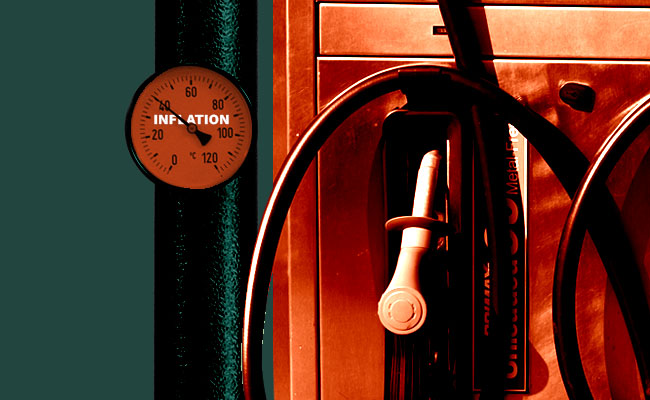
Even after the relief, the increases are brutal. Petrol 93 and 95 both rise by R3.06 a litre from April 1, while diesel jumps by a record R7.37 a litre for 0.05% sulphur and R7.51 a litre for 0.005% sulphur. That pushes inland diesel to record highs of R25.90 a litre and R26.11 a litre respectively, above the July 2022 peaks. Petrol rises sharply but remains below its July 2022 high of R26.74 a litre for inland 95.
It’s little wonder that queues snaked around filling stations across the country yesterday. Many stations ran dry as drivers panicked over reports of shortages and the jump in prices, despite government’s assertions that there is enough supply. Social media posts were awash with photos of people queueing to fill up at pumps, with pieces of paper stuck on them reading: “No petrol.”
‘Really not a crisis’
The chaos was briefly compounded by a controversial move from TotalEnergies, which advised some service-station owners last month to start lifting diesel prices ahead of the official adjustment by as much as R8 a litre. The instruction was later withdrawn after pushback.
Reggie Sibiya, CEO of the Fuel Retailers Association, tells Currency that claims of a shortage have been overstated. The real problem was a logistics and distribution backlog triggered by social media panic and hoarding rather than a collapse in national supply. “The average sites that were out of stock last week were 226,” he says. “And these past two days, only 140 sites reported to be dry. So it’s really not a crisis.”
For Kevin Lings, chief economist at Stanlib Asset Management, the minister’s intervention was bigger than expected. “We don’t have details on how this remains fiscally neutral, but that intention probably reflects the pushback from National Treasury.”
Treasury can probably absorb one month, he says, “but a second month of R6bn becomes problematic, with a third month pushing the relief to the extreme”.
Markets are more likely to tolerate a one-month shock absorber because the finance ministry has spent months rebuilding credibility around fiscal consolidation – talking up a primary surplus, a narrower deficit and a debt ratio that is finally stabilising.
Against that backdrop, investors may be willing to accept a temporary deviation if it clearly softens the inflation hit and is kept within the existing budget framework. “From a bond market perspective, the more modest impact on inflation helps,” Lings says. “It also helps that many other countries are having to do something similar using government balance sheets.”
Treasury’s 2026 budget projects a primary surplus of 0.9% of GDP this year, a narrowing consolidated deficit and debt stabilising at 78.9% of GDP.
Brace for May
When fuel prices surged after Russia’s invasion of Ukraine, the government first held fuel and Road Accident Fund levies steady in the 2022 budget, then cut the general fuel levy by R1.50 a litre for nearly three months.
“What helped was that the fuel price rose over a few months rather than all at once. We seem to adjust better to a few smaller shocks than one big shock,” Lings says, noting that petrol inflation rose above 50% year on year in July 2022 and the SARB still had to steer the economy through a bruising tightening cycle.
“We are still looking at a large increase in May unless the oil price moves noticeably lower soon, which compounds the upward pressure on inflation.” He also warns that households may respond badly to a softer sequence of increases. “There is a risk that consumers don’t change behaviour that much when faced with a series of smaller increases rather than a big shock increase. This means consumers could use credit to absorb the price increase rather than actively drive less or switch modes of transport.”
Lings expects the fuel-price shock to push inflation up from an expected 3.1% in April to about 4%. That, he says, “is not a disaster if the conflict ends during April”.
But the longer oil prices stay above $90 (Brent crude traded at about $107 a barrel on Tuesday), the more damage is done to inflation expectations and the less likely a series of rate cuts South Africa had been counting on.
Before the Iran war, Stanlib had expected 100 basis points of cuts over 18 months, which would have boosted confidence, attracted foreign inflows into the bond market and reinforced the tentative growth recovery. “That upside is slipping away,” Lings says.
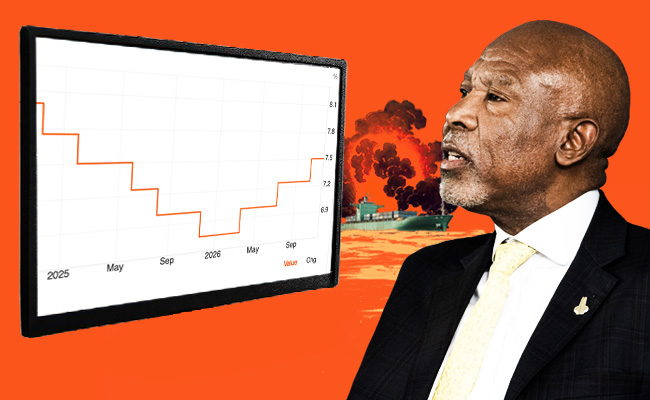
In March the SARB warned that fuel inflation could top 18% in the second quarter and that a prolonged oil shock could push headline inflation above 5%. It kept rates unchanged at 6.75%.
‘Least fiscally costly’
Siphamandla Mkhwanazi, senior economist at FNB, says the cut in the levy is “probably the least fiscally costly move the government could have done”. In his view, the intervention should have a “meaningful impact on inflation”, potentially keeping the peak within the SARB’s target band of 3%, plus or minus one percentage point.
“Depending on how long the war lasts and the extent of the damage to energy infrastructure, this relief potentially reduces pressure on the SARB to hike rates.”
John Loos, an independent economist, is more sceptical about the macro significance. A R6bn one-off is manageable in a budget of more than R2-trillion – but only if it stays a one-off. The problem is not one month of relief; it is the risk that relief becomes sticky if oil prices stay high into May and June. It softens the direct fuel-price hit but may not stave off second-round effects through transport, agriculture and other goods.
In his framing, the measure is a useful shock absorber, but small relative to household disposable income – which stands at more than R5-trillion – and smaller still relative to South Africa’s longer-term need to fund infrastructure and capital spending rather than yet another emergency patch.
Gina Schoeman, head of economics for Central and Eastern Europe, the Middle East and Africa at Citi, still expects the SARB to hold rates this year, with the possibility of a rates increase.
“One must be wary that a lower fuel price keeps up fuel consumption, which remains a concern in South Africa’s supply constraints,” she says in a note. “We don’t believe government would agree to the price reduction, however, if it thought there was a supply risk.”
ALSO READ:
- Why South Africa needs to brace for rate hikes
- What Iran’s war means for African economies
- Countries tap oil reserves amid Iran fallout
Top image: Gallo Images/Misha Jordaan; Pexels/Jan van der Wolf; Currency collage.
Sign up to Currency’s weekly newsletters to receive your own bulletin of weekday news and weekend treats. Register here.