
Government third-party road accident insurer the Road Accident Fund (RAF), which is drowning in claims liabilities of more than R40bn and a balance sheet still deep in deficit, must now pay post-judgment interest automatically on every late settlement and pay off a hospital that closed after it reneged on its payment obligations.
The Supreme Court of Appeal (SCA) handed the RAF two resounding defeats on the same day this week, exacerbating the acute institutional crisis for the fund, which has been the subject of blistering parliamentary scrutiny.
The first case, RAF vs Sheriff of the High Court, Pretoria East and Others, and its companion matter, RAF vs Stoffels and Another, addressed a question the fund has been litigating across multiple high courts for years: is it obliged to pay interest on late judgment debts even when the original court order is silent on the subject?
The answer, the SCA held unanimously, is yes – and it always has been.
Writing for a three-judge panel, justice Keoagile Elias Matojane reaffirmed that under section 2(1) of the Prescribed Rate of Interest Act, every judgment debt bears interest automatically from the day it becomes payable, unless the order expressly states otherwise. No additional court order is needed. No claim in summons is required. The interest runs as a matter of law.
In RAF matters specifically, that clock starts ticking 14 days after the court hands down its order, per the RAF Act’s own grace period.
The RAF had argued strenuously that a 1997 amendment to the interest legislation – introducing provisions for interest on unliquidated debts – effectively replaced this automatic mechanism for compensation claims of the type it pays. The court dismissed that argument as a confusion of two distinct legal concepts: pre-judgment interest, governed by the newer provisions, and post-judgment interest, which has operated ex lege (as a matter of law) since the 1970s and is not displaced by the amendment.
The RAF also invoked res judicata – the legal principle that a matter once decided cannot be relitigated – arguing that claimants who had not obtained express interest orders at trial had forfeited any interest claim. The court rejected this too. Silence in a judgment is not a determination. It is simply silence.
Unpaid invoices
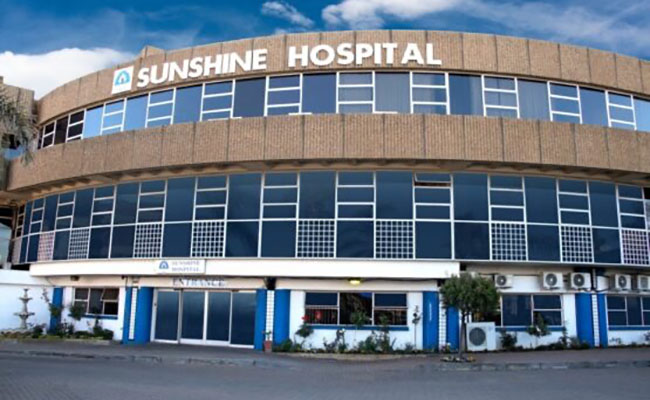
The second judgment, Newnet Property (Pty) Ltd t/a Sunshine Hospital vs The Road Accident Fund (case no. 932/2024), told a starker story.
Sunshine Hospital, a private facility that treated motor-vehicle accident patients referred by or at the expense of the RAF, accumulated a mountain of unpaid invoices after the fund simply stopped paying in March 2020.
The hospital obtained judgment after judgment – by consent, by default – collectively compelling the fund to pay more than R403m. The fund paid R336m and then stopped. When Sunshine Hospital returned to court to enforce a remaining R92m, a Pretoria high court judge dismissed its application on res judicata grounds, reasoning that because the underlying claims had already been adjudicated, there was nothing new to decide.
The SCA reversed that ruling in its entirety. Seeking enforcement of existing judgments, the court held, is not the same cause of action as obtaining them. The high court had conflated the two. More pointedly, the court ordered the RAF’s acting CEO, Radikwena Phora, personally directed by name, to ensure that the fund complies with its payment obligations – a mandamus that reflects the court’s dwindling patience with institutional non-compliance.
The seeds of the crisis
The RAF’s primary source of income is a levy raised on fuel, measured in cents per litre on petrol and diesel sold in South Africa. National Treasury has historically set the levy on the basis of a pay-as-you-go principle rather than with the purpose of establishing a fully-funded position for the RAF. That structural choice – essentially running the RAF as a cash-flow operation rather than a properly capitalised insurer – planted the seeds of the current crisis decades ago.
The RAF levy has risen far faster than inflation over the past 18 years, from 41.5c a litre in 2008 to R2.25 a litre from April 1 2026 — an annualised increase of about 9.8%. The last increase before the increase in the budget this year was in 2022, when the minister of finance froze further increases because of the impact on fuel prices and the economy. Meanwhile, claims volumes, litigation costs and the administrative overheads of a dysfunctional bureaucracy have continued to grow.
The numbers are staggering. The RAF probably faces a debt exceeding R500bn, with thousands of victims waiting for compensation. The backlog of outstanding claims stood at more than 440,000 at the end of March 2025. National Treasury has warned of a worsening contingent risk liability, describing the agency as a “significant fiscal risk”, forecasting that the RAF’s provisions will rise from R353bn in 2023/24 to R423bn in 2027/28.
Where will the money come from?
In July 2025, transport minister Barbara Creecy took the unprecedented step of dissolving the entire RAF board of directors following persistent governance challenges, including protracted and costly litigation on accounting standards.
Parliament’s standing committee on public accounts opened a comprehensive inquiry into the RAF’s financial affairs, confronting the interim board over the awarding of two media contracts worth R1bn – including one to a company that hosted a staff awards ceremony costing nearly R4m – at a time when the fund had 445,782 outstanding claims and more than 50 employees on paid suspension for more than three and a half years without finalised disciplinary cases.
The question hanging over both judgments is how, exactly, all this is going to be paid. The SCA has now made clear that the legal obligations are real and late payment generates interest.
That leaves three possibilities, none especially attractive.
The first is better administration: defend claims properly, reduce default judgments, cut waste and pay valid creditors faster so interest stops compounding.
The second is legislative reform of the compensation model, something governments have talked about for years and rarely finished.
The third is the most politically awkward: admit that a levy frozen at R2.25 a litre is not remotely enough for a fund carrying tens of billions in liabilities and backlogs, then decide whether taxpayers, motorists or claimants will absorb the difference.
The law, after this week, is becoming clearer. The funding plan is not.
ALSO READ:
- Scopa peers into the Road Accident Fund’s abyss
- Road to ruin: RAF scandal prompts full-scale probe
- R48m for doing nothing: How the RAF lost control of itself
Sign up to Currency’s weekly newsletters to receive your own bulletin of weekday news and weekend treats. Register here.