
“Hang on. They’re coming.”
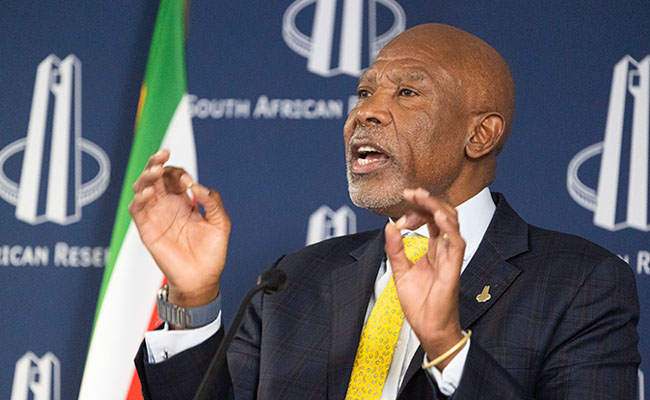
That’s essentially what South African Reserve Bank (SARB) governor Lesetja Kganyago was telegraphing when he announced the monetary policy committee (MPC) decision to pause on further interest-rate cuts.
The repo rate stays at 6.75% for now, after a four-to-two decision that shows just how finely balanced the debate – and how important the latest economic data – has become ahead of the next MPC meeting in March.
Johann Els, chief economist at PSG Financial Services, says he had expected a cut – but only by a whisker. It was always going to be tight: a Bloomberg survey published before Kganyago took the podium showed economists narrowly split, with 13 expecting the MPC to hold, while 11 pencilled in a 25-basis-point reduction.
Despite the disappointment in plenty of quarters, given the present inflation rate and the rand’s recent rally, Els says the SARB’s statement was nonetheless “fairly dovish”.
The rand’s move since the last decision has been hard to ignore: it traded at about R17.22/$ ahead of the November MPC meeting, and had strengthened to R15.80/$ by Thursday – a gain of roughly 8% in just over two months. Lower inflation expectations among businesses, financial analysts and trade unions add to the case for easing.
The MPC now expects headline CPI to average 3.3% in 2026 (from 3.5% in November), while leaving its GDP growth forecasts unchanged at 1.4% in 2026 and 1.9% in 2027.
Anchoring the inflation target
The dilemma, though, is that the easing case is strengthening at the same time as geopolitical uncertainty has lifted oil prices – not to mention the SARB’s efforts to bed down credibility around its new 3% inflation target (with a tolerance band of one percentage point either way).
Brent crude has climbed about 12% since November. Els believes the committee wants inflation to settle “more permanently” at the new goal, and inflation expectations to re-anchor further, before it moves again.
Still, the PSG economist’s base case is for two 25-basis-point cuts this year, with a “slight possibility” of three – depending largely on oil and the rand. If the rand heads toward R14/$ and holds that for a sustained period, he argues, South Africa could see further petrol-price relief, pulling the inflation trajectory lower and giving the committee room to move.
Elna Moolman, head of South Africa macroeconomic research at Standard Bank, highlighted the SARB’s unease about the risk outlook, but pointed out that the bank’s own models indicate that there’s scope for 75 basis points of rate cuts this year and next.
“Indeed, if all of the disinflationary impulses remain intact, including the stronger rand, there could be scope to see these 75 basis points of interest rate cuts even quicker,” she wrote.
‘Sticky’ inflation won’t be a deterrent
Market analyst Michał Jóźwiak at Ebury says the decision is consistent with a “stop-and-go” approach as policymakers assess the the global trade and economic landscape and monitor the re-anchoring of inflation expectations.
He also flags just how much of the rand’s rally, which has outpaced other emerging markets this year, has come from external forces: safe-haven flows into gold, and platinum at record highs, plus a weaker dollar.
But Nedbank’s chief economist Nicky Weimar expects inflation to remain “sticky” over the next six months at between 3.5% and 3.7%, driven by base effects, high utility charges and elevated meat prices linked to foot-and-mouth disease – though she sees limited risk of lasting second-round effects.
Weimar’s team expects only 50 basis points in rate cuts this year, with one in July and another in September, but she concedes that “the first cut could come sooner than we initially anticipated”.
There are a few home-grown factors that help, too: Els says the macro backdrop is improving thanks to stronger commodity prices which will bring in more tax revenue, potentially narrowing the budget deficit and improving the odds of a ratings upgrade later this year.
If that holds, he says it supports the rand and keeps imported inflation in check – while also helping to boost confidence and unlock private-sector fixed investment, which has lagged.
And now, the ‘good news’ risk
Kganyago also flagged a risk that often accompanies faster growth: productive capacity.
Economists call this the output gap – the difference between what the economy is producing now and what it could produce if factories, workers and infrastructure were being used at normal, sustainable levels. If that spare capacity shrinks – meaning demand is rising faster than the economy’s ability to supply goods and services – companies get more room to raise prices, and inflation can follow.
“For all intents and purposes, the output gap is closing. It is negative 0.3 this year, and then it declines next year, and by 2028, it will be zero,” Kganyago said.
But the output gap and potential growth are estimates, not hard data – so a narrowing gap doesn’t automatically mean inflation will “run away”… “it is not”, he said.
ALSO READ:
- More rate cuts coming – but the path lower will be bumpy
- The SARB’s review of prime will not reduce the cost of debt
- Godongwana claims control of new 3% inflation target
Top image: Reserve Bank governor Lesetja Kganyago. Gallo Images/Alet Pretorius.
Sign up to Currency’s weekly newsletters to receive your own bulletin of weekday news and weekend treats. Register here.