
Let it not be said that Eskom doesn’t look out for the little guy. Sure, it buys diesel for its generators from PetroSA and other major international players. But it also spreads the largesse. Back in 2015, for example, the Sunday Times reported that Eskom had handed diesel supply contracts to a beautician and a dentist. And in 2019, News24 reported that a Joburg copy-and-print shop was the beneficiary of such a contract.
We don’t know much more than that, because Eskom has kept a tight lid on its contracts with fuel suppliers – coal and diesel – and Promotion of Access to Information Act (Paia) requests have yielded little by way of useful information.
Until now, that is. For four years, AfriForum has been fighting the power utility with the determination of an Afrikaner refugee trying to trade genocide for apple pie, and this week it was handed a big win by the Supreme Court of Appeal (SCA).
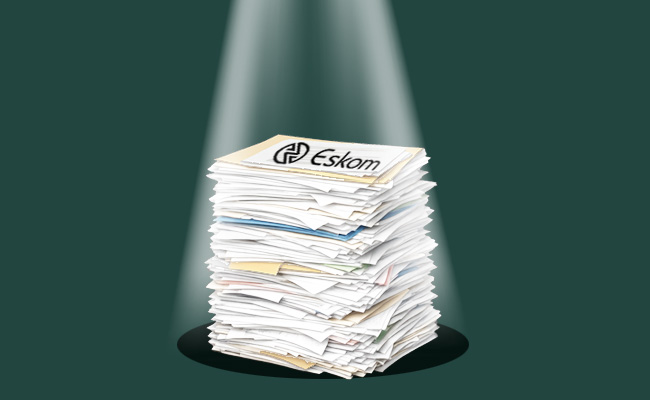
Upholding a high court ruling, the SCA ordered Eskom to hand over its coal and diesel contracts, as well as unredacted versions of its contracts with neighbouring countries.
It was a blood nose for Eskom. The utility had argued that its contracts contain commercially sensitive information and that disclosure would compromise future negotiations: suppliers would be able to negotiate higher prices, leading to inflated costs, and raising concerns around collusion. It would also put both Eskom and third parties at a disadvantage.
The judges didn’t buy it. As the high court had pointed out, Eskom had simply claimed that revealing these contracts would put it at a commercial disadvantage rather than showing this to be true. When faced with a Paia request, it seems Eskom did little more than assert that this was so in the absence of evidence.
“There is nothing to support the allegation that the agreements are confidential, contain information that is commercially sensitive, and would disadvantage Eskom or third parties in contractual negotiations,” the SCA ruled.
Now, there may be some broader validity to Eskom’s argument, lack of substantive evidence aside. There is, for example, the possibility of collusion. Only, there are laws in place to deal with that, and it would be the remit of the Competition Commission to step in if it suspects collusion is happening
As for the pricing issue – well the court pointed out that general coal prices are made available by, for example, the World Bank. So there’s surely a benchmark.
In any event, as the high court had ruled, Eskom itself says its contracts are negotiated under a legislative framework that dictates a coal procurement procedure that is an open tender process. The bid committee makes a determination based on competitive and cost-effective tendering; “it is not a subject of private negotiation”.
“Consequently, with a competitive bidding process there can be little scope for manipulated negotiation power.”
Most important, however, is the manifest public interest in making the contracts available for an entity that in 2025 spent up to R150bn of public money on primary energy. Disclosure is crucial not only “because [Eskom] is a state entity with a monopoly in the supply of electricity”, the court said, but also because of corruption.
The long shadow of corruption
Eskom has long been a crime scene. Who can forget the R26 the utility paid per roll of single-ply toilet paper that should have cost less than R5. Or the R51 a pop for black refuse bags, a 900% mark-up.
But that’s not the worst of it. Remember the Guptas? They finagled deals where existing contracts for cost-effective mines were cancelled or not renewed and, in their place, negotiated sweetheart deals, producing substandard coal, from mines further away from power stations, and trucked in at inflated costs.
In 2018, energy expert Ted Blom estimated that overvalued coal stocks and corruption in coal procurement was costing the utility about R8bn, according to Business Tech. And the Institute for Security Studies’ Accountability Tracker figured overall Gupta corruption cost the utility R14.7bn.
If you had any doubt about the scale of corruption in Eskom’s contracts, look no further than the Zondo commission of inquiry into state capture, the Dentons report (which Eskom tried to keep under wraps, and then only released in redacted form), a parliamentary inquiry into the power utility, and the hard-drive of damning Gupta leaks.
But despite all the talk that followed these inquiries about cleaning the rot at Eskom, the auditor-general in her qualified 2023/24 audit of the utility found a R16bn compliance hole around subcontracting in its coal contracts. And “inadequate systems of internal control to timeously detect and record … losses [due to criminal conduct]”.
Given the quantum of money involved and the importance both to the public purse and the steady supply of electricity, it seems a no-brainer that the public should have access to Eskom’s fuel supply contracts. After all, sunshine has long been acknowledged as the best antidote to corruption.
The most troubling aspect of all this is that Eskom has seemingly learnt nothing from the decade of reputation-savaging corruption and, when given the option, opted to try hide its coal contracts from the public, rather than play open cards. As the beneficiary of public money, this is not the standard of governance its board should sanction, nor accept.
Nonetheless, a happy offshoot of AfriForum’s case is the precedent it may set, with at least one legal expert pointing out the ruling applies to all state-owned enterprises. Imagine how much harder it will be to steal when everything is out in the open. Happy days.
ALSO READ:
- The cost of Eskom’s secret pricing deals
- Secret Eskom tariff deal may just break SA
- Eskom’s R92bn ‘gift’ for South32
Top image: Rawpixel/Currency collage.
Sign up to Currency’s weekly newsletters to receive your own bulletin of weekday news and weekend treats. Register here.