
Like all the best visions, the vision of this year’s Mining Indaba was vague enough to be interpreted in myriad ways.
“Stronger together: Progress through partnerships” was what this year’s indaba was all about, apparently.
Were the partnerships alluded to between mining companies and governments? Mining companies and communities? Mining companies and investors? Mining companies and customers? Or between governments and communities? Governments and investors?
Well, probably all of them. Certainly, all these potential partners were in fulsome evidence throughout the indaba, though perhaps not so much the communities. Communities are inevitably too cash-strapped to make much of an appearance and rely on various NGOs to represent them, which might in itself be a good indication of who is benefiting from mining activity across the African continent.
And precisely who is benefiting?
Birgit Pickel, director-general for Africa at the German federal ministry for economic co-operation and development, told one session that the big challenge in mining is getting more for Africa. The processing and manufacturing of African minerals is not being done in Africa, “it’s creating business opportunities for German car manufacturers”.
No doubt, there is more that African governments could do to encourage investors and get a larger slice of the pie. Pickel suggests creating more conducive circumstances with improved policy certainty and processes that work and are applied fairly. Then there’s the infrastructure and the skills. Or rather, there isn’t.
More money for those not digging it
But don’t expect anything to happen very soon. As Brian Kagoro of the Open Society Foundations pointed out in a session on the threats and opportunities presented by the surge in “green mineral” demand, at the inaugural session of the OAU all the way back in 1963 beneficiation and value-chain advances were two of the eight priority items on the agenda. “For 60 years we’ve been saying the same thing and not doing anything about it,” said Kagoro. “The folks who handle logistics and trade make a lot more money than the guys who dig.”
Vusi Mabena, executive secretary of the Mining Industry Association of Southern Africa, did introduce a note of caution on behalf of the mining companies. “We’re caught in the middle, we have to extract, we have to ensure we create the value for all stakeholders – governments, communities, investors.”
The private sector is under pressure to enable local beneficiation, and while the mining companies agree in principle, it results in additional costs, said Mabena. “Miners are price-takers, and now they have to sell to governments at a price for beneficiation, which might result in companies making no profit.”
And, of course, even when African governments manage to get a bigger slice of the cake, it doesn’t mean communities where extraction is being done see much benefit.
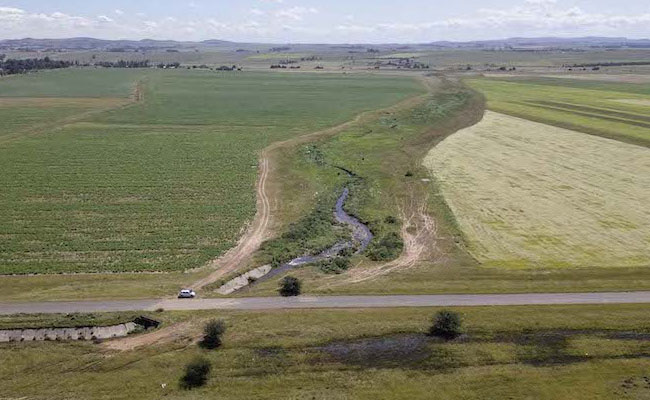
While they didn’t get much of a look-in at the Mining Indaba, communities were well represented at the Alternative Mining Indaba held a few kilometres from the Cape Town International Convention Centre. On two occasions during the official Mining Indaba, members of communities arrived to protest against the environmental and social degradation caused by mining activity.
They claimed companies and governments ignore the pollution, land degradation and displacement suffered by communities. What do they want? Tighter regulations, independent monitoring and greater accountability from both licensed firms and licensing governments.
Collaboration is still missing
So, in all, it does seem as though none of the parties involved in this massively important industry is terribly happy, though everyone – bar the communities – seems to be raking in oodles of money.
But here’s the thing: however tough the situation seems right now, the global mining industry could be heading for some seriously turbulent times. Increasing US-China tensions, shifting global alliances, and a US president who has dismantled climate regulations and shows little regard for national sovereignty all threaten progress.
Brian Currin, executive director of Concentric Alliance, warned that the dangers of this geopolitical landscape marked by a shift to the right would be catastrophic for Africa’s mining industry.
The ESG progress made over the past 10 to 15 years would be upended; mining companies’ rights to operate would be dissipated; the whole question of sovereignty would become uncertain, Currin told attendees at the indaba. “We would be taken back to the dark days of colonisation.”
But it doesn’t have to go that way, he added. Avoiding it requires collaboration between African countries, which, so far, hasn’t been evident.
Still, amid the pessimism, many speakers seemed to feel ESG is here to stay. “In a world of climate extremes, mining companies don’t have the luxury not to integrate ESG; many look at it as a way to protect value”, said one speaker.
Whether new industry standards can actually shift who benefits remains an open question. One of the last sessions at the indaba focused on the likely impact of the Consolidated Mining Standard Initiative (CMSI), which is scheduled to be rolled out later this year.
The CMSI aims to replace, as one delegate described, the existing alphabet soup of standards and guidelines with one overarching global standard.
On-the-ground reality is different
Here is CMSI’s bold ambition: “We aim to bring together the best aspects of four well-established standards – the Copper Mark, Mining Association of Canada’s Towards Sustainable Mining (TSM), World Gold Council’s Responsible Gold Mining Principles and ICMM’s (International Council on Mining and Metal’s) Mining Principles – into one, global standard that reduces complexity and clarifies responsible practices for mining companies of all sizes, across all locations and commodities.”
Unsurprisingly, given that it is an attempt to streamline a host of existing standards, the CMSI has, according to Bady Baldé, deputy executive director of the Extractive Industries Transparency Initiative (EITI) international secretariat, “strong industry buy-in”.
But not everyone is enthusiastic about the initiative. A community-based activist and veteran of several Alternative Mining Indabas was a little more circumspect. “I’m sceptical of all of these standards; often they are driven by the desire of mining companies to report a good story,” he told Currency days after the indaba had wrapped up. He acknowledged that the CMSI is certainly impressive, but whether or not it’s implementable is questionable. “The truth on the ground is very different.”
As the CMSI notes, it’s impossible to distinguish a ton of metal from different sources, but whether it’s been produced, processed and recycled responsibly carries immense implications for society and the planet.
“Since we can’t distinguish between responsibly and irresponsibly produced metals simply by looking at or using everyday products, we have relied on governments to regulate minimal production, processing and recycling,” says CMSI. But, according to CMSI, society increasingly expects those mining, recycling or converting metals into products to follow responsible standards backed by independent assurance and transparent disclosure. So, the industry launched this initiative.
Governance will be in the hands of a 16-member board, with representatives from mining companies, value-chain companies and the communities in which they operate.
Stewart Bailey, chief sustainability and corporate affairs officer at AngloGold Ashanti, describes the CMSI as a “streamlined tool” that, through increased transparency, will reduce risk and attract more investors to the industry. “As a way to attract capital, this is an important piece of work because, if you do it well, it will attract investors who are skittish about mining.”
And the good news is, as far as Bailey is concerned, the anti-woke agenda is not winning. ESG is alive and well, he says. It turns out attention to ESG is a great way to manage risks that companies would manage anyway, including health, safety and environment.
Success or failure will perhaps be, as EITI’s Baldé told delegates, down to the individuals recruited to drive the process. They will need to do it with an eye to all the industry partners.
ALSO READ:
- Coal’s slow death in Mpumalanga
- The canary in the mine: Why South Africa’s exploration plunge matters
- Mozal goes dark as power prices crush beneficiation ambitions
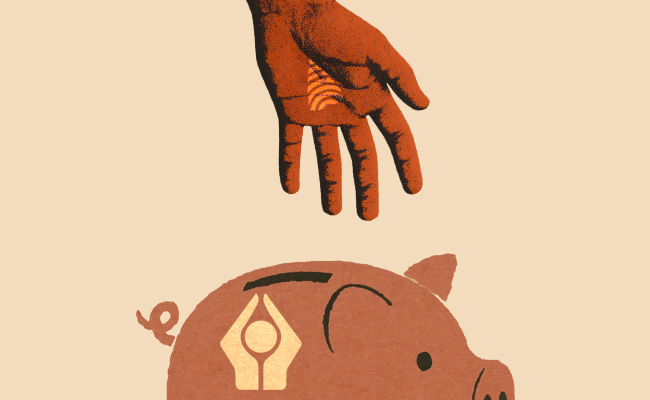
Top image: Rawpixel/Currency collage.
Sign up to Currency’s weekly newsletters to receive your own bulletin of weekday news and weekend treats. Register here.