
Shortly before Easter, a surprising announcement emerged from the business rescue of construction icon Murray & Roberts. A consortium, led by a company called Differential Capital, would be buying Murray & Roberts’ last asset, its mining construction business.
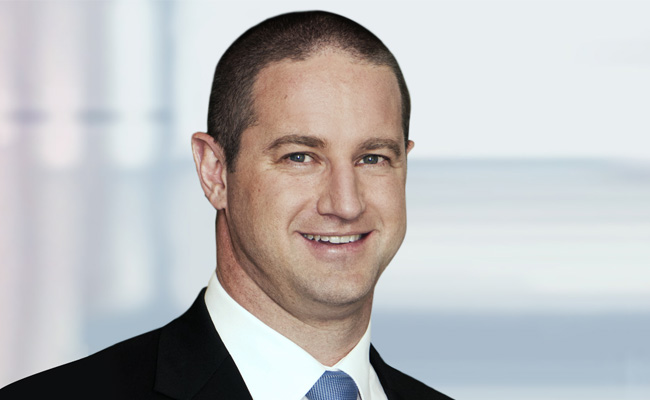
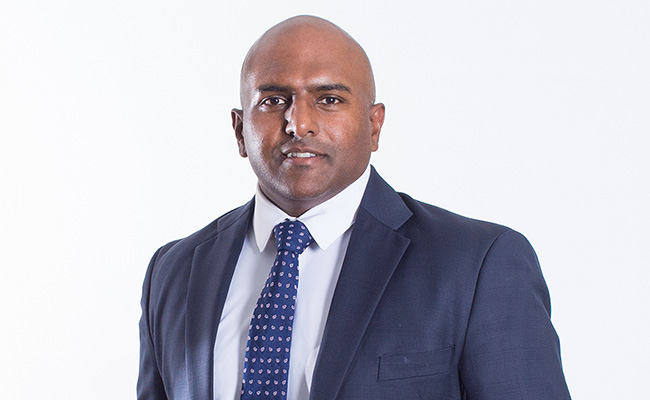
It raised eyebrows because Differential, which will now largely call the shots at Murray & Roberts’ cementation business, isn’t run by hard-nosed builders, but rather by clever investment analysts Vincent Anthonyrajah, Musa Malwandla and Sam Houlie.
It is an asset manager, built on the idea of mixing “traditional fundamental analysis with data and artificial intelligence” to find value no-one else sees. But, you might say, fund managers don’t usually buy whole companies; they usually take small stakes, watch from the sidelines, then scarper at a hint of trouble. So what gives?
“We definitely think of ourselves as something a bit different from most asset managers,” says Anthonyrajah in a wide-ranging interview with Currency.
“It’s critical to know the difference between a simple trade, and an investment, where you need to have a long-term view. About 99% of the time, we have trading ideas, but once in a while, a special situation crops up, where you see a great asset with solid fundamentals, in need of capital,” he says.
But Anthonyrajah is clear: “We don’t do turnarounds of bad businesses – we look at good businesses stuck in a bad capital structure, which we can fix.”
The Murray & Roberts bid wasn’t its first such foray. In 2020, Differential made an audacious bid to buy Jet out of Edcon’s business rescue for R800m, but the business rescue practitioners, surprisingly, chose to sell Jet to retailer TFG for R480m.
“The data points for Jet were amazing,” says Anthonyrajah. “It held the largest market share for larger working women, it had an excellent team of buyers, many of whom are now at Pick n Pay clothing, but the problem was the capital structure.”
It’s a similar value play today with Murray & Roberts. The data is clear, Anthonyrajah says, that there will be an explosion in resources demand globally over the next 50 years, and much of this mining activity will have to move underground.
“South Africa is better than almost any country in the world in underground mining – we have mines 4km deep – and Murray & Roberts is the best at building these mines. But what you had was a business that shouldn’t have been saddled with debt, with no clear incentive structure,” he says.
These are big gambles, however, especially for a company that is almost brand spanking new.
Differential launched in 2018 as an asset manager premised on the idea that it could use AI – through its own proprietary machine-learning algorithms – in a way few were, to find opportunities, and make faster and better decisions.
Today, of course, AI is all the rage in asset management, but in 2018 it was more fringe, and had become something of a fixation for Anthonyrajah.
Though he had cut his teeth as a banks and property analyst at Investec Securities and SBG Securities, in 2014 he realised that AI was the way of the future, so he was hired as the “chief analytics officer” at life insurer Momentum.
“The epiphany I had was that the one area where we could deploy AI practically was on my home turf: investments. Musa and I both figured that there was huge scope to use data in a much smarter way, which was the thinking behind Differential. But, of course, we needed the capital to begin,” he says.
Near-death experience
The goal was to build an asset manager from the ground-up, with technology at its core – something of an inversion from how it works in most places, where technology has been bolted on to existing asset management systems later.
Anthonyrajah bumped into his previous boss at Standard Bank, global markets head Andrew Hall, whom he told about the idea. “The next minute Andrew calls me, and he said he was with Ben Kruger, who was then Standard Bank’s joint CEO, and he told me, ‘Ben loves your idea’.”
Kruger, one of the more underrated banking CEOs, was quick to realise the sort of difference AI could make to investment performance, so Standard Bank threw its weight behind Differential, taking a 25% stake.
“We thought we had a killer plan: a unique group of data scientists, we were training our own large language models, and we were Black-owned in an industry where everyone was preaching about how we need more transformation,” he says.
Then Covid arrived, and the world collapsed. Differential didn’t sign up a single client for its first two years. Anthonyrajah and Malwandla had gone all-in, mortgaging their houses. The company limped towards Christmas in 2020, watching its capital slowly deplete, and it seemed the bold AI experiment had failed.
“We had drafted the retrenchment letters to send to staff, but thought it was too cruel to send them out just before Christmas, but we were done,” he says. “But at 1.30pm on December 31, one client sent us a mandate to manage R200m for them, the Motor Industry Retirement Fund, which handled the pensions for all the people you see working on the petrol station forecourts.”
That saved the company from the guillotine.
It is an ordeal that speaks eloquently to the forked tongue with which the investment industry speaks of the “need for transformation”, just as much as it reveals how risk averse capital providers really are when it comes to supporting entrepreneurs.
To be clear, Anthonyrajah says, Differential never wanted to trade on its Black ownership.
“Broad-based empowerment has always been a ruse. When you only obsess about equity ownership, as the government has, it’ll always be a failure, because by definition there can only be a few owners. And, if you’re white and own 100% of a mine, but employ hundreds of Black people in the majority, and pay substantial tax, surely that’s a success? The way it is framed now focuses on the wrong things,” he says.
For, the Motor Industry Retirement Fund, it was an astute decision.
Differential’s flagship hedge fund, in which R509m is now invested, has delivered a return of 15.7% per year since inception in 2019, compared to the average 6.3% of the money market index. Its South African equity unit trust, now with R364m under management, has delivered less, at 11.4% per year, marginally below its benchmark.
And in April, Differential won the award for the best multi-strategy hedge fund at the annual HedgeNews Africa Awards, for the highest returns. It proved, says Houlie, that using AI “does not come at the expense of performance”.
The business of prediction
It’s probably no surprise that Anthonyrajah thinks a little differently.
He was born in Mahikeng in the North West into a family that knew nothing about investing: his father was a doctor working in South Africa’s rural towns who happened to be a policyholder of Old Mutual. Back in 1997, when Old Mutual said it would “demutualise”, it sent policyholders a prospectus spelling out how they could convert their interest into shares.
“My dad asked to figure out what it means. I was only in about grade 11, but it was a window into a new world. Soon after, I went to a university open day, where an actuarial science student showed a share price graph, and made it sound as if they could predict where it was going. I thought: ‘Man, these guys can predict the future – I’ve got to get in on this,’” he says.
In 2003, Anthonyrajah completed his degree in actuarial science thanks, in no small part, to the fortuitous benevolence of the late Desmond Smith – a man who, as the youngest MD of Sanlam in 1993 and its chair until 2017, was regarded as an industry legend.
“When I was figuring out what to do, I wrote to 120 actuaries across the country, and only two got back to me. One of them was Desmond Smith, and he was hugely helpful. He gave me vac work, and even paid for part of my university fees,” says Anthonyrajah.
For Smith, it must have resonated, since he had joined Sanlam in the actuarial department back in 1968, after finishing his studies thanks to a Sanlam bursary.
It was a good gig, but it wouldn’t last: Anthonyrajah wanted to “get back to the business of predicting the future”, so he quit life insurance to become a stock analyst at Investec Securities. He made lifelong friends there, including with the highly-regarded analyst Mark Salmon and Malwandla – both of whom he works with today at Differential.
“I was in awe. I couldn’t believe my job was to go through company financials, build these crazy quant models, and go and interview executive teams. I mean, imagine: here I was, as a 27-year-old clown who knew nothing, asking Johan van Zyl how he was going to do to improve margins. I didn’t even know what I didn’t know,” he says.
Anthonyrajah soaked up knowledge from the best in the business, including Marc Ter Mors, Jonathan Kennedy-Good, Risto Ketola, Bandile Zondo, Voyt Krzychylkiewicz and Craig Butters.
“I learnt many invaluable lesson from Mark. Back then, I really didn’t have any EQ, so when someone said something lazy or stupid, I’d try school them. But Mark Salmon told me to quit it: ‘When a guy loves himself that much, just smile and nod.’”
It’s a soft skill that must come into play every day, now that every one of his rivals is frantically launching some new “AI-based investment model” almost every other week – the sort of thing that Anthonyrajah began doing a decade ago.
Man in the machine
To what extent will AI change the nature of asset management? Will humans still have a role when large language models cannot only detect valuation inefficiencies and frailties in accounts far faster than a human, but even write the research report?
“Oh, absolutely,” says Anthonyrajah. “AI is a powerful tool to simplify information – there is huge innovation around the topic of correlation, and creating portfolios – but it is still just a fancy information-retrieval system. You need humans to input much of the data, and sense-check ideas. And a large part of the market relies on people who don’t make decisions based on a huge amount of data, but on great insight and foresight.”
There will still be part of the capital allocation process where automation won’t help. And a machine won’t be able to sit in a meeting with Absa’s new CEO, Kenny Fihla, and detect where incremental changes are being made that could have an outsize impact on returns.
But Anthonyrajah is clear that technology for technology’s sake isn’t the goal; rather, it is to improve returns for the pensioners whose money they manage and, hopefully, make a positive difference to society along the way.
Keeping the jobs alive at Murray & Roberts is, you could say, one way of doing that. Another is by using their skills to point out unfair practices.
On this score, one of Differential’s first public forays, which grabbed headlines in 2019, was a scathing report implicating one of the JSE’s darlings: banking group Capitec.
In a 48-page research report, Differential dubbed the unsecured lending market, on which Capitec and so many other banks rely, as “dysfunctional” and a “threat to society”.
The report continued: “Aggressive collection practices and extortionate pricing have ensured that even though about one-half of all unsecured lending consumers are in default, the lending industry remains highly profitable.”
The data was alarming: 7.8-million South Africans owed R229bn in unsecured loans, about R29,000 each. And 56% of them were in default.
“The all-in cost of credit is egregious by any measure. A person in need of a one-month loan is not likely to be able to pay an annualised yield of 225% without likely needing further loans, thus ensnaring them in a debt trap,” it said.
It seems so obvious to anyone who bothered to spend any decent amount of time examining the way the lending market worked, and yet it amounted to heresy for investors who had benefited from Capitec’s 2,485% gain over the past 15 years.
Today, Anthonyrajah sticks by that report. “Our views haven’t changed. But to Capitec’s credit, they took on board our criticism, and over the years, their effective interest rate has dropped. So if we were trying to achieve a social goal of lowering credit costs for the poor, this happened,” he says.
To make this kind of assessment, very publicly, about a company like Capitec, with its apologists all over the place, isn’t easy. But it’s an illustration of the fact that Differential has no qualms about upending conventional market wisdom.
It’s a principle that has led it to do what few others in its position have done – like buy a business outright, like the Murray & Roberts operation.
And those people who got that vision, like the Motor Industry Retirement Fund, might not have known it at the time, but they’ve been instrumental in creating something entirely different in the investment market.
This story was produced in partnership with Stanlib.
Sign up to Currency’s weekly newsletters to receive your own bulletin of weekday news and weekend treats. Register here.