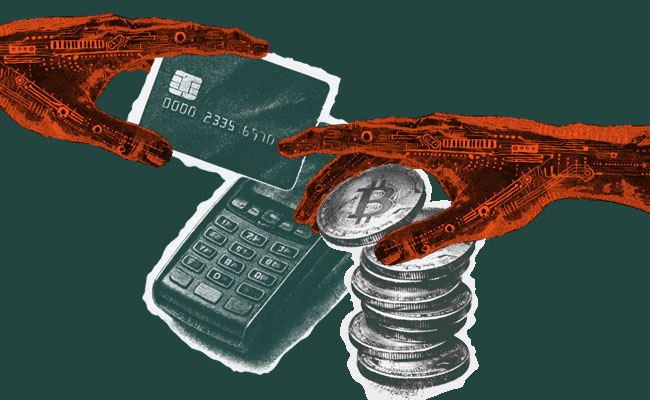

There is a crypto platform called Pump.fun, well-known to crypto insiders but not so much to the rest of us. It has industrialised financial nihilism. In short, it lets anyone launch their own cryptotoken for about $5. With 98% of tokens collapsing to zero, a class-action lawsuit alleging racketeering, and a former developer in prison, why can’t anyone stop playing?
Every 24 hours, approximately 10,000 new cryptotokens are born on this single platform. By the end of that same day, roughly 9,900 of them are dead. This is not a bug. This is the business model.
Pump.fun is a memecoin factory running on the Solana network that, depending on your perspective, has become either the most democratised financial innovation since the stock exchange or the most efficient wealth-extraction mechanism ever designed.
Since launching in January 2024, the platform has generated nearly $800m in revenue. It raised $1.3bn in July 2025 – $600m in a public sale that sold out in 12 minutes, plus $700m from private investors. Someone, clearly, believes in the model.
Entering a lottery
The mechanics are almost elegant in their simplicity. For a few dollars, anyone can create a cryptocurrency by uploading an image and choosing a name. The platform takes a 1% fee on every trade. When a token reaches a market capitalisation of $90,000, it “graduates” to a decentralised exchange, and Pump.fun collects a bonus.
This creates a high-speed “bonding curve” – a mathematical contract that sets the price of the token based on supply. In practice, it creates a lottery where the earliest buyers win at the expense of everyone else.
The platform’s meteoric rise has not been without friction. In August 2024, a former developer, Jarett Dunn (known online as STACC), was arrested in London. He was accused of a $1.9m “exploit” against the platform, which he claimed was an act of “ethical redistribution” to return funds to users.
Pump then dump
But the legal pressure intensified in December 2025. A class-action lawsuit filed in New York alleges that Pump.fun is a “digital bucket shop” that violates the Racketeer Influenced and Corrupt Organisations (Rico) Act. The suit claims the platform’s founders knowingly facilitated “rug pulls” – scams where creators hype a token and then dump their holdings, leaving retail investors with worthless digital dust.
The plaintiffs argue that Pump.fun isn’t just a neutral technology provider, but an active participant that designs its algorithms to encourage gambling-like behaviour and rapid-fire speculation.
Despite the lawsuits, the platform’s growth remains staggering. In September 2025, Pump.fun crossed $1bn in single-day trading volume for the first time. It now ranks third among all decentralised finance (DeFi) protocols for daily revenue, trailing only stablecoin giants Tether and Circle.
Rigged against retail investors?
Critics have long argued that memecoin markets are rigged against retail investors. Pump.fun may be providing the most comprehensive evidence yet – not through failure, but through success. The platform works exactly as designed. It extracts value with remarkable efficiency from people who understand precisely what they’re doing, even as they do it.
Research from Dune Analytics found that only 0.4% of Pump.fun users made profits exceeding $10,000. More than 60% of traders ended August 2025 with losses; collectively, users lost $66m that month despite record platform activity. The house always wins, and unlike traditional casinos, this one has no regulatory oversight requiring it to maintain minimum payout ratios.
Perhaps the most telling detail is that Pump.fun’s own token has fallen 50% from its July debut, then another 30% since the lawsuit gained momentum in December. Even the casino’s shares are a gamble.
Whatever the courts decide, Pump.fun has already demonstrated something important about markets, technology and human nature: given sufficiently frictionless infrastructure, people will gamble on anything.
The only question is who gets to run the table.
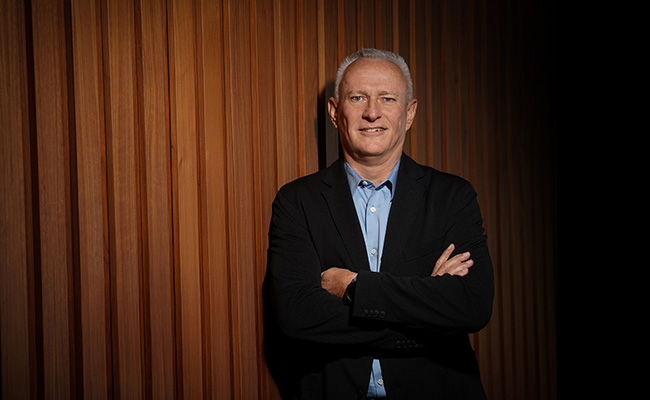
Steven Boykey Sidley is a professor of practice at JBS, University of Johannesburg, and a partner at Bridge Capital.
ALSO READ:
- In cryptoland, you can bet on Taylor Swift – or The Rapture
- Remember NFTs? They’re all grown up now
- Confessions of an election oracle
Top image: Rawpixel/Currency collage.
Sign up to Currency’s weekly newsletters to receive your own bulletin of weekday news and weekend treats. Register here.