
The department of public works and infrastructure has announced a plan to create a national property company that will oversee a portfolio of 88,000 state-owned buildings and 5-million hectares of land it values at R155bn — three times the size of South Africa’s largest private property companies.
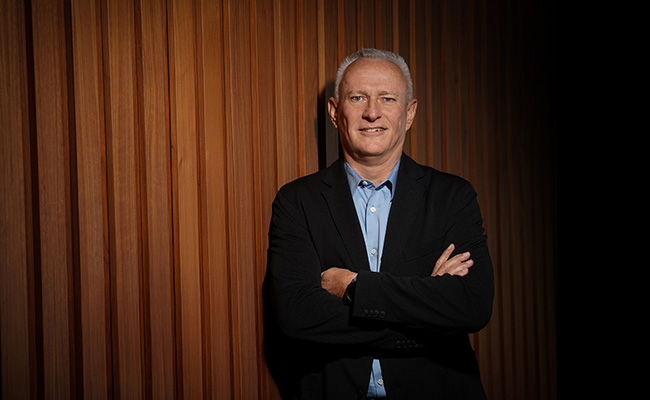
Public works and infrastructure minister Dean Macpherson unveiled the initiative this week, arguing that the state’s vast property portfolio – long treated as an administrative burden – could instead become a cornerstone of national wealth creation.
“The department was treating these assets not as assets but as liabilities,” Macpherson said during a media briefing. “They were draining the budget but generating no revenue.”
This ambitious plan of a state property company was announced by President Cyril Ramaphosa in his state of the nation address last month, but has not yet been formally presented to cabinet.
The concept has existed in government policy circles for decades – cabinet approved the idea of a state property company as far back as 1999 – but it was never implemented, Macpherson said. He recently pitched the plan at a South African business summit in London, and investors were “incredibly positive” about the idea, he said.
A ‘globally competitive investment vehicle’
The strategy is to place commercially viable parts of the state property portfolio into a professionally managed structure capable of attracting private investment, executing large development projects and generating returns for the state. The idea is to create a “transparent, bankable, and globally competitive investment vehicle”.
Macpherson was at pains to point out that the South African National Property Company (SANPC) will function as a commercial operator within the government’s existing property system. The department of public works and infrastructure will remain the constitutional custodian of state land and buildings, though the new entity will act as an “active manager” responsible for professional asset management, development projects and operational oversight.
For this to work, a complete governance overhaul is necessary. Until now, property assets have been managed within the public works bureaucracy through the property management trading entity, which critics say has struggled with poor maintenance, weak financial discipline and limited commercial decision-making.
But under the new model, SANPC will operate with corporate governance structures aligned with the Companies Act, King IV’s corporate governance principles and the Public Finance Management Act to demonstrate transparency and financial discipline.
The indicative investment portfolio alone includes four major categories of projects:
- Government office precincts: there are 13 planned precinct developments covering roughly 2.39-million square metres of office space, with capital investment needed of about R67.4bn. These projects aim to consolidate government departments into modern state-owned buildings rather than renting from private landlords.
- Economic and coastal infrastructure: this includes the redevelopment of 12 small harbours and coastal facilities, requiring about R48.4bn in capital investment, aimed at unlocking maritime industries and tourism.
- Large-scale land development: this consists largely of the redevelopment of former military bases and other large parcels of state land for mixed-use projects and housing, with estimated capital investment needed of R26.7bn.
- Service-delivery infrastructure: this encompasses the modernisation of operational facilities such as police stations, courts and other public service buildings. More than 800 facilities fall into this category, requiring R5.6bn in investment.
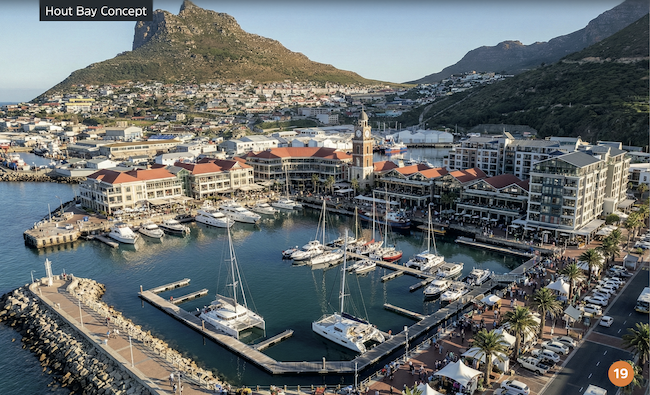
Already, Macpherson says hundreds of indicative projects have been conceptualised, including, for example, the R12bn development of Hout Bay Harbour, into a kind of mini-version of the Cape Town Waterfront.
One of the most immediate motivations behind the initiative is to reduce the government’s heavy reliance on privately leased office space. The state currently spends roughly R6bn a year leasing buildings from private landlords, even while many government-owned buildings remain vacant or underused.
Macpherson said the new model would prioritise shifting departments into modernised state-owned precincts, turning that annual lease bill into long-term asset value. “On one hand the state owns vast tracts of land and buildings, and on the other it is paying billions in rent,” he said. “That contradiction has to be resolved.”
At the same time, the government also faces a large maintenance backlog – officials estimate that roughly R30bn would be required to restore many buildings to acceptable condition – which is unlikely to come from the national budget alone. So, the SANPC is designed as a remedy to this, leveraging private capital and project financing to renovate and redevelop these assets.
Eye on a sovereign wealth fund
The financial model for the new property company rests on three main funding streams.
First, the state will continue charging government departments accommodation fees for occupying buildings. These payments provide a predictable long-term income stream secured by National Treasury allocations.
Second, individual projects will be structured through public-private partnerships (PPPs), allowing private developers and institutional investors to co-finance developments alongside the state.
Third, a development fund will be established to raise capital in a private-equity-style structure for specific investment portfolios, such as the refurbishment of police stations or other public infrastructure.
Macpherson’s department has spent 18 months refining the investment model, and consulting with asset managers and agencies in countries such as Singapore and Malaysia.
Government expects the establishment process – including regulatory approvals, governance structures and executive appointments – to take between 12 and 24 months. Nonetheless, officials plan to begin launching development projects through PPP structures before the entity is fully operational.
In the longer term, Macpherson said, the government hopes the SANPC can play a wider role, beyond property management.
Here, the idea is that the property portfolio will eventually form part of a broader national wealth strategy, potentially serving as a foundation for a sovereign wealth fund anchored in state property assets. If successful, officials argue, the initiative could transform South Africa’s vast but dormant public property holdings into a long-term revenue-generating asset base for the country. “This is about unlocking national wealth,” Macpherson said.
To get there, however, the new company will need to overcome cynicism by demonstrating that, unlike so many other state funds, it can be run according to the highest standards of governance, and remain corruption-free.
ALSO READ:
- Gauteng’s faulty towers
- Carlton Centre: The skyscraper nobody wants
- Why Cape Town wants to sell its big money-spinner
Top image: Rawpixel/Currency collage.
Sign up to Currency’s weekly newsletters to receive your own bulletin of weekday news and weekend treats. Register here.