

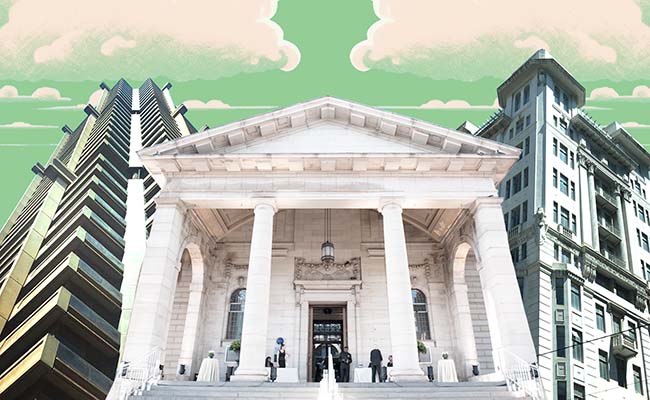

Founded in 1886 above the richest gold deposits ever discovered, Joburg has witnessed a roller coaster of change and upheaval during its brief existence. Boosted by steady supplies of gold and cheap labour, the city grew rapidly from an 1880s mining camp of make-shift tents and tin shacks into a 21st-century metropolis that towers over the old mining claims.
Joburg is not blessed with Cape Town’s beauty, Durban’s endless beaches or Pretoria’s jacaranda-lined boulevards (and Union Buildings). So the city has had to work a little bit harder for recognition – but a pioneering spirit, a dash of chutzpah and the occasional architectural marvel (funded by the gold) definitely set it apart.
Here’s a list of some of the city’s architectural firsts. And no, we’re not talking about the first time Herman Mashaba was mayor, or the day the pool-sized pothole in your road appeared. These are legitimate early developments that were actually “world class”.
First central vacuum system: 1904
Long before smart cleaning systems were the thing in Camps Bay or Dainfern, Joburg architect Frank Emley had a vacuum installed in the exclusive Rand Club – in 1904, to be precise!
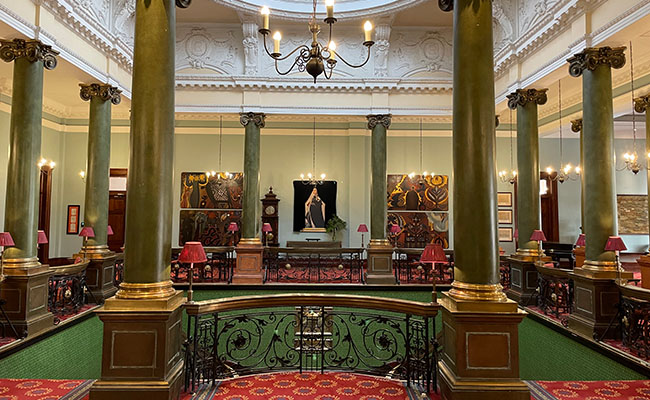
The four-storey Edwardian edifice is modelled on Pall Mall’s Reform Club, with an imposing central staircase, colonnaded double-volume gallery, timber-panelled library and an impressive ballroom (called the coffee room in London clubs).
Perhaps the original Randlords thought a central vacuum would afford the staff time for more important tasks, like pouring G&Ts or serving marrowbones on toast.
First public art gallery: 1915
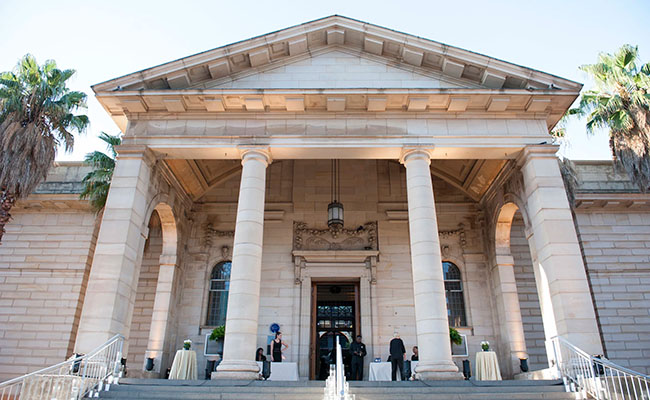
Funded by her mining-magnate husband, Lady Florence Phillips commissioned the renowned British architect Edwin Lutyens to design a public art gallery for Joburg at Joubert Park. The classical sandstone building includes impressive, vaulted gallery spaces, with overhead natural lighting and a cool internal courtyard. Though original funding was insufficient to complete the gallery, it was extended in 1938 and again in 1986 to commemorate Joburg’s centenary.
The building holds more than 9,000 works, including pieces of international renown by Auguste Rodin, Pablo Picasso, Claude Monet and Henry Moore, as well as artworks by renowned South Africans such as Gerard Sekoto, Walter Battiss, Alexis Preller, Mary Sibande and William Kentridge.
First skyscraper: 1929
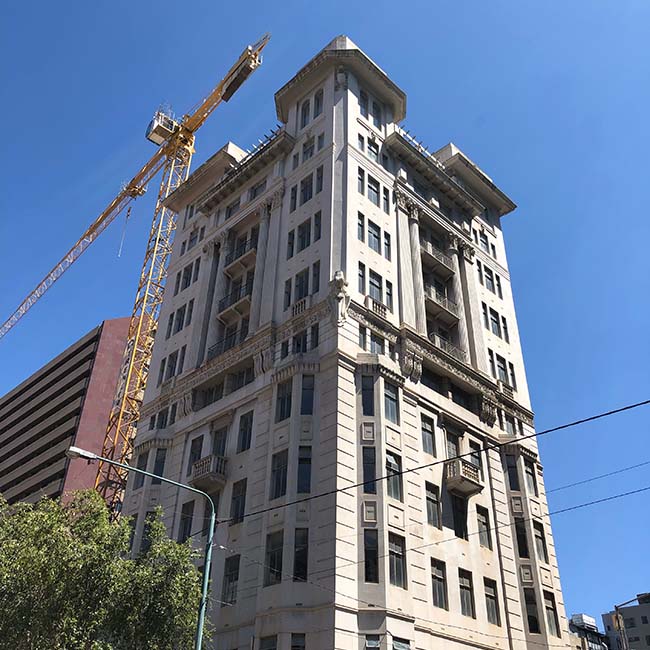
Fondly known as Joburg’s first skyscraper, the Barbican Building is located at the corner of President and Rissik streets. The structure reaches 10 floors above the pavement.
Six Art Deco-inspired upper levels – complete with giant columns and three protruding corner turrets – perch above a five-storey base of decidedly more Edwardian persuasion.
On its completion in 1929, gawkers travelled from the corners of the country to marvel at the Barbican and its sky-scraping magnificence (only 67 floors shorter than New York’s Chrysler Building, designed the same year).
The building has recently been repurposed to house a bookshop, a South African fashion designer’s office and production spaces. To complete the restoration, an illuminated New York-esque Barbican sign has been installed atop the roof.
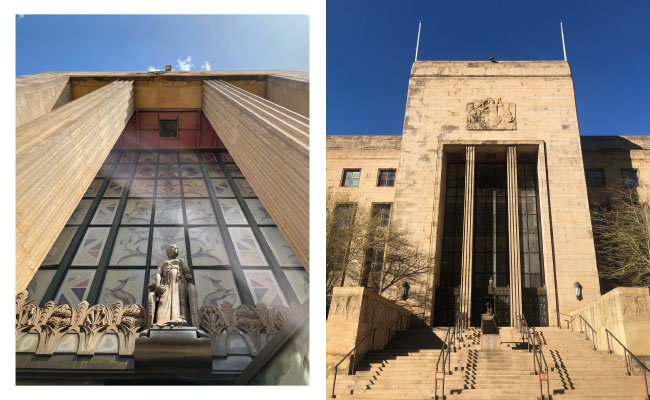
First multi-storey glazed façade: 1936
44 Main was constructed in 1936 as the head office of Anglo American. Classical design forms and proportions fuse elegantly in this stately, stripped-down, neoclassical building.
The H-plan structure with golden Ficksburg sandstone façades draws comparison to the US Federal Reserve in Washington, as well as Mussolini’s public buildings in Rome.
Intersecting office wings are set back from the street, hugging generous pockets of greenery and public fountains decorated with friezes of fish and mystical aquatic creatures. The building’s intricately detailed bronze entrance doors are the work of Walter Gilbert, the same artisan responsible for the gates of Buckingham Palace.
A triple-storey Art Deco glazed façade by artist Jan Juta, the first of its kind at the time, allows refracted sunlight to illuminate the building’s entrance lobby. Juta’s work adorns public buildings across the world, including the Royal Institute of British Architects offices in London.
Today, 44 forms the anchor in a reimagined Main Street hub focusing on art, education and technology to reinvigorate the downtown Joburg area.
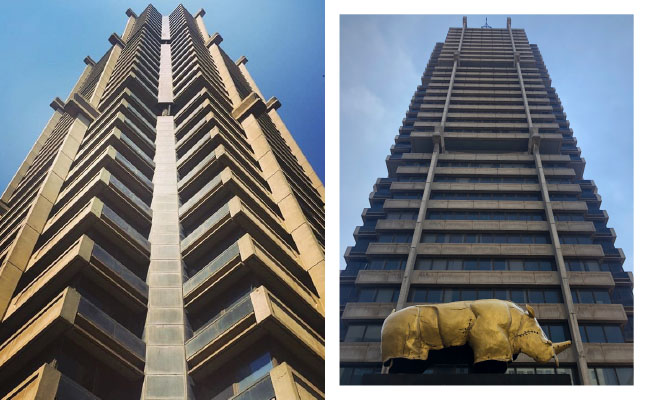
First hanging building: 1967
Standard Bank commissioned the German architect Helmut Hentrich to design its new head office at the corner of Fox and Simmonds streets in the mid-1960s.
Four sites were consolidated, creating a land parcel for the new tower surrounded by a large public plaza. The 27-storey skyscraper was constructed with a central core from which reinforced concrete beams were extended, and the office floors then suspended below. This “hanging building” was constructed from top to bottom and is still considered a Joburg landmark nearly 60 years after its completion.
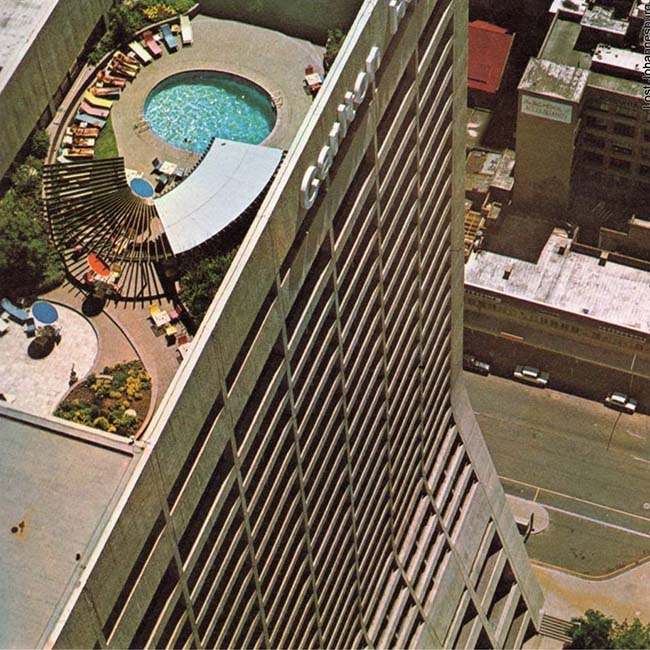
First international hotel: 1973
The Carlton Hotel formed part of the larger “city within a city” Carlton complex, modelled on New York’s Rockefeller Center and designed by SOM Architects. The building’s distinctive inverted Y shape is quintessential of the firm’s design language in the 1970s.
Operated by Westin, the chain’s “international” status meant that black guests were welcome and patrons of all races could mix freely, positioning the hotel as a key location in South Africa’s transition to democracy.
The Black Management Forum was founded at the hotel in 1976. In 1987, the National Union of Mineworkers, then led by Cyril Ramaphosa, met with mine owners at the hotel, demanding increased wages and better working conditions. The National Peace Accord was signed there in September 1991, and Nelson Mandela heralded the birth of a new South Africa with his delivery of the ANC’s victory speech from the Carlton’s ballroom in April 1994.
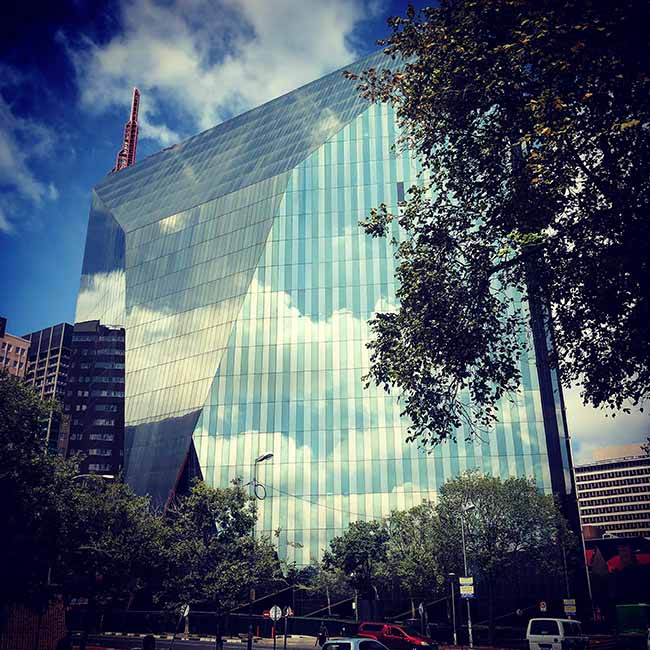
First “starchitect” design: 1983
Internationally renowned German-American architect Helmut Jahn’s unashamedly modern, mirrored masterpiece at 11 Diagonal Street perfectly captures the glamour and excess of 1980s Joburg.
Jahn’s style was characterised by innovative structural engineering and a bold, postmodern aesthetic. The architect blended glass and steel to create open, transparent buildings, “reflecting” power, modernity and modern technology. The blue glazed “diamond” is typical of Jahn’s work, embracing the city surrounding it, refracting vignettes of streets, smaller structures and the endless sky above, in uber-elegant, jewel-faceted facades. Jahn said that the shape – a cut reflective diamond – was inspired by mining giant De Beers, which was headquartered at the building. 11 Diagonal is often erroneously referred to as the old JSE, which is housed in a less memorable structure diagonally opposite the iconic diamond.
ALSO READ:
- Eight questions for the interested and interesting: Brian McKechnie
- Joburg, step by step
- Joburg’s centre cannot hold. And yet it does
Sign up to Currency’s weekly newsletters to receive your own bulletin of weekday news and weekend treats. Register here.






Lovely article Brian
Great article, Brian