South Africa will have to play a careful diplomatic game on the Iran issue, having offered to mediate between warring parties in the conflict even as the US has called it out for “cosying up to Iran”. With the conflict showing no sign of abating, the country will need to exercise some political nous.
In other big news this week, the fourth-quarter GDP read-out is scheduled for Thursday. Expect good news – even if it is just a marginal improvement.
Here’s what else to keep an eye on this week.
Politics
Parliament
The main National Assembly item this week will be questions to the president on Thursday.
On Tuesday, MPs will debate International Women’s Day, which took place on Sunday.
It’s yet another busy week for portfolio committees. The standing committee on public accounts will receive briefings by the OR Tambo District Municipality and Buffalo City Metro following the committee’s oversight meetings in the respective municipalities last year. The agriculture portfolio committee meeting will receive a briefing on Tuesday from the department of agriculture on the foot-and-mouth disease outbreak.
Middle East conflict
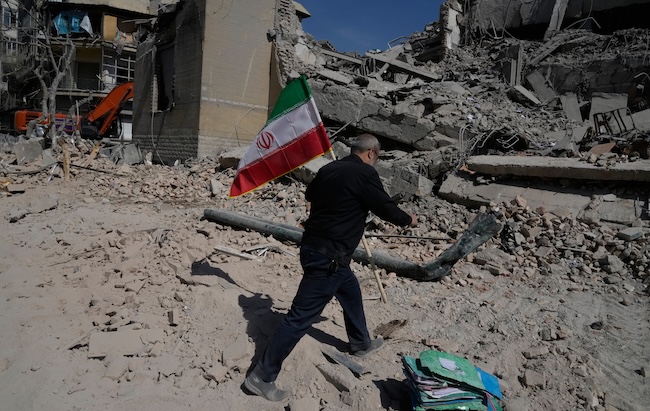
The conflict in the Middle East prompted by the US and Israel’s attacks on Iran on Saturday February 28 enters its second week. The South African government will continue to walk a diplomatic tightrope as it scrambles to repatriate South Africans stranded in the region. Last week, the US house affairs majority committee slammed South Africa for “cosying up” to the Iranian regime after South Africa offered condolences to Iran on the death of its leader, Ayatollah Khamenei.
Madlanga commission
North West businessman Suleiman Carrim is expected to testify before the Madlanga commission of inquiry into the police this week. Carrim has been accused of assisting Vusimuzi “Cat” Matlala in securing a R360m South African Police Services tender and securing kickbacks as a result. Carrim has applied for his testimony to be heard in camera due to apparent death threats warning him not to testify before the commission.
Economics
Fourth-quarter GDP
Tuesday’s fourth-quarter GDP release will be the week’s key data drop. After expanding by 0.5% quarter on quarter in Q3, growth is likely to have picked up slightly in the final quarter of 2025, with activity expected to edge up to about 0.6%. The improvement is set to reflect firmer domestic demand, with several components contributing to the uptick.
Household spending likely remained the main driver, supported by steady real income growth, subdued inflation and lower interest rates. Government consumption also appears to have strengthened, while indicators such as building statistics, machinery imports and corporate borrowing suggest fixed investment continued to recover after a prolonged slump.
That said, the external sector is likely to have acted as a drag. Import volumes probably outpaced exports, reflecting firm domestic demand alongside sluggish growth in key trading partners and high US tariffs. Taken together, the Q4 outcome would imply annual GDP growth of about 1.4% for 2025.
Fourth-quarter current account
Attention then shifts to Thursday’s fourth-quarter current account read-out. The deficit is likely to have widened from 0.7% of GDP in Q3 to about 1% in Q4, largely reflecting a bigger shortfall in the non-trade balance as income and services payments rose faster than receipts.
A wider trade surplus may have helped contain the overall deficit, supported in part by further gains in South Africa’s terms of trade. Still, firm domestic demand likely pushed import volumes higher over the quarter. For 2025 as a whole, the current account deficit is expected to have edged out slightly to about 0.8% of GDP, from 0.7% in 2024.
Mining production (January)
Also on Thursday, January mining production figures are due. After a 1.2% month-on-month decline in December, the print is likely to show a modest rebound in output at the start of the year. A seasonally adjusted increase of about 0.7% month on month appears likely, supported by stronger production in gold and platinum group metals as well as continued growth in manganese ore.
Mining output is set to show firmer year-on-year growth, with an increase of roughly 2.7% expected compared with 2.5% in December. While the sector continues to face structural constraints, occasional rebounds in key minerals suggest output still moves closely with changes in global demand and commodity prices.
Manufacturing production (January)
Manufacturing production data for January will also be released on Thursday. After contracting by 1.2% month on month in December, activity is likely to have staged a modest recovery at the start of the year. Output is expected to rise by about 0.8% month on month, lifting annual growth to roughly 1.2% from 0.8% previously.
The improvement is likely to reflect stronger output in food and beverages, motor vehicles and other transport equipment, alongside gains in basic iron and steel, metal products and machinery. Even so, the sector remains sensitive to swings in domestic demand and lingering supply-side constraints.

This article is published courtesy of The South Africa Brief, a political newsletter published on Substack which is a collaboration between Paul Berkowitz and Jonathan Moakes. It provides analysis and insight into the new, uncertain era of South African politics heralded by the 2024 general election. Including a specific focus on municipal politics, it will provide full analysis in the run-up to this year’s municipal polls.
Top image: Rawpixel/Currency collage.
Sign up to Currency’s weekly newsletters to receive your own bulletin of weekday news and weekend treats. Register here.