The economic year kicks into gear this week, with the release of data for mining production, retail sales and inflation. Meanwhile, a board of inquiry is set to determine how it came to be that Cyril Ramaphosa’s directive on Iran’s participation in “Operation Will for Peace” was ignored. Here’s what else you need to keep an eye on this week.
Politics
World Economic Forum (Davos)
A South African government delegation will attend the World Economic Forum annual meeting in Davos, Switzerland, this week. The delegation will be led by finance minister Enoch Godongwana, and includes minister of international relations and co-operation Ronald Lamola; minister of electricity and energy Kgosientsho Ramokgopa; minister of trade, industry and competition Parks Tau; minister of tourism Patricia de Lille; and minister of small business development Stella Tembisa Ndabeni-Abrahams.
The government has indicated that it will seek to “showcase its improving economic position reflected in strengthening investor confidence”. Its strategic intent “is to position South Africa as an attractive investment destination reflected in demonstrable progress in attaining macroeconomic stability, positive momentum in economic reform implementation, regional leadership, and global diplomacy”.
Mkwanazi ad hoc committee
The parliamentary ad hoc committee to investigate allegations made by lieutenant-general Nhlanhla Mkhwanazi returns this week, with sittings from Tuesday to Friday. Robert McBride appears on Tuesday and Wednesday, with Mkwanazi set to appear himself on Thursday and Friday.
Fallout from Iran participation in ‘Will for Peace’
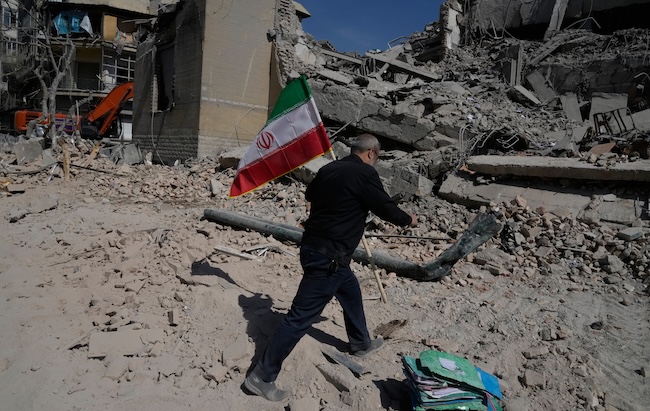
This week is likely to see further fallout from the South African National Defence Force’s defiance of a presidential instruction to remove Iran from a naval exercise conducted in False Bay last week. On Saturday, the presidency confirmed that an instruction had indeed been issued to defence minister Angie Motshekga to ensure Iran was withdrawn from the exercise.
Motshekga has announced a formal board of inquiry that has been asked to report within seven calendar days on how Iran was allowed to participate.
The inquiry will examine whether President Cyril Ramaphosa’s instructions were misrepresented or ignored, amid mounting confusion over Iran’s exact role in the Brics-plus naval drills, which also involved Russia and China. A Reuters witness reported seeing three Iranian naval vessels operating alongside other participating ships throughout the exercise period. The report is due on Friday.
Relief efforts, Kruger Relief Fund response to severe flooding
The Limpopo and Mpumalanga provinces have been battered by heavy rainfall over the past few weeks, with devastating consequences. In Limpopo, floods have claimed at least 11 lives and destroyed or damaged more than 2,000 homes. In Mpumalanga, at least 14 deaths have been reported, and 10 schools were forced to close, affecting thousands of learners.
Provincial governments have declared states of disaster in many districts, and the national government has established the Kruger Relief Fund to help rebuild the Kruger National Park. The park, situated in Limpopo and Mpumalanga, has been damaged by the flooding.
Economics
Mining production (November)
November’s mining production will kick off the week’s data calendar on Tuesday. The readout is expected to confirm continued, though moderating, momentum in the sector. Overall mining production is forecast to grow by approximately 3.8% year on year, down from 5.8% in October, but still pointing to positive momentum, supported by firmer commodity prices and a favourable base from last year.
Though the industry continues to contribute meaningfully to export earnings and overall industrial activity, gold production remains on a downward path. Investors and analysts will watch how individual mineral categories performed, as the figures offer an early read on how mining sectors are navigating logistical challenges and demand conditions as 2026 gets under way.
CPI (December)
Consumer inflation data for December is scheduled for release on Wednesday morning, and is likely to show a slight rise in headline inflation to about 3.6% year on year, from 3.5% in November. The modest uptick is expected to be driven predominantly by a 1.4% increase in petrol prices during the month, which will narrow the year-on-year decline in fuel costs that previously helped hold inflation down.
Services inflation may also add upward pressure, with categories such as homeowners’ equivalent rent, domestic workers’ wages, public transport fares and vehicle insurance set to push overall services prices higher. On the food front, analysts anticipate a marginal easing in food inflation to 4.3% from 4.4%. Core inflation, which strips out volatile items like food and energy, is forecast to edge up to 3.3% from 3.2%, but remain relatively subdued, supported by a stronger rand and cheaper import prices.
Retail sales (November)
Later on Wednesday, November’s retail sales round off the week with a clearer picture of consumer behaviour heading into the festive season. The print is expected to show a marked acceleration in consumer demand, with year-on-year growth expected to be about 4.8%, up from 2.9% in October. The anticipated uptick largely reflects the timing of Black Friday promotions and early festive-season spending patterns, which tend to boost consumption in the run-up to Christmas.
Discounting in areas such as clothing, electronics and household goods is likely to have supported higher sales volumes, despite continued pressure on real incomes. The focus will be on whether sales growth was broad-based or concentrated in a few areas, offering insight into household demand. Subdued inflation may also be providing some support to consumer spending.

This article is published courtesy of The South Africa Brief, a political newsletter published on Substack which is a collaboration between Paul Berkowitz and Jonathan Moakes. It provides analysis and insight into the new, uncertain era of South African politics heralded by the 2024 general election. Including a specific focus on municipal politics, it will provide full analysis in the run-up to next year’s municipal polls.
Top image: Rawpixel/Currency collage.
Sign up to Currency’s weekly newsletters to receive your own bulletin of weekday news and weekend treats. Register here.