
Old Mutual shares have been on a steady run since Jurie Strydom was made CEO last June, gaining about 20% in value. That’s in part down to a R3bn share buyback, of which R700m was spent in the second half of its financial year to end-December.
For the year, the group’s key valuation metric – group equity value – inched up 2.8% to R19.80 and shareholders will receive a final payout of 56c a share, taking the year’s total to 93c – an increase of 8%. Currency spoke to Strydom about the results, the progress of Old Mutual’s bank, and how he’d pitch the company to would-be investors.
First, the margins on the value of new business fell to 1.2% for the year – which is less than half the upper end of your 2%-3% target, and half of last year’s. In layman’s terms, what happened?
The value of new business is the actuarial present value on the profits you make on the business you write. So for a couple of years we’ve had persistency issues – higher lapses, particularly in our mass business – than that present value calculation had allowed for. So we brought that change into the assumption base. Now obviously you want to reduce lapses and retain more customers so there’s a whole operational strategy around bringing it back, but for now you base the assumptions on your most recent experience.
So it’s essentially a reset for the business?
Yes, exactly.
From when you started last June, where are you making headway and where haven’t you gained traction?
I think we’ve gotten serious traction with the operating-model changes we’ve made across the group. We’ve really clarified targets, we’ve reorganised the group for people to be chasing their own P&Ls [profits and losses] so it’s not fragmented across the organisation. 2026 is the first year where we’re coupling the targets with incentives. I’m pleased with the traction on the changes. Some of what we’re implementing will take time to bear fruit, like persistency and new business volumes.
While you’ve got all these targets set out do you have a greater competitor in the merged Ninety One/Sanlam business? Is it a bigger threat or will they do them and you’ll do you?
I think the asset management part of the [business] is at the end of the value chain for groups like us where you’ve got your asset-gathering machines, like your life and savings businesses, and that money gets administered by us and managed by different asset managers. It includes internal asset management, but not exclusively at all; we’re open architecture and already on our platforms we allow customers to choose where they want to invest their funds. So the imperative for groups like us is that you want [your] asset managers to be best-of-breed, competing for third-party money and not just internal money and you want them performing.
You didn’t mention it in the results: the Iran war and its effect on global insurance markets. Or is it really marginal to Old Mutual?
Well the obvious immediate impact was on insurance in the Strait of Hormuz, but that’s not a space we play in so it doesn’t directly impact us. But, ultimately, all geopolitical uncertainty, to the extent that it feeds through in the form of inflation, has an impact on us more broadly as a group.
What about Old Mutual Bank? You said in the results that you’re adding about 3,000 customers a day, and that 48% of Old Mutual’s Money Account base of 400,000 people have converted, but that from this point you’ll be looking to bring customers in from outside the Old Mutual network. How long are you giving yourselves to know whether you’re resonating with people?
It’s not just customer sign-ups, but customer activity, and South Africans are multi-banked. And what you want to drive is activity and lending, and that’s how you succeed as a bank. Yes, we’re getting traction with Old Mutual customers, but we want to become a bank where they’re more active. I think 2026 and 2027 are the big execution years. You’ve got to be fair and say that banking is a long-term play and so it’s not a quarter to quarter thing, so that’s what we’ve set out to do.
As an investment proposition what is it that investors might be getting from Old Mutual? Is it a play on South Africa’s recovery or Old Mutual’s recovery or the bank? What’s your pitch?
There is an opportunity to unlock value in the group. We’ve been saying we think we’re undervalued relative to the inherent value in the group, which we define as group equity value [at present, R19.80 a share compared to Old Mutual’s share price of R14.46 ]. And we think we’ve got great opportunities to generate growth – in South Africa, off the back of [the macro-economic environment] and also our ability to regain market share, as well as the bank, which will enable us to contest the banking profit pool which is sizeable. So getting that right is a big opportunity.
ALSO READ:
- How Old Mutual’s new boss stitched up R1.87bn 10X takeover
- Behind Jurie Strydom’s R300m bonus
- Why Old Mutual is betting its South African future on banking
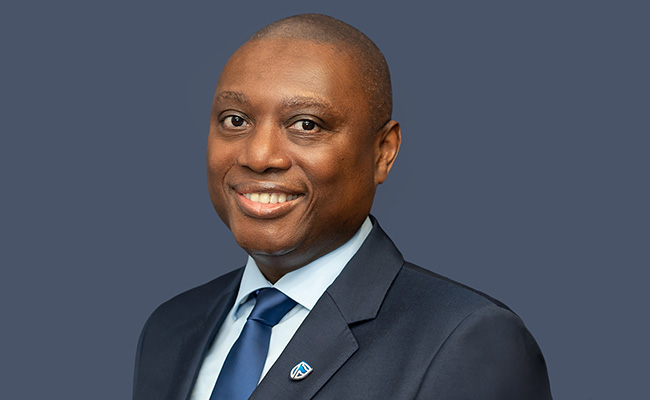
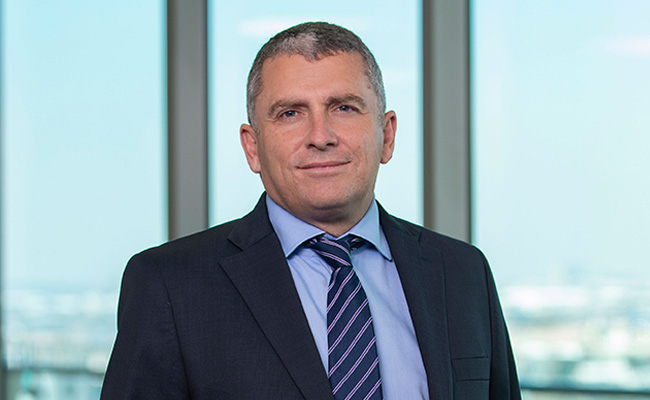
Top image: Old Mutual CEO Jurie Strydom. Picture: supplied.
Sign up to Currency’s weekly newsletters to receive your own bulletin of weekday news and weekend treats. Register here.