
Even by its own high entertainment standards, RMB Holdings’ (RMH’s) latest AGM was a humdinger.
It’s now evident that almost all the shareholders are at war with each other: minority shareholder Albie Cilliers called on the chair to resign; a speech by an Atterbury director that seemed to encourage shareholders to support the AttBid offer has resulted in a battle opening up on a new front – the Takeover Regulation Panel; and the extreme voting at the AGM has essentially rendered RMH something of a zombie company.
Also noteworthy is that 72% of the votable shares attended the meeting – up from the traditional 55% that are normally present.
The ‘monetisation strategy’
For those who haven’t followed this high-drama story so far, the gist of it is: in 2020 the RMH board decided to wind down its operations in what the board calls a monetisation strategy. Being essentially a holding company, this meant unbundling its investments, the largest of which was its 38% stake in FirstRand.
After FirstRand was unbundled, RMH was left with just property assets – primarily a 38.5% stake in Atterbury Property Holdings (APH) and 37.5% of Atterbury Europe. It had a market cap of about R2.4bn.
The Atterbury Europe stake was the first to go. Minority shareholders were incensed that the sale price was a hefty R500m below stated net asset value and that the business was sold when the rand was strong, meaning fewer rands received. The board said it had no choice as it was under pressure from major shareholders who wanted a deal done quickly.
Minority investors weren’t placated, particularly as it appeared the executives were being generously remunerated to implement the monetisation strategy at any cost.
So, when it came to the sale of the final asset – the 38.5% stake in APH – minority shareholders were ready to push back at any signs of a low-ball offer. That low-ball offer was delivered to them early last month when consortium AttBid (comprising the Atterbury Property Fund with 49%, and the WeBuyCars Van der Walt brothers with 51%) placed its 47c-per-share deal on the table.
Gloves come off
Which takes us to last week’s AGM. Here are some of the highlights: a record (not just for RMH, but the entire JSE) 10 of 20 resolutions failed; and Cilliers, the largest minority shareholder, called on chair Herman Bosman to resign because of the low-ball offer, while an individual aligned with Atterbury enthusiastically encouraged the RMH shareholders to accept the AttBid offer.
That individual was Gideon Oosthuizen, a director of APH, who stressed he had not been instructed to address the meeting by the Atterbury Group. Yet the board allowed him an untrammelled 11 minutes to discuss the proposed deal, including informing shareholders the circular would be released on Monday March 9 and the offer would be open until April 24. Oosthuizen got an additional five-minute shot towards the end of the meeting.
He, and Atterbury, are evidently extremely bullish about the property industry. He went on to sketch a major drawback for RMH’s current minority investors – namely, a lack of dividends.
“We are thinking long-term, we are thinking development. Those two things typically require capital rather than sending out dividends to shareholders on a regular basis. So that is the reality of the company that Atterbury is,” said Oosthuizen.
And just in case there was any uncertainty about the 47c-per-share deal, Oosthuizen told shareholders: “If you don’t like the offer, I’m sorry but that is what it is going to be. There’s not going to be a higher offer. The offer isn’t going to change if somebody complains about the value of the offer or they say they don’t have enough information to make a decision.”
Within hours of the close of the AGM, Cilliers had contacted the Takeover Regulation Panel (TRP) to lodge a complaint.
The TRP factor
The Atterbury Group has largely avoided the listed space – except tangentially via RMH – and so may not be too familiar with the takeover laws and regulations of South Africa. Regulation 117 requires that “all documents relating to an affected transaction as defined under section 117(1)(c) of the act, including announcements and circulars, must be approved by the panel before being posted or published”.
In the Caxton vs Mpact decision back in 2023, the takeover special committee emphasised the regulation didn’t just apply to announcements and circulars but also “to statements which may mislead holders or create market uncertainty even when not factually inaccurate”. (This sounds rather like what Oosthuizen did, even if he wasn’t instructed to.)
Cilliers’ approach to the TRP may achieve nothing more than a compliance notice being slapped on Atterbury. However, assuming AttBid does not manage to get 90% of the shares and RMH remains listed, it will be an inauspicious start to Atterbury’s life as a listed entity.
Meanwhile, back at the AGM, the tensions between the RMH board and Atterbury, which first emerged with the commencement of the monetisation strategy, were evident in the extreme pattern of voting.
Here are the key resolutions that did get passed.
No payday for non-execs
Almost 62% of shareholders voted for the re-election of Bosman and independent non-executive director Murphy Morobe. More than 60% voted for the reappointment of the auditor and the same amount voted for the re-election of the audit and risk committee members, as well as the election of the company’s social and ethics committee.
But – and here’s where you can tell things have become tense between Atterbury and RMH – 87% of shareholders voted against paying non-executive directors. This is without precedent on the JSE. The 87% included the 39% controlled by the AttBid consortium.
Less significant because it’s only an advisory vote, is that a similar unprecedentedly large chunk of shareholders voted against the remuneration policy and remuneration implementation policy.
Bosman told Currency after the meeting that he was unaware of AttBid’s intention to vote against the resolutions.
Asked why he voted to re-elect the directors but then voted against paying them, Atterbury CEO Louis van der Watt told Currency: “We do not want anything to change until the offer period has expired.”
It wasn’t just about ensuring RMH had an auditor, an audit committee and a social and ethics committee – all of which are required by law. Morobe will be needed for the independent board that will be tasked with considering the AttBid offer. Changes on any of these fronts would delay completion of the offer, something Atterbury is keen to avoid.
New delays
Then there were the resolutions dealing with more mundane issues like the authority to issue shares; placing authorised but unissued shares under the control of the directors; and authority to repurchase shares.
It seems this highly unusual situation will last until the deal is finalised. Van der Watt told Currency: “Depending on the result [of the offer] we will hold a shareholder meeting and then make changes.”
Cilliers’ complaint about Oosthuizen’s participation at the meeting may have already delayed proceedings. On Monday March 9, there was no sign of the shareholder circular.
RMH CEO Brian Roberts confirmed the release date was supposed to be March 9, but by Monday morning the TRP had not yet signed off on it. “It is imminent,” he said.
ALSO READ:
- We want RMH – but not without a fight
- Atterbury plays it cool on RMH buyout
- Atterbury’s bid to delist RMH is no sure thing
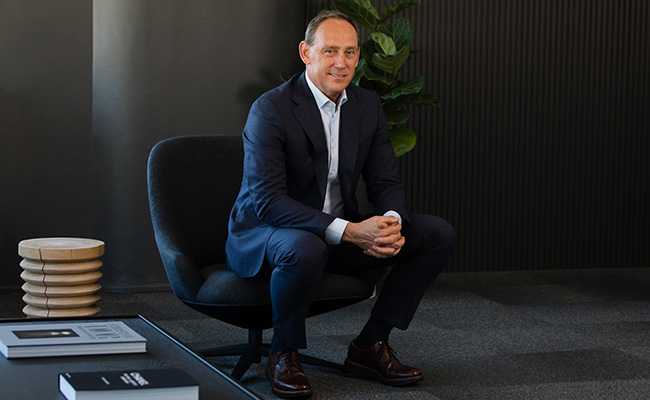
Top image: Atterbury’s Louis van der Watt. Picture: atterbury.co.za.
Sign up to Currency’s weekly newsletters to receive your own bulletin of weekday news and weekend treats. Register here.