


It’s looking like a fairly ignominious ending to the listed life of a once-outstanding blue-chip investment holding company.
And it’s certain to be an acrimonious one: significant minority shareholders of Rand Merchant Bank Holdings (RMH) tell Currency they will not accept a 47c a share offer from AttBid, which includes the founder of Atterbury Properties, Louis van der Watt, and WeBuyCars founders Faan and Dirk van der Walt.
This means RMH may live on for a while longer as a listed entity; an outcome that almost no-one wants but that’s regarded as the lesser of two evils by its smaller investors.
Whatever happens, it’s likely to be a sad ending for RMH, which was once home to significant stakes in some of South Africa’s history-making companies. Think FirstRand, Discovery and Outsurance.
To fully understand why minority investors are so unhappy with the price, RMH’s history with Atterbury is key.
In 2016, a few years after spinning off its insurance businesses, RMH turned to property. First on its shopping list was a 27.5% chunk of Atterbury Property Holdings (APH), a well-regarded property-development company run by its entrepreneur founder, Van der Watt. At the time, RMH said this was the first step in a strategy to invest in entrepreneur-led property businesses. (It was a strategy that had worked well for it in the insurance industry.)
For Atterbury the deal not only brought in an equity investor but also, according to Van der Watt at the time, a “funding facility via RMB”.
Premium property
So excited was RMH about its property ambitions it was willing to pay a hefty premium for its first deal.
Just how hefty a premium only became known years later when, during a presentation to shareholders in June 2020, RMH revealed it had paid R484m for an investment with a stated net asset value (NAV) of R265m.
Presumably in 2016 the RMH board, with then CEO Herman Bosman, reckoned they were onto a guaranteed growth asset. After all, Atterbury had an excellent track record of about 20% compound annual growth rate over the past 20 years. It seemed like the ideal partner. What could go wrong?
Unfortunately, it quickly became apparent RMH had bought into the property business almost at its peak.
This became uncomfortably apparent after June 2020 when RMH unbundled its 34% stake in FirstRand. The announcement of a monetisation strategy shortly after was inevitable.
First to go was Atterbury Europe in mid-2022, a deal that incurred the wrath of activist shareholders when it was sold for R512m less than its R2.3bn stated NAV and at a time when the rand was comparatively strong. In fairness to the RMH board, it should be pointed out that 97% of the 53% of shareholders who bothered to vote, did approve the deal.
But shareholder activist Chris Logan, an outspoken critic of the Atterbury Europe transaction, tells Currency that as soon as the RMH board adopted the monetisation strategy “there ceased to be any alignment with shareholder interests”.
(Following that deal, the sale of the now 38% stake in Atterbury Property Holdings was just a matter of time.
The details behind this increased holding reflected how Van der Watt was generally able to outmanoeuvre the RMH board.
At the time of the 2016 deal, RMH had underwritten a R478m loan from Rand Merchant Bank to Atterbury. In 2023 when the loan was to be repaid, Atterbury said it would settle the loan by issuing shares to RMH, at embedded value, which was about 10% higher than NAV.
This meant RMH would then have to repay RMB the R478m. Unsurprisingly, RMH objected and the matter went to arbitration.
It was ultimately settled that the loan would be partly paid in cash of R162m, with the remaining R325m in Atterbury shares valued at NAV. RMH handed over the money to RMB and got the APH shares and some cash.)
Inevitable buyers?
So, not only was the sale of RMH a matter of time , the buyer would inevitably be Atterbury Property Fund Proprietary (APF), which held the other 62% and was controlled by Van der Watt. Adding to APF’s compelling position as buyer was the fact it had bought Coronation’s 28.35% stake in late October 2025, making it the single largest shareholder.
For minority shareholders the only crucial unknowns were the timing and pricing of the deal.
In November 2025 RMH’s shareholders were given a strong indication of both. The timing? Soon. And the price? About 47c a share.
In a trading statement issued in November RMH informed shareholders it had decided to write down the valuation of the Atterbury stake by 28% to R498m – or down to 47.5c from 66c a share. It seemed a strange move given that interest rates were on the decline and property market conditions picking up.
No other bidders
But that view overlooks RMH’s “monetisation strategy”. The board wasn’t concerned about running the property business, it was determined to sell it. And let’s face it: APF was the only potential buyer.
As the board pointed out earlier this month: “To date no compelling offers have been made for Atterbury, likely owing to the minority position of RMH in Atterbury, capital requirements of the business as well as the lack of a firm dividend policy.”
So, when APF informed RMH in September last year that if it was going to make an offer and it would be at 47c a share, RMH felt obliged to take the writedown.
Four months later AttBid, a consortium led by APF with 49% and the Van der Walt brothers with 25.5% each have indeed made their pitch at 47c. (The Van der Walts are long-term business partners of Van der Watt.)
AttBid, said RMH, is “the most natural acquirer of RMH Property”. It also pointed out the deal provides shareholders with the option of realising immediate and certain value at the prevailing market price, “which must be considered against the ongoing operational costs of running a listed company as well as any potential future capital requirements from Atterbury, which may cumulatively lead to significant future value erosion”. So, the board reckons the acquisition is aligned with the monetisation strategy to realise value for RMH shareholders.
But, says RMH CEO Brian Roberts, this is not a recommendation to shareholders. “The independent board’s recommendation will only be made public in the circular.” That shareholder circular is expected to be issued on March 9 and will include the independent expert’s opinion, which will have been considered by the independent board before it makes its recommendation.
Minority shareholders dig in
Yet the minority shareholders are not impressed. Paul Whitburn of Rozendal Partners, which has a 7% stake, tells Curency they will not be accepting the offer.
“In the past year property shares on the JSE have been rerated close to their NAV; RMH would also have been rerated,” says Whitburn, who reckons its end-June 2026 NAV could be about 70c compared with the reported – and pre-impaired – June 2025 NAV of 66c.
Whitburn accepts RMH has incurred substantial running costs as a listed entity, but says there are ways for these to be reduced.
He is particularly critical of the manner in which the RMH board wrote down the NAV in November. “It was done on the basis of an unsolicited offer from a related party,” he says, and reckons the RMH board is in a rush to get the listing off the market as quickly as possible. “This is not good for their reputation,” he argues.
Consider how attractive the deal looks from APF’s perspective.
Not only is Van der Watt getting back, at a discount, what he sold at a hefty premium 10 years ago, he is also picking up about R200m in cash and near-cash assets. In addition, and, perhaps even more critically, he will be able to get control of a shareholder agreement between RMH and APH that has enforced some restrictions on APH.
The problem clause
Just to show how sensitive the agreement is, one clause is currently the subject of arbitration between the two parties. A ruling is expected in April. The disputed clause requires APH to get approval from RMH for any debt over R25m.
If Van der Watt and AttBid manage to acquire 100% of RMH this shareholder agreement can be scrapped. However, less than 100% could cause problems. Whitburn says he will use JSE regulations to fight any attempt to interfere with the shareholder agreement if RMH remains listed.
Right now, a continued listing looks very possible. Shareholder activist Albie Cilliers, who owns 15% of RMH, says he certainly will not be backing a 47c offer, and even if no other shareholder opposes the deal, Cilliers and Rozendal Partners have more than enough to thwart any plans that Van der Watt may have to delist RMH.
Cilliers says he’s as keen to be invested in RMH as the Van der Walt brothers evidently are and is in no rush to exit. Intriguingly, the brothers sold R860m of their WeBuyCars shares days before announcing their involvement in AttBid.
Currency asked RMH CEO Roberts if the RMH board would consider suspending its monetisation strategy given the improving property market conditions and given the possibility of a favourable arbitration decision in April, given that both have positive implications for RMH’s value.
He says the board is continuing to evaluate the situation. “The company strategy is set by the board to reflect long-term dynamics and what is in the best interests of all shareholders.” As for the arbitration, well that has no link to the company’s strategy or the current market conditions, says Roberts.
ALSO READ:
- Atterbury plays it cool on RMH buyout
- Atterbury’s bid to delist RMH is no sure thing
- WeBuyCars still bok on its growth targets
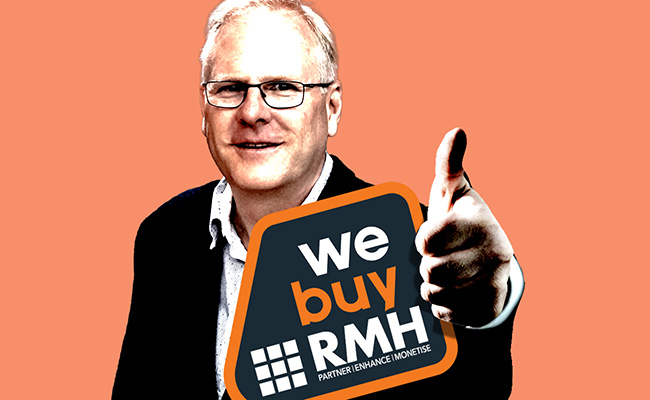
Top image: Faan de Walt: webuycars.co.za. Graphic: pexels-pixabay/Currency collage.
Sign up to Currency’s weekly newsletters to receive your own bulletin of weekday news and weekend treats. Register here.









One question to ask Albie is why did he resign from the board of Atterbury Property?