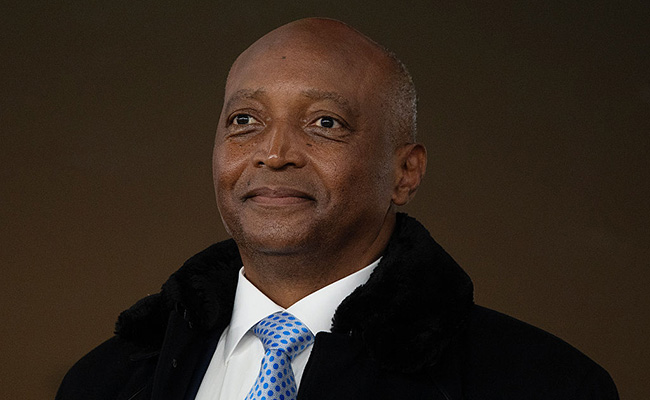

The recent Sens announcement by African Rainbow Minerals (ARM) that founder Patrice Motsepe has relinquished his position as executive chair and is retiring as an employee of the company has sparked much speculation.
Most of it centres around whether Motsepe is preparing for a bid for the South African presidency – a position his brother-in-law currently holds. The thinking is that Motsepe, who has never publicly uttered one word about political ambitions, is preparing his business affairs so that he will be ready for high office.
Other speculation focuses on ARM’s legal battle in Tanzania, where Motsepe and several of his companies are accused of breaching a confidentiality agreement signed in 2019 with Pula Graphite. Pula is claiming $195m from ARM and Motsepe. By slipping into a non-executive role, so the speculation goes, Motsepe might avoid getting embroiled in a high-profile legal dispute.
As with most speculation, there are sound reasons why much of this doesn’t hold up to scrutiny. For starters, it’s a bit early for Motsepe to be preparing his business interests for a presidential bid. As for the legal battle, it won’t make any difference what his current role is: what’s important is what it was at the time the alleged contravention was committed.
‘Self-explanatory’
The fact is, thanks to the JSE’s just implemented “Simplification Project”, Motsepe had no choice but to relinquish his executive chair role.
In strict governance terms Motsepe should not have been executive chair of ARM – ever. Or at least that’s what a casual reading of the previous JSE listings requirements indicates.
Section 3.84(c) states: “The issuer must have an appointed chief executive officer and a chairman, and these positions must not be held by the same person. The chairman must either be an independent non-executive director, or the issuer must appoint a lead independent director, in accordance with the King code.”
That is so straight forward that in a document issued by the JSE back in 2012 – a document aimed at clarifying the sections of the King Code with which listed companies had to comply – the exchange said the section was “self-explanatory and no guidance [was] required”.
Fourteen years later, it turns out the substance of the section was, in fact, far from self-evident. At least, as far as ARM was concerned. And so, in mid-February 2026, the JSE released its “Simplification Project”, with a section that seemed designed entirely for Motsepe and ARM.
Section 5.7(d ) now states that companies on the main board “must have a chief executive officer and a chair, and these positions must not be held by the same person. [So far no change, but here it comes.] The chair must not be an executive director, and must either be an independent non-executive director, or the applicant issuer must appoint a lead independent director in accordance with the King Code.”
Governance gap
You see what happened there? ARM was left with no wiggle room at all. This updated mandatory listing requirement has closed the governance gap through which the ARM board was able to drive a Boeing. In the past it might have been obvious to most that the intention of the splitting of the role of chair and CEO was to ensure no one individual had excessive power on the board. ARM ignored that.
Shareholders would have to see the board document that delegates the power of the board to determine what authority the executive chair had vis-à-vis the CEO, but most commentators would assume in this case the authority rested largely with Motsepe.
This is at odds with South Africa’s traditional board governance system. While executive chair is a commonly held position in the US, in South Africa the highest executive authority on the board is traditionally the CEO.
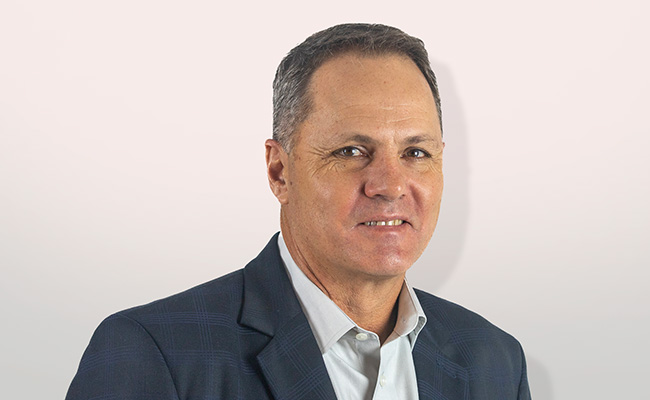
ARM got around the substance of the JSE regulation by appointing a CEO in addition to the executive chair. Andre Visser, director of issuer regulation at the JSE, tells Currency that because Motsepe was not CEO he was not contravening the listing requirements. “He wasn’t a CEO, he was executive chairman,” says Visser. But, “in terms of the new section he cannot be an executive”.
This is why on February 16, the day the “Simplification Project” amendments became operational, Motsepe retired from his position as executive chair and ceased to be an employee of the company.
ARM has also appointed a new chief operating officer.
Making key decisions anyway
The irony, as Protea Capital Management’s Jean Pierre Verster points out, is that ARM had an executive chair and a CEO even though it has operational control over only a few businesses.
ARM is largely a holding company. It has significant but, in most cases, non-controlling stakes in a swathe of mining assets from platinum to ferrous metals, to coal and gold. “It plays more of a financial than operational role,” Verster tells Currency.
And here’s the thing. Regardless of what the King Code recommends or the JSE requires, as the single largest shareholder in ARM, Motsepe will still be making the key financial decisions anyway. “It’s likely that capital allocation decisions will continue to be made by him,” says Verster.
According to the most recent annual report, Motsepe owns 91.1-million of the 209-million ARM shares in issue. That’s a hefty 43.6% of the company. The shares are held by African Rainbow Minerals & Exploration Investments Proprietary Ltd and Botho-Botho Commercial Enterprises Proprietary Ltd.
From here on, ARM will be saved the payment of Motsepe’s executive remuneration, which for financial 2025 was R32.1m, but a chunk of this cost will be diverted to the new chief operating officer.
Not that Motsepe will have to worry about cash shortages, thanks to those hefty annual dividend payments he receives from ARM.
In response to questions from Currency, ARM says: “The recent transition in Dr Motsepe’s role reflects ARM’s strong commitment to good governance and legal compliance, including with the listings requirements of the JSE Limited and the principles set out in King V.
“ARM has always maintained robust governance structures that comply with the JSE listings requirements and general principles of good governance, including a clear separation between the role and responsibilities of the chief executive officer of ARM and of Dr Motsepe in his role of executive chairman of ARM prior to his retirement from that role with effect from 16 February 2026.
“The position of the chief executive officer of ARM has always been separate and distinct from that of executive chairman.
“Consistent with the legal and JSE requirements, the chairman of the board of directors of ARM is appointed by the board. However, as a non-executive director of the company, Dr Motsepe will stand for re-election as a director of the company at the next annual general meeting in order for the shareholders to vote on his directorship.”
This story has been updated with comment from ARM.
ALSO READ:
- Motsepe’s path to Union Buildings starts with a clean slate
- King V: Finally, some muscle
- Going for a steal: Why ARC wants out
Top image: Patrice Motsepe. Picture: Visionhaus/Getty Images.
Sign up to Currency’s weekly newsletters to receive your own bulletin of weekday news and weekend treats. Register here.