
It might be mid-January, but in the South African art world, late February is already in laser focus. Flights were booked months ago, calendars blocked out and itineraries drawn up with one fixed point in mind: the Investec Cape Town Art Fair (ICTAF). For the slackers among us, there is still time to get our acts together and secure opening-night tickets – just.
By the time the fair rolls around on February 20, the city will already be more than warmed up. It’s a frantic month, and the art bonanza arrives hard on the heels of the Mining Indaba and the state of the nation address, both of which funnel global and local attention and traffic into Cape Town. After barely catching its breath from the manic December holiday season, the city is thrust into a few compressed weeks of conversation and dealmaking. The pleasure part of this mania peaks when air-kissing buyers, gallerists and general enthusiasts in linen and sunglasses descend on the convention centre, and Cape Town slips decisively into art-world mode.
This Mother City calendar staple wasn’t always a crowd-puller. In fact, it only kicked off in 2013, but under the direction of Laura Vincenti, the ICTAF has not only endured, it has levelled up, becoming a serious date in the global art diary and billed as the biggest art fair on the continent. Last year it had 30,000 visitors and 125 participating galleries.
Sure, the location helps. Who wouldn’t trade a gloomy northern winter for February heat, mountains, wine and long lunches? But the fair’s growing gravitational pull can’t be explained by scenery alone. It’s also very credible, and that, in an anxious, geopolitically fraught, flat-ish art market, matters more than ever.
A decade in, and growing up
An Italian architect, and seasoned art and exhibition maven, Vincenti joined the fair in 2015 and took on the directorship in 2017. Looking back, she is measured rather than smug about what’s been achieved. “I’m proud of the consistent growth, the first phase over the years,” she says. “It has been consistent, and also [there’s] the recognition [of the fair] on a global stage as a unique place to encounter and discover new talents.”
That phrase – “consistent growth” – is telling. In a world addicted to flash and TikTok dopamine hits, the fair’s evolution has been steadier, more deliberate. Vincenti speaks less about numbers than about language. Over her tenure, she has watched a particular methodology take shape: a way of bringing galleries, artists and audiences into dialogue across borders and cultures. Last year, 58 countries were represented at the fair.
In fact, the fair has become a platform for gallerists and artists to find common ground across cultures, she says. That’s not accidental; it’s cultivated – through curatorial choices, event design and a firm sense of what the fair is for.
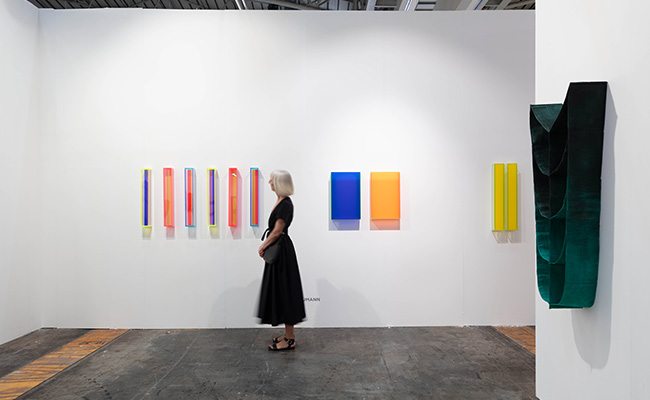
From destination city to destination fair
One of the most striking shifts for the ICTAF has been psychological. It’s no longer unusual to mention Cape Town in art-world conversations abroad and hear a knowing response. Vincenti notices it herself while travelling. “Very often, now, I get asked about my choice behind particular galleries or artists showing at the fair,” she says. The question matters because it assumes intent; that the fair is not simply an open invitation, but a considered proposition.
Her answer is carefully framed. It is not about personal taste; she’s there representing the fair. What guides those decisions is a “common language” – one that resonates across regions.
“Being an international art fair in Africa also means resonance and interconnections with the Global South context,” Vincenti explains. “Relationships are forged across countries, galleries and artists and creators linking through shared historical social issues as connected tissue.”
It’s part of what gives the fair its particular texture, and why it is increasingly taken seriously by curators, collectors and institutions.
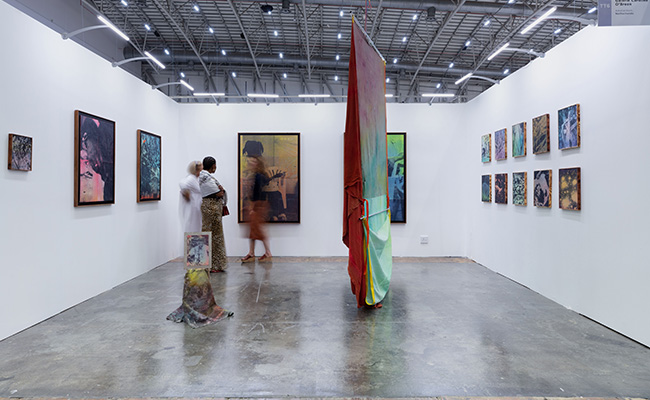
The mood of the moment
The global art market remained under pressure through 2025, with overall sales softening for a second consecutive year as high interest rates, geopolitical uncertainty and a retreat from speculative buying weighed on confidence. Activity at the very top end slowed, while younger and mid-career artists felt the correction most sharply – a reminder that the exuberance of the pandemic-era boom has well and truly faded.
Vincenti is candid about this reality; the industry doesn’t exist in a vacuum. “At the moment we are facing a big change globally, not just in the art world,” she says. “The general mood is somewhat down for now.”
Yes, sales are harder won and gallery confidence can be patchy, but she remains cautiously optimistic, believing that there will be a “resurfacing towards the light in the near future”. It’s a sentiment rooted more in instinct than, say, market data, but no less persuasive for that.
There is also a longer view at play. African art, she argues, is finally moving beyond its uncomfortable phase as an international “trend”. As African art appears more regularly in consolidated and stable collections, artists are getting more recognition – and a more established voice in the canon of contemporary international art.
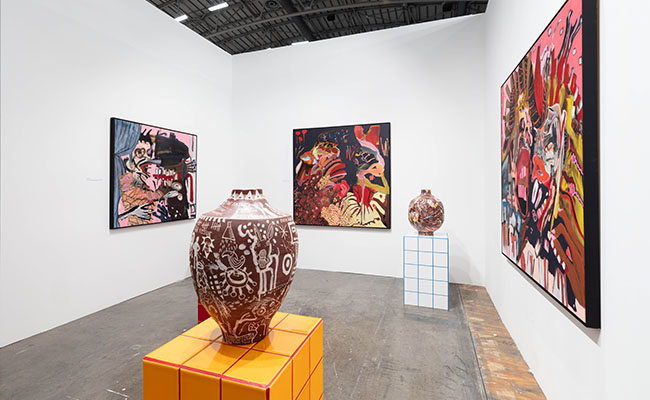
Bubbles, corrections and responsibility
That realism about African art, and it’s place in the global market, also extends to pricing. The past decade has seen aggressive price inflation for young and mid-career artists, in South Africa as elsewhere. “A lack of stability in market values is a big risk to the careers of emerging talents,” Vincenti says. “This volatility can have lasting damage on artists and certainly on their longevity.”
She does not hedge on whether a correction is coming: this is a bubble, she says – and it won’t last forever.
Vincenti is also refreshingly frank about the role of these sorts of events: they function as commercial vehicles. In South Africa, in particular, the private sector has stepped into roles often played elsewhere by public institutions – nurturing ecosystems, creating visibility, sustaining careers. Ideally, she argues, that balance would shift towards greater public-private collaboration. For now, the fair carries a degree of cultural responsibility, whether it asked for it or not.
That much is evident in the fair’s evolving programme. The 2026 edition will be the largest yet, but the expansion isn’t just spatial. For the first time, the fair will introduce a series of adult-focused workshops – an unusual move internationally, but a pointed one locally.
“The fair holds a responsibility as a cultural platform to provide a space that is not just commercial, but also a space of education and confrontation,” Vincenti says. “For the first time, we will really do something towards this goal of nurturing education for people here, for the local community.”
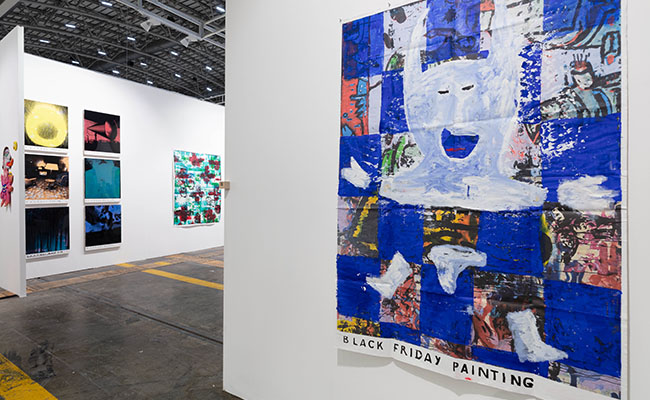
The shape of things to come
The curatorial theme, “Listen”, also signals a subtle shift. Listening, for Vincenti, is not passive. “You can listen to an artwork,” she says. “The artwork speaks to you in a very different way, but it speaks to you.”
It’s an idea that plays out spatially too, and is an apt one for this trained architect. Vincenti thinks of the fair less as a grid than as a city; a series of neighbourhoods designed to encourage pause, movement and encounter. In a world of increasingly formulaic fairs, that human-scale thinking sets Cape Town apart.
For newcomers, Vincenti’s advice is refreshingly unpretentious: “Just come,” she says, pointing to the fair’s open and inviting ethos. Galleries aren’t just there to sell; they’re there to explain and discuss the artworks on display. In the shared looking, the overheard conversations and the collective curiosity, intimidation tends to melt away. “You’re not alone in a white box,” she notes. “You are in the middle of a buzz.”
That buzz is now part of Cape Town’s cultural infrastructure. It spills out of the convention centre and into a constellation of fringe shows, dinners, openings and late nights across the CBD and foreshore. In our book, that swelling ecosystem of aligned but unofficial events is always the clearest sign that an art fair has truly arrived and, under Vincenti, the Cape Town fair very clearly has.
The Investec Cape Town Art Fair runs from February 20-22. For more information, visit the fair website.
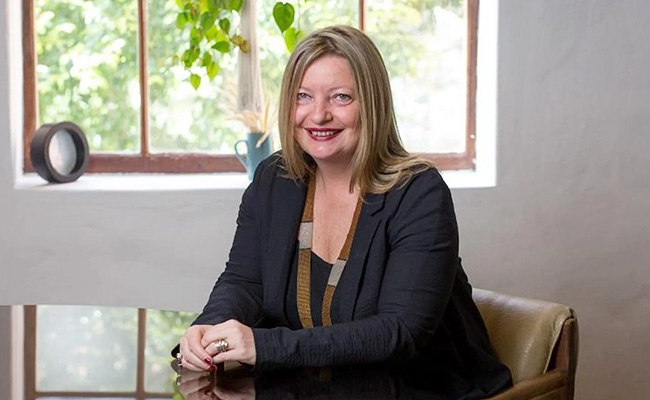
Top image: The Investec Cape Town Art Fair’s Laura Vincenti.
ALSO READ:
- Art: The investment to bank on
- Beyond the brushstroke: Understanding the art scene
- Art of the continent: The market outlook
Sign up to Currency’s weekly newsletters to receive your own bulletin of weekday news and weekend treats. Register here.