
There was a very real fear, during Covid, that Discovery – which, among other things, administers the country’s largest medical aid – might be forced to tap shareholders for cash. In the wake of a thumping half-year to the end of December, in which its earnings grew 29% to R5.7bn, that fear seems to have completely vanished.
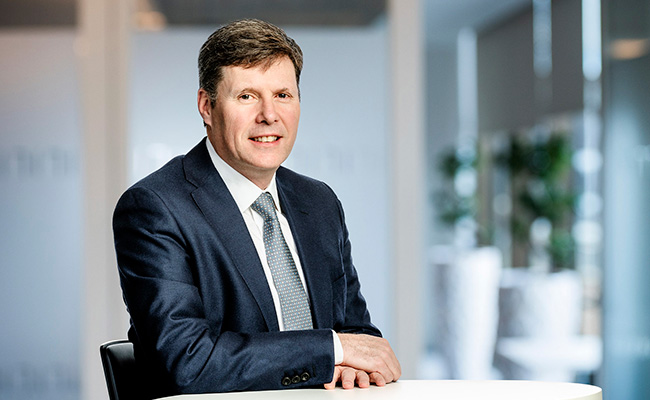
“I would argue that we’ve applied careful allocation of capital in pursuit of growth and that’s played out,” said Adrian Gore, the CEO and founder, at Discovery’s results presentation on Tuesday.
The results appear to vindicate Gore’s strategy, which has been to pump money into growing its bank and investment business, even as it continues to grab market share in its life insurance and medical aid business. But don’t make the mistake of thinking this is where Discovery’s growth path ends.
Far from it, Gore says, arguing that the business can still keep growing at between 15% and 20% a year over the next few years. In an interview with Currency on Tuesday, Gore says: “I don’t see us investing in a new start-up with J curves – we’ve done that and we’ve got here by doing that.”
Instead, Discovery is now looking to reap some of the reward for its years of ploughing money into its fledgling operations – including Discovery Bank in South Africa, Ping An in China and Vitality in the UK. The “Vitality Composite” business, in which all its offshore operations are housed, expanded its operating profit 41% to R2.1bn.
“We’ve got stuff that is embryonic: the bank is just profitable, the US is starting to emerge as a powerful potential business and it feels that without capital, we can grow really strongly and that’s fantastic,” says Gore.
‘In a strong position’
Of course, Gore’s bad luck is that these results were released on a day in which the entire JSE was savaged in the market fallout from the Iranian war. On a day where the JSE’s all share index plunged 5.5%, Discovery’s 0.4% gain represents a towering outperformance, compounding its rally of about 7% since it flagged the rise in profits last week.
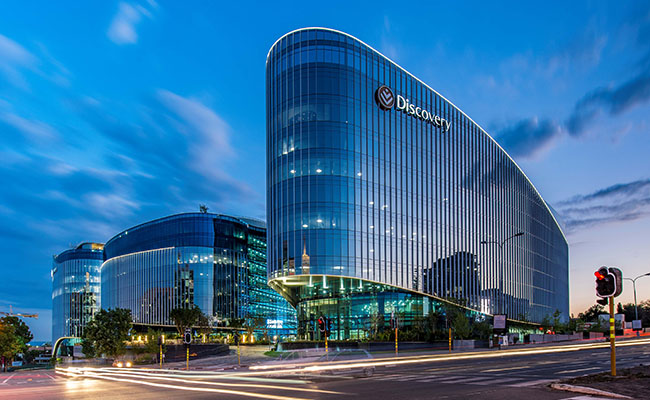
As smart as Discovery might be when it comes to allocating capital, it still had to field questions at the presentation over its decision to spend R4bn buying the head office in Sandton that it currently leases from its landlord, Growthpoint. On this point, CFO Deon Viljoen said the purchase actually saves it about R100m a year, as the company is still only halfway through its lease.
What will mute much of the criticism over its capital allocation is that its previous start-ups – like the bank – are purring.
Jarred Houston, an analyst at All Weather Capital who has followed the stock for the past 10 years, says Discovery “is in as strong a position as I’ve seen it”.
For starters, Houston says, it has a much stronger balance sheet than a few years ago. During the peak of investment into the bank, Discovery was spending more than 10% of its operating profit on new initiatives. Today, this is just 3%.
In the bank’s case, says Houston, “as it turns to profit it will no longer be a drag on group capital and increasingly have the ability to fund its loan book”.
Gunning for 2-million
Gore will be especially pleased with Discovery Bank, which was billed as the country’s first “behavioural bank” when it launched in 2018 into a market suddenly awash with new entrants, including TymeBank, backed by Patrice Motsepe, and Bank Zero.
Today, Discovery Bank has 1.4-million customers and, should it hit the magic mark of 2-million, its operating profit would be about R3bn, based on a cost-to-income ratio of between 40% and 50%.
“It’s not without risk, but if you look at the mathematics and extrapolate, and we grow at the same rate, I think it’s plausible,” Gore tells Currency. “The banking space is bigger than people think: if you do the analysis of the big banks, and the depth of their lending books, they are massive. So we’re not running out of road.”
In terms of sheer numbers, he’s not wrong; the established banks have between 7.6-million and 12.4-million customers, while the mass-market-focused Capitec has 24-million customers, and even the fledgling TymeBank says it has 10.3-million.
Discovery, as a digital bank, has an advantage in that it doesn’t have the expensive legacy systems of the older banks, at a time when customers are looking for both greater simplicity and flexibility.
Last year, consultancy PwC said 21-million South Africans had migrated to digital banks, as the lenders jostle to “craft personalised customer experiences that anticipate needs and erase friction”.
On the AI offence
But it’s not just digital banking where Discovery seems to be in the right place at the right time. As the world lurches towards “wellness” and AI-health programmes, Discovery’s Vitality – premised on incentivising healthy behaviour through its “shared value” model – is just as well placed.
“All of the forces we are seeing coming through are creating a very different environment, and we are squarely in the space [where] our model can lead globally,” Gore says.
Rather incredibly, for instance, Vitality has now gathered data on customers equal to 60-million life years.
Asked what he sees as the risks and benefits of AI for South African society, Gore is characteristically zen.
“We have all the same issues about jobs and we’ve got to figure them out, but unlike many companies, the front end of our business with Vitality is already AI – so we’re on the offence, not defence,” he says. “We have a business model that requires AI. For us it’s a product, but it doesn’t absolve us from the same set of dilemmas in how AI will affect call centres and processes and coders.”
Gore admits there is a “non-trivial risk” that AI will be very disruptive to society, but he caveats that by saying: “I think people are too pessimistic.”
Takeover target?
But while Discovery’s overall complexion looks pretty healthy, this doesn’t mean it hasn’t faltered.
One embarrassing bungle in the past year was a glitch that led to Discovery Health accidentally paying some members’ pharmacy bills over the course of an entire year. When it belatedly realised what had happened, and tried to claw the money back from those customers, the outcry from angry medical aid members forced it to reverse course, and agree to cover the R125m bill.
But overall, this was a small reputational hump.
If anything, the increased appeal of its Vitality model – with “shared value” all the rage in global insurance circles right now – means there is a risk that Discovery itself might become a takeover target for offshore rivals.
Houston says: “They’re definitely advanced by global standards [and] the fact that their IP and skill set is valued enough for these massive global insurers to buy in and pay them a royalty on business written tells you there is something there in what they can offer.”
Nonetheless, he’s doubtful there will be any takeover approach. More likely, says Houston, the Vitality business could be spun out and separately listed from the rest of the insurance business.
Asked about this, Gore says: “I think the two [parts] of the business have different potential investors but it’s not something we’ve considered. There’s an IP link – not a systems link – so Vitality AI can flow between the two. They’re both growing well and they’re symbiotic.”
But the bank is where the real excitement is now, says Houston. “The bank could become a really big business. It’s gaining traction at speed. If they can drive activity and lending, plus engagement through the app, it creates another level to this growth story.”
Growth path
For investors, Discovery has already been a massive success. At R259, the stock has more than doubled in the past two years – which isn’t something that many companies, gold and platinum stocks excepted, can claim.
Houston says All Weather accumulated a chunk of Discovery shares ahead of the rally, which began after the national elections in 2024, but it has since sold off much of that position.
“We are relatively cautious just because of how strongly these stocks have rerated,” he says. “But I think on a relative basis, and within the financial sector, Discovery is still attractive because I think it will carry on growing at a higher rate in the next three to five years.”
This story was produced in partnership with Stanlib Asset Management.
ALSO READ:
- Discovery, six years and R15bn later, makes bank
- Market smashes Discovery’s growth forecasts
- Discovery, humbled by poor crisis management, does a U-turn
Top image: supplied.
Sign up to Currency’s weekly newsletters to receive your own bulletin of weekday news and weekend treats. Register here.