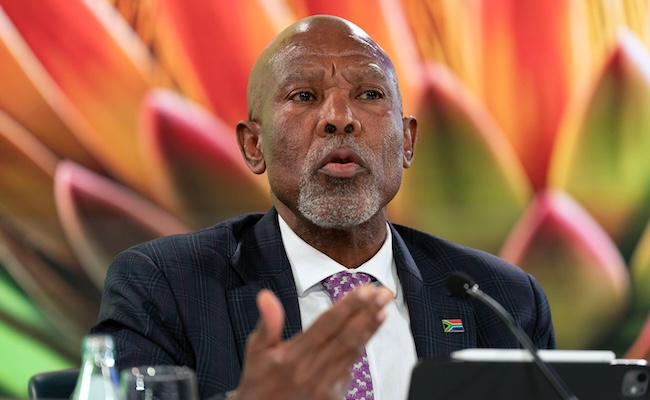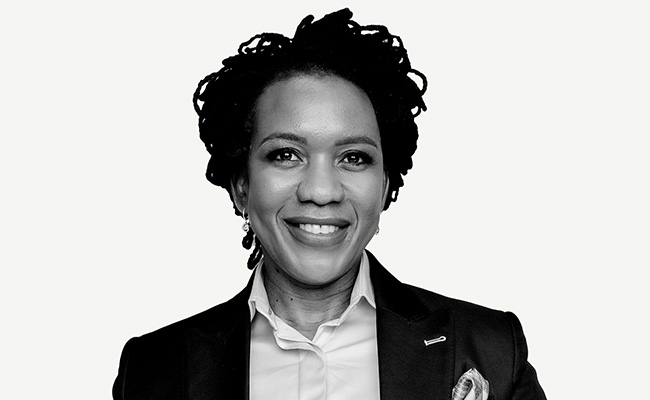
Mary Vilakazi, the CEO of South Africa’s largest bank by market value, FirstRand, believes the country would be better served by a “much more neutral stance” on geopolitical issues, as the Iranian war intensifies.
Vilakazi’s comments came in the wake of stellar half-year results, released in the week in which Israel and the US began bombing Iran, a country perceived to be South Africa’s ally. This sparked a return of fire in which Iran attacked its neighbours, Dubai, Qatar, Kuwait and Saudi Arabia.
“If investors start worrying about geopolitical fallout for South Africa, that is most unhelpful,” said Vilakazi in an interview with Classic Business. Rather, she said, South Africa should “focus on what benefits the country”.
Pretoria has faced renewed scrutiny from Washington over its diplomatic stance towards Iran amid persistent allegations that Iran helped fund the country’s case against Israel at the International Court of Justice – allegations which have been strongly denied by both South Africa and Tehran’s governments.
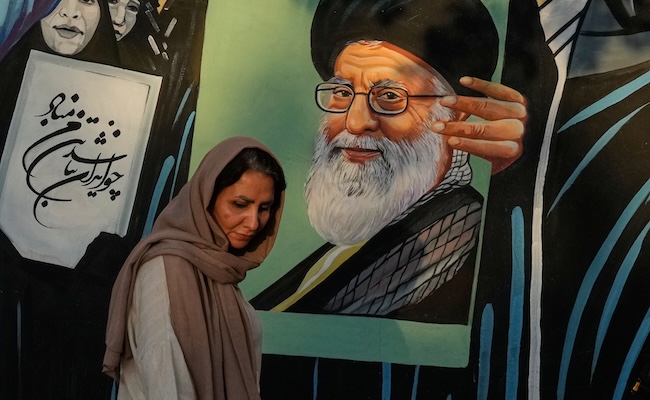
Yet this week, ANC secretary-general Fikile Mbalula said “we must not forget our friends”, while his deputy, Nomvula Mokonyane, led a delegation to Iran’s embassy to express solidarity with the people and government of Iran after the death of its supreme leader, Ayatollah Ali Khamenei.
This underscores a deep historical alignment: the ANC-led government has persistently either abstained or voted against condemnation at the UN for human rights abuses in Iran.
Donald Trump’s Republican Party responded to President Cyril Ramaphosa’s message of “condolence” for Khamenei’s death by saying South Africa’s president was “cosying up to the Iranian regime”.
Threat to corporate recovery
For Vilakazi, these sorts of geopolitical optics are unhelpful at a time when South Africa’s economy looks to have turned the corner.
“South Africa has done well in restoring macroeconomic stability,” she said, citing the roughly 220-basis-point decline in the sovereign risk premium reflected in the 10-year bond yield.
But she said geopolitical optics, like South Africa’s stance on Iran, matter.
She is not the only one to say this.
North-West University’s professor Barend Prinsloo says that if the war persists, South Africa’s “political and corporate alignment with Iran could begin to count against it, particularly if Washington frames the conflict around proliferation and defence supply chains”.
This “corporate alignment” refers to claims made in court that cellular firm MTN secured a mobile licence in Iran back in 2004, when it was chaired by Ramaphosa, by promising support for Iran’s nuclear programme at the International Atomic Energy Agency.
“Over time, the greater risk may lie in political and financial exposure if South Africa is viewed as an outlier in its ties to Tehran while the US appears willing to apply punitive measures,” says Prinsloo.
Vilakazi’s plea for a “more neutral stance” comes amid fears that in a turbulent trade climate, the fallout for companies in countries seen as aligned with a rogue state could be immense.
For South Africa, this would threaten to derail a fledgling economic recovery after a decade of blackouts and sub-1% GDP growth.
Stellar results
The fruits of this recovery were evident in the half-year financial results of FirstRand, one of the most consistently profitable banks in the emerging-market universe. Here, its normalised earnings grew 11% to R23.2bn, which lifted its return on equity to 21.1%.
In a global banking environment still grappling with slower credit growth and falling interest rates, those are formidable numbers. This result is notable since it was not driven by aggressive balance-sheet expansion – advances grew only about 5%, yet earnings rose by more than double that.
The explanation lies in a combination of diversified franchises, disciplined capital allocation and a balance-sheet strategy that has become one of FirstRand’s defining competitive advantages.
“We’ve seen good contributions from our South African franchises, supported by further contributions from our broader Africa subsidiaries,” said Vilakazi. “Retail continues to grow customers and transaction volumes, which has been supportive of profitability.”
FNB, which contributed 57% of group earnings, continued to expand its customer base and digital ecosystem, while RMB benefited from improved trading activity and private-equity realisations.
Still, retail lending growth remained relatively subdued as South African consumers are slowly recovering from years of elevated interest rates – though activity is steadily improving.
“Rates are coming down, but it takes a while before you can say consumers have emerged on the other side with stronger balance sheets,” Vilakazi said. “We are seeing that improve.”
Importantly, the bank is beginning to see a potential shift in the credit cycle – one led by companies rather than households.
“For South Africa, a positive that we note is that corporate credit extension is actually the strongest it’s been since coming out of Covid,” she said.
“That speaks to a credit cycle that’s emerging led by corporates – and hopefully an investment cycle. That’s what South Africa needs most.”
Decoding the magic
The real magic in these results sits deep inside the balance sheet.
FirstRand has long distinguished itself through sophisticated asset and liability management (ALM), the process by which banks manage the relationship between their loans, deposits and capital to optimise margins and stabilise earnings through interest-rate cycles.
In the latest period, that strategy delivered R1.2bn of additional earnings through structural hedging of the group’s endowment.
“That’s definitely the big contributor,” Vilakazi said. “Our group ALM strategy delivered very well in this environment where rates are coming down.”
Put simply, the bank’s large deposit base allows it to invest portions of its funding along the yield curve rather than simply holding liquidity at overnight rates. The result is a structural margin advantage.
Since the strategy was introduced in 2018, it has generatedR17.5bn in cumulative additional net interest income.
It is a key reason why FirstRand consistently produces returns on equity above 20%, comfortably ahead of most global peers.
ALSO READ:
- South African foreign policy: Vrot with contradiction
- The exchange … with FirstRand’s Mary Vilakazi
- Rating the AGMs: FirstRand and Aspen
Top image: FirstRand CEO Mary Vilakazi. Picture: firstrand.co.za.
Sign up to Currency’s weekly newsletters to receive your own bulletin of weekday news and weekend treats. Register here.