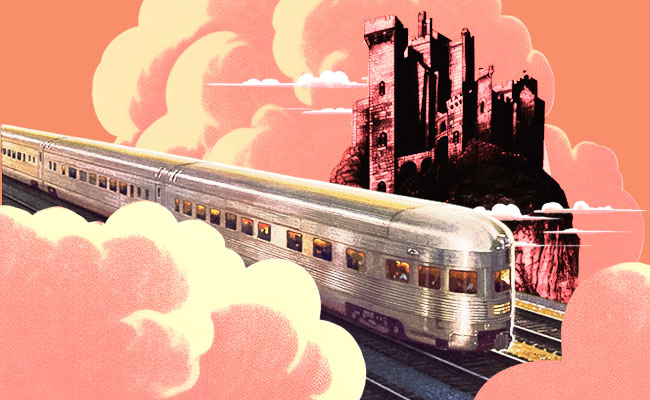

Since the news broke that the Gauteng provincial government will be taking ownership of the Gautrain on March 28, South Africans have been bidding it farewell across social media.
“Rest in peace, Gautrain,” one user wrote on Facebook. “The cadres must be rejoicing,” said another. In further displays of doomerism, AI-generated images of dirtied and dilapidated train stations with street hawkers crowding the platforms have been making the rounds.
It is indicative of the public’s view of the Gauteng government and its ability to maintain its own infrastructure.
It’s not as though these fears are unfounded: Gauteng is experiencing a major infrastructure crisis, characterised by crumbling roads, sketchy electricity distribution and decrepit water systems. But no-one, not least the Gauteng provincial government, wants the province’s singular piece of functioning high-speed technology to go down the drain.
“I don’t see that they [the government] would even want to think about trying to run it themselves,” says industrial analyst and director of Chronux Research Rowan Goeller. “They just don’t have the necessary skills to run an entity like Gautrain. It’s not government’s strength at all.”
It’s also a question of financial capacity, says Gautrain Management Agency (GMA) CEO Tshepo Kgobe. Speaking to the feasibility of a government-run Gautrain, he says one must “look at the reality of whether you’ve got money in the fiscus to refurbish [the Gautrain] and do other things”.
“Yes, the money can be made available, but something else is going to suffer in government that you will not be able to spend money on,” he says.
For that reason, the Gautrain has for the past 19 and a half years run as a public-private partnership (PPP) with the Bombela Concession Company (BCC).
“The bulk of the money for the Gautrain was actually put in by government, and the [BCC] put in a fairly small portion,” explains Goeller, which is unusual in that the upfront financing for PPPs usually comes from the private partner. The government has finally paid off the cost of building sponsored by the BCC and will now have full ownership.
But while ownership is being transferred, the rail line will continue to run under a PPP. As Kgobe explains, the PPP model was chosen as the most sensible way forward after undergoing a feasibility study approved by Treasury.
“One of the things that has worked very well in the current PPP is [the] separation of duties,” explains Kgobe. The government and the operator have very clear demarcations as to what is and is not their business to run, which ensures the logistic and financial burden of running the Gautrain is shared.
The BCC is responsible for the day-to-day running of the Gautrain and its bus fleet, including security, ticket sales, station maintenance, staffing and customer support. The government’s focus is the bigger picture, such as integration and co-ordination with other public transport services and future Gautrain expansions.
Under the new PPP, the winning bidder will sign a contract with the provincial government to operate, maintain, upgrade and modernise the Gautrain. The GMA confirms that “one consortium has now been selected as the preferred bidder” – albeit a year behind schedule.
Why this isn’t your typical tender
PPPs differ from public procurement processes, which have come to be associated with corruption in South Africa. PPPs are long-term, collaborative contracts of different types with more stringent approval processes overseen by National Treasury, whereas public procurement is the shorter-term purchase of goods or services directly funded by the state.
PPPs are not entirely insulated from corruption (the Vrede Dairy Farm scandal is a standout case), but they are much harder to feed off , as they are heavily regulated and require approval from Treasury in six distinct phases, from the feasibility study to a value-for-money assessment, to the negotiations and finalised plans. Additionally, payment is tied to performance in the long term, meaning PPPs are only supposed to benefit financially when services are delivered.
For further transparency, the names of the three consortiums bidding to become the new Gautrain operator have been made public. There’s the Jubane Consortium, which includes the BCC as well as French, Dutch and South African investment groups and transportation companies. (The BCC did not respond to requests for comment.)
There is also the Sihamba Sonke Mobility Consortium, comprising mostly South African or African investment management and engineering companies, as well as a French multinational mobility company that manages transport in more than 16 countries.
Last, there is the WRIC Concession Company, which does not have a public profile.
None of this indicates the total collapse of the Gautrain as we know it. The BCC will continue to operate the Gautrain for six months until the chosen bidder can smoothly take over. Changes might occur then, but nothing like the fearmongering froth being churned up online.
When asked questions by Currency about the chosen bidder, Kgobe says he doesn’t know anything, as the board is completely excluded from anything related to the procurement process.
“The separation of duties in our governance requires that it gets run as part of procurement, so myself as CEO I don’t get involved in it,” he says.
Hopefully such governance practices form another barrier in the way of the tendrils of any corrupt dealings. For now, sanity prevails and the Gautrain remains alive and well.
ALSO READ:
- Africa’s big bet: $15.2bn mobilised for mega-projects
- PPPs to the rescue? Not quite yet
- By the numbers: Highlights from the mid-term budget
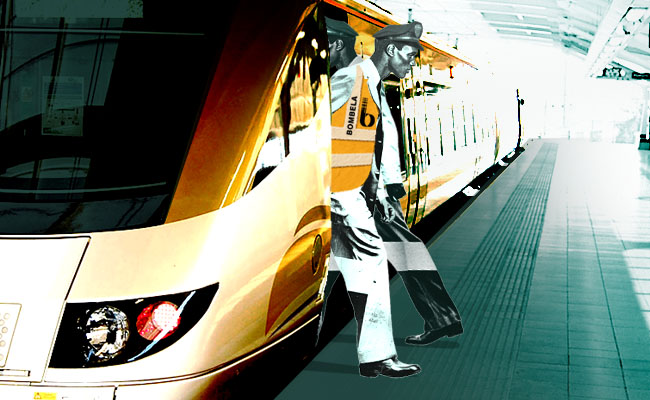
Top image: Bioclear South Africa/Wikimedia Commons; Rawpixel/Currency collage.
Sign up to Currency’s weekly newsletters to receive your own bulletin of weekday news and weekend treats. Register here.