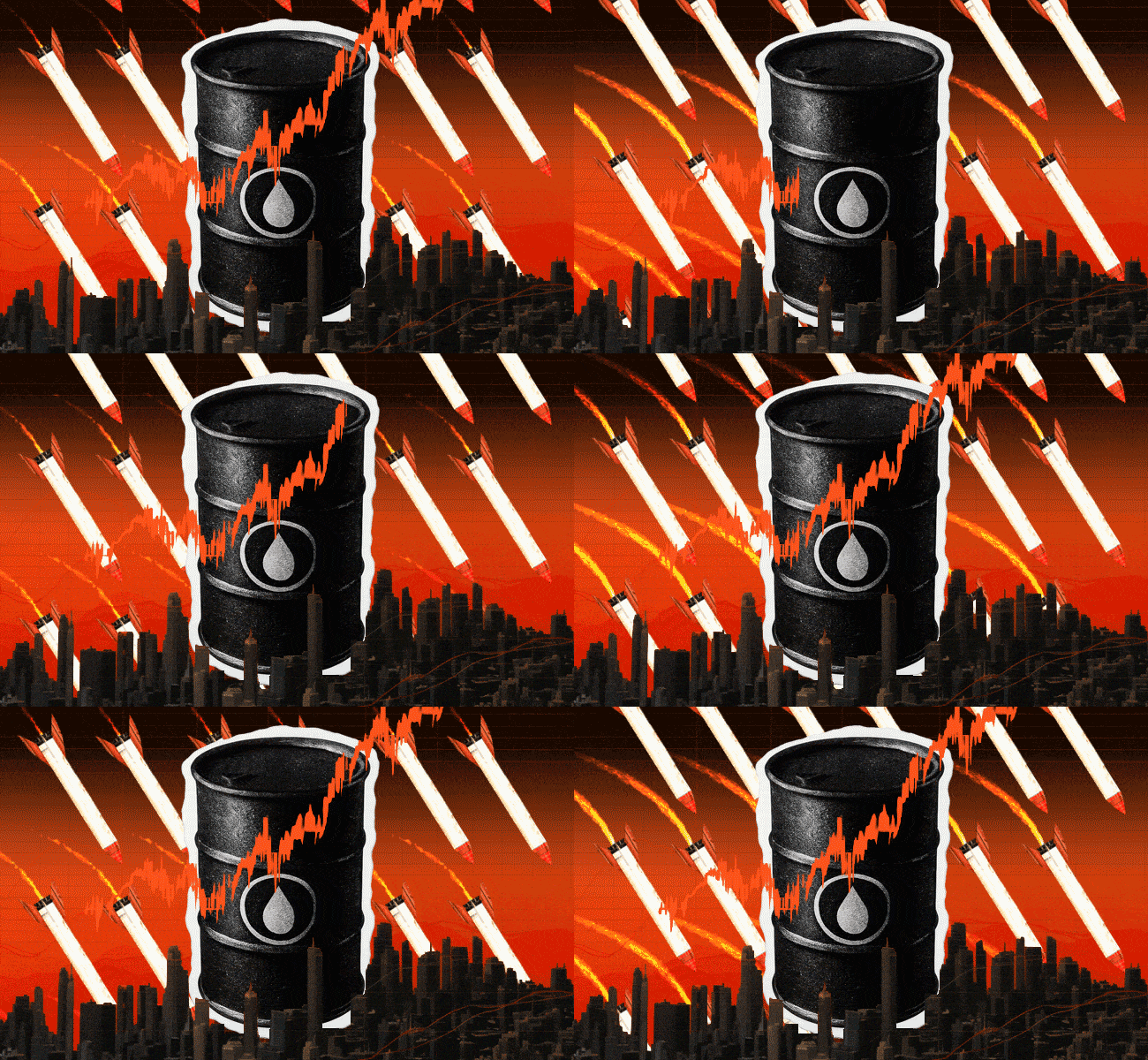

Oil prices didn’t drift higher last week – they leapt. Brent crude briefly touched $119.50 a barrel on Monday, after starting the month near $77. This meant prices have risen more than 50% in a month and 25% in a single session as tensions between the US, Israel and Iran escalated. Traders are now worrying about oil shipments through the Strait of Hormuz, responsible for transporting a fifth of the world’s oil resources.
Who are the winners and the losers?
Energy companies were the clear winners: Sasol shares are up about 36.5% over the past 30 days and Thungela surged roughly 52.6% as investors rushed into companies that benefit directly from higher energy prices. But the same shock hit the rest of the market the other way: the JSE all share index fell 9.2% over the week, as investors began pricing in higher fuel costs, rising inflation and the risk that interest rates could stay higher for longer. At the same time, the rand depreciated by close to 4% against the dollar over the past seven days to R16.80, which will add to inflation.
What are the three pressures hitting markets?
The first is a geopolitical oil shock – and markets always react quickly when energy supply is at risk.
The second pressure is inflation. When oil rises, fuel becomes more expensive, transport costs go up and businesses pass those costs on to consumers through higher prices.
The third pressure is interest-rate uncertainty. If inflation rises again, central banks like the South African Reserve Bank (SARB) may have to keep interest rates higher for longer, or delay rate cuts, even as growth slows. Higher rates make borrowing more expensive and weigh on stock markets.
When all three pressures hit at once, investors suddenly have to rethink growth, profits and valuations.
Why the rest of the market is nervous
Rising fuel costs act like a quiet tax on the whole economy. As fuel becomes more expensive, trucks cost more to run, flights cost more, and businesses start paying more to move goods and produce things. They pass on those costs to consumers.
Economists estimate that if fuel prices rise by about 9% in a single month, it could add about 0.4 percentage points to inflation, pushing it from roughly 2.9% to about 3.3% in a short space of time – the kind of move that makes central banks nervous.
The SARB went into the year expecting inflation to stay just above 3%, with oil assumed to be closer to $75 a barrel. Oil above $100 changes that picture and makes it harder for the SARB to cut interest rates as quickly as investors had hoped.
Why some think this could get worse …
If the fighting in the Middle East spreads or ships cannot move safely through the Strait of Hormuz, oil could stay above $100 for a long time, or rise towards $150 a barrel.
That puts central banks in a difficult position: they can’t cut interest rates because inflation is rising, but keeping rates high can slow the economy. This could then lead to stagflation, where growth is weak but prices keep rising – a pattern seen during the oil crises of the 1970s. Higher oil, higher inflation and higher interest rates all tend to pressure share prices, especially in markets that were already trading at relatively rich valuations.
Okay, so what’s the worst-case scenario?
It’s simple: the fighting could spread and ships would be prevented from moving safely through the Strait of Hormuz for several months and this would cascade through the economy.
For this extreme scenario to happen, the normal safety valves would have to fail: large producers would not increase supply fast enough, emergency strategic oil reserves would not be released quickly, and alternative shipping routes would not replace the lost supply. The probability of this outcome is fairly low, but if it did happen, global growth would suffer.
Why this may be a three- to six-month shock
Oil shocks often look worse at the start than they turn out to be. When a war threatens supply, traders price in the worst possible outcome and prices jump fast because people fear oil could become scarce. But these spikes often fade once supply adjusts and the panic settles. During the 1990 Gulf War, oil prices surged but settled within about nine months. After the 2019 attack on Saudi oil facilities, the price spike faded within weeks. And after the 2022 invasion of Ukraine, oil moved back towards earlier levels within six months. Markets adjusted as large producers increased output, and governments released oil from strategic reserves.
Another reason spikes often fade is that financial markets move faster than the physical oil market. Traders in futures markets react instantly to headlines and fear, but the real oil market – ships, refineries, storage tanks and inventories – adjusts more slowly and finds ways to balance supply and demand. That is why the smart money believes this could be a three- to six-month shock, rather than a prolonged energy crisis.
For now, the market is doing what it often does in uncertain moments – pricing the worst case first.
ALSO READ:
- What Iran’s war means for African economies
- Smart trade for the Gulf meltdown: Don’t look
- Why Iran is sowing regional chaos
Top image: Rawpixel/Currency collage.
Sign up to Currency’s weekly newsletters to receive your own bulletin of weekday news and weekend treats. Register here.