
In South Africa’s water-scarce regions, one of the most effective ways to restore water is also one of the least visible: clearing invasive alien vegetation.
In the Western Cape, where the threat of “Day Zero” once brought the province to the brink, communities are working on the ground to restore natural water systems by removing invasive plants that consume significantly more water than indigenous species.
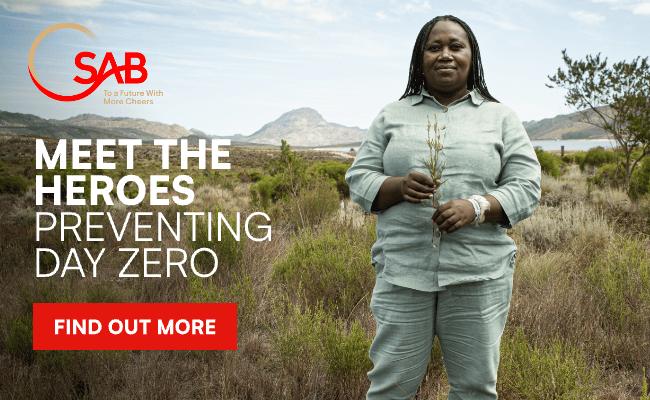
This work is led by local teams, many of them women, who are actively clearing invasive species from critical catchment areas. These teams are often employed by small, Black women-owned enterprises that are creating jobs and driving inclusive economic participation in their communities. By removing invasive vegetation, they are enabling water to flow back into rivers, dams and underground systems, directly supporting surrounding communities, agriculture and ecosystems.
Invasive alien plants absorb far more water than native vegetation, placing additional strain on already limited resources. Clearing these species is therefore not just an environmental intervention, but a practical, high-impact solution to improving water availability in water-stressed regions.
Since 2015, through partnerships with organisations such as The Nature Conservancy and WWF South Africa, this work has helped clear thousands of hectares of invasive vegetation in the Western Cape. The impact is measurable, with more than 3.3-billion litres of water returned to local systems.
Beyond the environmental benefits, this work is creating meaningful local livelihoods by equipping communities with skills, income and long-term opportunities, while contributing to ecosystem restoration.
For those on the ground, the impact is immediate and tangible.
“The work we do is not just about clearing land; it is about restoring balance to nature and helping water flow back into our communities,” says Thandeka Mayiji-Rafu, an invasive species clearing specialist. “It is about making a difference where we live.”
SAB supports these initiatives as part of its broader commitment to protecting the natural resources that sustain both communities and its business.
“Water is the most important ingredient in beer, but more importantly, it is essential to the communities we serve,” says Zoleka Lisa, vice-president of corporate affairs at SAB. “Our role is to support work that strengthens water security in a way that is practical, local and sustainable.”
These efforts form part of SAB’s global “Cheers to Nature” platform, which focuses on nature-based solutions that deliver real, measurable impact.
While the work itself happens on the ground, SAB has also launched a Watershed Film to bring greater visibility to these efforts, ensuring that the people behind the work, and the impact they are creating, are seen and understood more widely.
At a time when water security remains a growing national and global challenge, this work highlights a simple but powerful truth: restoring nature is one of the most effective ways to restore water.
Watch the SAB Watershed Film here.
Sign up to Currency’s weekly newsletters to receive your own bulletin of weekday news and weekend treats. Register here.