
May’s inflation print has left the South African Reserve Bank (SARB) in a bind: the headline number looks bad, the underlying story looks better, and the world is changing faster than policymakers can model it.
Consumer prices accelerated to 4.5% year on year in May from 4% in April – the highest reading in almost two years and above the Bank’s 3% target. But the outcome undershot the Bloomberg consensus of 4.7% and Nedbank’s 5.1% forecast, reinforcing the sense that this is an oil- and administered-price-shock rather than a broad demand surge.
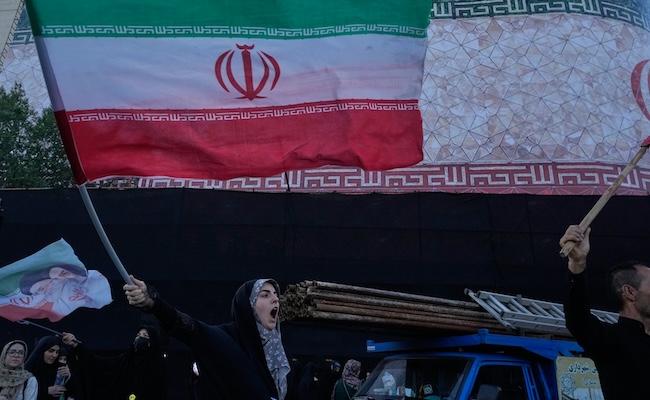
And the oil shock itself may already be fading: as Washington and Tehran edge towards a peace memorandum on the Strait of Hormuz, the fuel crisis that drove much of May’s reading is unwinding before the July monetary policy committee (MPC) meeting even arrives.
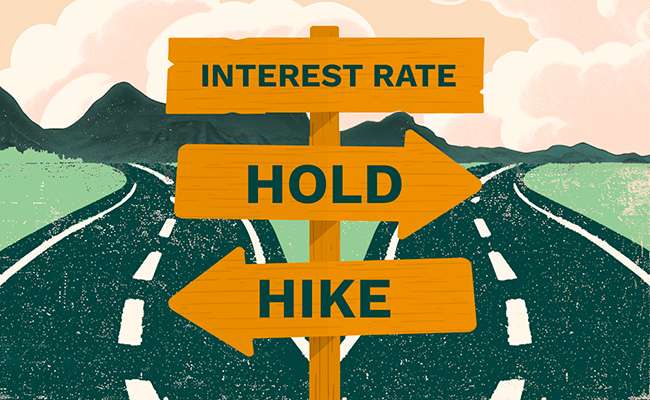
The question the SARB now faces is whether to act on what the data says – or wait for what it implies.
Transport inflation jumped to 9.4% year on year, reflecting a 14.3% month on month rise in petrol prices as the closure of the Strait of Hormuz squeezed global supply and pushed Brent crude above $100 a barrel in May. Eskom’s 8.76% tariff increase, which took effect on April 1, helped nudge housing and utilities inflation to 5.3%, with electricity and other fuels running at 9.4%.
“The concern isn’t just the fuel number itself – it’s that we’ve had two consecutive large hits on public transport, and the second-round effects are still feeding through,” says Keabetswe Mojapelo, macroeconomist and fixed-income analyst at Rand Merchant Bank. “Until the strait reopens and stays open, I wouldn’t call this over.”
Second-round effects
That second-round dynamic is exactly what the SARB fears. Core inflation, excluding food and fuel, edged up from 3.6% to 3.8%, which economists at Nedbank read as evidence that firms are passing some of their higher operating costs on to consumers. Goods inflation jumped from 3.4% to 4.4% – its highest since August 2024 – while services inflation crept up to 4.7%, driven by transport, recreation, IT and hospitality.
Yet the inflation basket is not uniformly running hot. Food is in disinflationary territory and, for now, offsetting some of the fuel-price pain. Headline food inflation slowed to 1.6% from 2.8%, a 14-month low, with broad-based easing across cereals, fruit, vegetables and oils, and meat inflation falling to 7.3% from 9.4%. Nedbank attributes this to lower global food prices, strong domestic agricultural output, and gradual normalisation in meat markets as vaccination campaigns contain foot-and-mouth disease.
Mojapelo cautions that the food reprieve may be short-lived, as higher diesel prices only begin to show up with a six-month lag. “We’ll probably see the impact when we get into planting season,” he says.
On the SARB’s calculus, May’s print “certainly increases the possibility for another interest rate hike” at the July MPC meeting, Mojapelo argues, especially after policymakers already raised the repo rate by 25 basis points to 7% in May, when CPI jumped from 3.1% to 4%.
But the data also supports a case for patience. “The rate of monthly increase almost halved – from 1.1% in April to 0.7% in May,” says Chris Hattingh, executive director at the Centre for Risk Analysis. “If the latest print confirms the SARB’s own May forecast of 4.4% average for the year, that says: ‘We’re on the right track.’”
The Iran factor
Elna Moolman, Standard Bank Group’s head of South Africa macroeconomic research, goes further. The easing oil-price trajectory and the imminent prospect of a US-Iran deal mean “the upside risks to the inflation trajectory have subsided”, she says. “It also increases the likelihood that the Reserve Bank will not have to hike interest rates further.”
Not everyone agrees. Lerato Ntuli, an economist at Anchor Capital, still anticipates one additional 25-basis-point rate hike in the second half of 2026, citing the gradual nature of any Gulf supply normalisation and the risk that elevated input costs – fuel, fertiliser, logistics – will eventually filter through to food prices. An El Niño weather event, she notes, remains a tail risk for agricultural output and the food-price path.
The global backdrop has shifted materially since the SARB last met. Three months after US and Israeli strikes on Iran closed the Strait of Hormuz, Washington and Tehran have agreed to a framework for a memorandum of understanding to end hostilities and reopen the route. Pakistan, which has been mediating, says the agreement is due to be signed on June 19 in Switzerland, beginning a 60-day formal negotiating window.
Mojapelo urges caution about declaring victory. “Until we see something concrete – signatures, everyone together in one room – I wouldn’t say the oil is fully flowing just yet,” he says.
Hattingh agrees that the deal’s shape matters as much as its existence. “At the moment it looks like a bit of a pause, not yet like a full ceasefire or agreement,” he says. “It’s going to take a while for producers and refineries to get back up to full operation, even if Trump says things are open.”
Fuel price cuts
Markets have already moved. Brent crude fell roughly 3% on Tuesday, dropping to about $80 a barrel as traders weighed the prospects of renewed supply through the strait. Prices are now down about 40% from their wartime peak in early April. Mid-month data from the Central Energy Fund points to substantial over-recoveries on both petrol and diesel – raising hopes of lower pump prices in July after four consecutive months of increases.
“We can expect fuel price cuts in July already,” Hattingh says. “Of course, we’ll lose the levy relief, so that’s a bit of a counterbalance – but things are looking better from a fuel-price point of view in the short term.”
Nedbank’s house view is that headline CPI will peak near 4.9% in June – with the next reading due on July 22 – and then trend back towards 3% by year end, averaging 3.6% in 2026, assuming the strait stays open and geopolitical tensions do not reignite.
On that trajectory, Nedbank’s Johannes Khosa and Nicky Weimar expect the SARB to pause in July and begin cutting “relatively early next year” once second-round effects are clearly contained.
ALSO READ:
- Kganyago hikes rates — but bets are off from here
- The hidden warning in the GDP data: consumers are buckling
- Inflation hits 4%, putting rate hikes firmly in play
Top image collage: Rawpixel; Currency.
Sign up to Currency’s weekly newsletters to receive your own bulletin of weekday news and weekend treats. Register here.