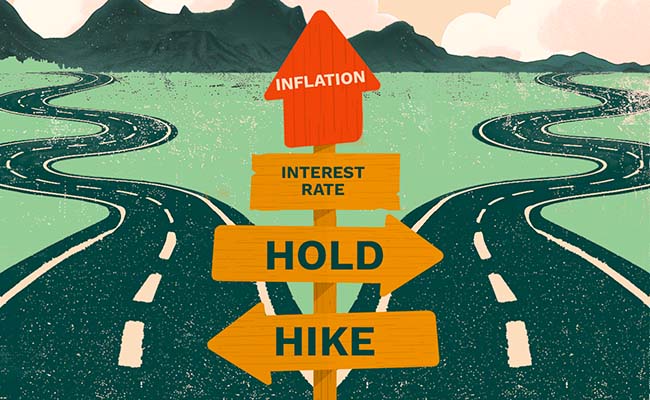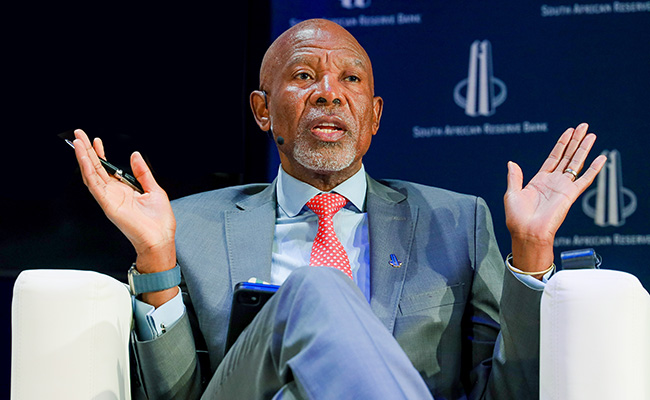
Lesetja Kganyago and the other five members of the South African Reserve Bank (SARB) monetary policy committee (MPC) this week considered hiking rates by 50 basis points – but settled on 25 instead.
This is no cause for alarm yet – on a R1m home loan at the prime rate, this only adds about R168 to the monthly repayment – but the concern is that this may be the first of many hikes if the US war in Iran doesn’t end soon, and the oil price doesn’t fall. The trajectory is anyone’s guess: hours after Kganyago announced the rate hike, news reports suggested the US and Iran had reached a deal to end the war, but there have been many such false starts in recent weeks.
As it was, this was the first interest rate hike in three years, with Kganyago lifting the SARB’s benchmark rate to 7%, by a four-two vote following a “protracted discussion” on whether a higher rate would have been more appropriate. This means that from today, the prime interest rate will be 10.5%.
“In the final analysis, the view of the committee was that we are still looking for more information, and if we are to act cautiously, we would do a 25-basis-point adjustment to the policy rate and then see what we are getting in the data,” he said.
The Iran war has caused havoc with fuel prices, which filter directly into the cost of food and transport. This meant that the SARB now sees inflation averaging 4.4% this year, up from 3.7%, with “core inflation” peaking at 4.1% in the first quarter of next year. This is all contingent on oil: the SARB has lifted its assumption for the price of Brent crude to $91 a barrel for this year, from $78 previously.
Higher prices also hurt South Africa’s GDP growth. The Bank has lowered its forecast to 1.2% for this year, from 1.4% last year.
April inflation hit 4%, a 20-month high and the top of the bank’s tolerance band, with fuel doing most of the damage. Services inflation ran at 4.6%. Strip out fuel, electricity and food – the core measure the bank watches for contagion – and prices are rising. That, Kganyago said, is the evidence that second-round effects are “beginning to kick in”.
Three more rate hikes?
“In terms of inflation, the outlook has deteriorated quite significantly,” says Sifiso Mkhwanazi, a macroeconomist at Alexforbes. “In our models, what we are seeing is that inflation remains above the upper limit of that tolerance band until the end of the first quarter next year. The SARB will try to anchor inflation expectations, and we believe there could even be three interest rate hikes.”
The main reason is that the Iran conflict has carried on far longer than most had initially anticipated.
“We can’t characterise this war as being temporary any more,” he says. International energy agencies, he notes, put any recovery in oil supply at three to four months – even if the conflict ended today. “Oil prices are never going to go to $60-$65 a barrel anytime soon.”
The bank’s own projections point the same way. In March, the MPC sketched two scenarios; on Thursday, it presented three, all worse than the base case. The mildest carries two further hikes; the harshest, five more in total and inflation breaking through 6%, with the policy rate peaking at 7.83% by the third quarter.
‘Right thing to do’
“On balance, it was a considered MPC statement – the right thing to do,” says James Turp, a fixed-income portfolio manager at Ninety One. “It didn’t show panic or overreaction, and leaves some optionality on the table.”
Kganyago was clear about why the bank cannot wait for certainty: by the time second-round effects are unmistakable, “it’s too late, it’s outside of your monetary policy horizon”.
Which is why the call for what will happen at the July meeting is already live. The next read on inflation expectations – done by the Bureau for Economic Research and which Kganyago called “the key driver of what future inflation is going to be” – lands just before that meeting.
If it shows households and firms bracing for a longer stay above target, the 50-basis-point hike the bank declined to deliver this week does not go away. It simply moves to the next page of the calendar.
ALSO READ:
- Why South Africa is so vulnerable to the Iran war
- Fuel relief puts Godongwana (and Kganyago) in a bind
- The SARB’s review of prime will not reduce the cost of debt
Top image: Gallo Images/Fani Mahuntsi; Currency.
Sign up to Currency’s weekly newsletters to receive your own bulletin of weekday news and weekend treats. Register here.