
Singapore’s founding prime minister, Lee Kuan Yew, once argued that successful democracies require two things: a large, engaged middle class and broad political consensus on the fundamentals of governance. It’s an observation that deserves serious consideration in South Africa today.
Lee’s second condition has, perhaps unexpectedly, begun to emerge. The government of national unity (GNU) has shown that South Africa’s major political parties can co-operate around the constitutional order and the practical business of governing. While disagreements remain, the centre has held. That is no small achievement.
The first condition, however, remains our greatest weakness.
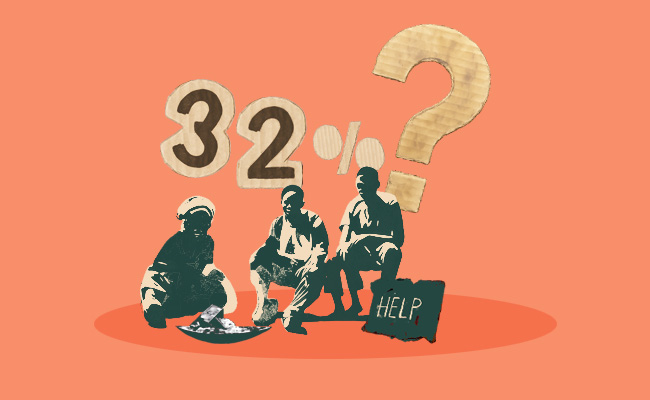
South Africa is not primarily a middle-class society. It is an unequal society with a relatively small middle class carrying an outsized share of the tax burden, while millions remain excluded from meaningful economic participation. Estimates vary depending on the definition used, but only about one in five South Africans can reasonably be described as middle class.
Contrast this with many of Europe’s most prosperous democracies. Countries such as Denmark, the Netherlands, Norway, Finland and France all have populations where roughly three-quarters or more of households enjoy middle-class living standards. These countries are hardly examples of laissez-faire economics. They combine high tax rates with universal healthcare, publicly funded education, strong labour protections and active market regulation.
Their success challenges the simplistic neoliberal argument that prosperity requires smaller government, weak labour protections and unfettered markets. In reality, successful market economies often rely on capable states that invest heavily in people and ensure that growth is broadly shared.
Widening inequality
There is encouraging news. Research by the University of Cape Town’s Liberty Institute of Strategic Marketing has found that households earning at least R22,000 a month increased from about 4-million in 2012 to more than 11-million by 2024. Importantly, black South Africans now comprise approximately 65% of this expanding middle class.
This is genuine progress. But it should also give us pause. South Africa’s Gini index has increased since 1994, consolidating its position as the world’s most unequal country.
History teaches us that when inequality becomes entrenched, political accountability weakens. As Harvard historian Sven Beckert argues in Capitalism: A Global History, modern capitalism has frequently concentrated wealth and political influence where state institutions fail to balance the interests of capital, labour and society.
French economist Thomas Piketty observed this dynamic with his now-famous formula: r > g – the return on capital exceeds the growth rate of the economy. Left unchecked, wealth accumulates faster than wages grow, inequality widens and economic opportunity becomes increasingly determined by ownership rather than effort.
South Africa exhibits many of these characteristics. Growth has remained stubbornly weak while wealth has become increasingly concentrated. Those who own appreciating assets benefit disproportionately, while millions struggle to build wealth through work alone.
The result is not merely economic inequality. It is political inequality.
A powerful constituency
A broad middle class has both the incentive and the capacity to demand competent government. It pays taxes, owns property, builds businesses, invests for retirement and expects functioning public institutions. It has something tangible to lose when the government fails and something meaningful to gain when it succeeds. It therefore becomes a powerful constituency for accountability, pragmatism and institutional stability.
Extreme inequality produces the opposite effect. Politics becomes increasingly polarised between those seeking redistribution and those protecting accumulated wealth. Elections become contests over division rather than shared prosperity. Long-term policy gives way to short-term populism.
Singapore offers an instructive, though imperfect, comparison. Since independence in 1965, its GDP per capita has increased from approximately $500 to more than $90,000 – sustained growth of 6.7% a year over six decades. Over the same period, living standards have risen across virtually the entire population, producing one of the world’s largest middle classes by living standards.
While Singapore’s political model is very different from South Africa’s constitutional democracy, its relentless focus on housing, education, industrial policy, infrastructure and job creation transformed ordinary citizens into stakeholders in economic success.
South Africa’s trajectory has been far less impressive. GDP per capita has roughly doubled since 1994, growing at an average annual rate of less than 2% in real terms. That is simply insufficient to expand the middle class rapidly enough to sustain a healthy democracy over the long term.
Entrenching democracy
Economic growth is often discussed as an end in itself. It is not. Growth matters because it creates taxpayers, homeowners, entrepreneurs and skilled workers. It creates citizens with a direct stake in good governance.
If the GNU wishes to leave a lasting legacy, it should judge every major policy against one question: will this expand South Africa’s middle class? Education that produces employable graduates, reliable electricity and functioning infrastructure, access to affordable housing, better municipal government and higher private sector investment – these are not merely economic reforms; they are democratic reforms.
As we approach our local government elections this November, we cannot assume our democracy will simply mature with time while economic growth stagnates and inequality persists. Democracies are strongest when most citizens feel they have a meaningful stake in the country’s future. Building a larger middle class is therefore not simply an economic objective. It is the surest investment we can make in the future of South African democracy.
Thomas Brennan is a co-founder of Franc, a South African fintech company that helps people invest easily and affordably.
ALSO READ:
- How this year’s Nobel winners changed the thinking on economic growth
- Capitalism with guardrails: harnessing its power for good
- Why halting South Africa’s debt binge is a huge win for the GNU
Top image collage: Pexels/Magda Ehlers; Rawpixel; Currency.
Sign up to Currency’s weekly newsletters to receive your own bulletin of weekday news and weekend treats. Register here.