
BEE has had its chance. Now bury it.
My local Nepalese waiter at a Chinese restaurant in Paris was genuinely bemused by South Africa’s ideological debates on BEE. I had been reading department of trade, industry and competition minister Parks Tau while enjoying dinner and shared some of his thoughts with the waiter, an immigrant with a finance degree.
He understands that he has to hustle as a waiter for a while until his break comes, which he fully believes it will. His attitude kind of sums up the poverty of those who lean on ideas of historical prejudice to serve up their own prejudice fresh.
Tau says the attack on BEE is political. Of course it is. BEE is political. It classifies citizens by race, tells companies who should own them, shapes who may supply them and decides which firms may approach the state’s table.
Elections are a referendum on a political party’s policies. The public votes, and the winning party uses its policies to shape legislation driving its own agenda. What the government of national unity has failed to grapple with is that the public voted – and their votes showed that the mandate to pursue certain policy agendas, including BEE, is less than clear, and certainly is not supported by the majority anymore.
The minister’s argument is that critics oppose redress. This is the old trick. Make criticism of BEE sound like nostalgia for apartheid. Then the policy itself need never answer for its results.
But BEE is not transformation. It is one attempt at transformation. It has been tried for more than two decades, transmogrifying into something expensive, complicated and weak, a handbrake on economic growth. It has spawned an industry of consultants, verifiers, lawyers and various intermediaries.
The numbers
Daan Steenkamp and Donald MacKay’s excellent new report adds welcome data to throw fresh light on the main questions the government has avoided to this point in the policy debate. They are: what does BEE cost, and what does it produce?
The state collects mountains of compliance data. It does not release this for serious public analysis. It measures ownership points, supplier spending and certificates. It does not benchmark the system against investment, productivity, business formation or employment.
The report surveyed 126 firms. The sample is not nationally representative, and the authors say so. Still, the findings should make Tau uneasy.
Median initial compliance costs ranged from R160,000 to R650,000. Ongoing annual costs ran from R225,000 to R2.7m across different certification levels. For some firms, compliance consumed a large share of profit. In extreme cases it exceeded profit altogether.
Only 4% said BEE had increased net employment and 35% said it had reduced hiring. Almost half reported lower reinvestment. More than 40% said it had reduced new investment. Fewer than 2% said it increased new investment.
This is a transformation policy that punishes the creation of the thing South Africa lacks most: growing firms that employ people.
The market has also voted.
The value of major BEE transactions fell 87% between 2018 and 2024. Sasol’s restricted empowerment share, economically identical to the ordinary share except for who may buy it, trades at a discount of about 57%. The ordinary share trades thousands of times more frequently.
The restriction destroys liquidity while the intended beneficiaries bear the discount.
There is something almost perfect about this. A policy created to transfer wealth makes black-held assets less valuable because the state restricts who may buy them.
Then there is the Burger King absurdity. Black shareholders wanted to sell their investment. The deal was blocked because the buyers would reduce the company’s empowerment status. The policy designed to give black South Africans economic agency tried to stop black investors exercising it.
Stealth tax
BEE has become a stealth tax on enterprise. It taxes capital, time, management attention and ambition. It encourages firms to remain small, stay outside government supply chains, restructure artificially or move activity offshore.
Tau himself admits empowerment spending is fragmented and poorly targeted. He says some firms channel money towards entities that qualify on paper without building real capacity. Well, duh. It’s exactly what the policy was designed to incentivise.
We need to have an honest conversation. Yes, this is political. All policy is political. Everything is political, to borrow from British punk rock band Skunk Anansie’s lead singer, Skin.
Replace BEE with a programme built around education, household poverty, infrastructure, entrepreneurship, access to capital, apprenticeships and measurable job creation. Publish procurement data. Break cartels. Fund black start-ups directly. Reward businesses that train, invest, export and hire.
BEE had a fair trial. It produced a narrow class of beneficiaries, a fat compliance industry and a smaller economy from which to redistribute.
It is time to end it.
ALSO READ:
- Stings like BEE: will the ANC get real?
- South Africa needs BEE – but that doesn’t blind us to its faults
- Meth’s BEE sting: why targets won’t work without a schooling fix
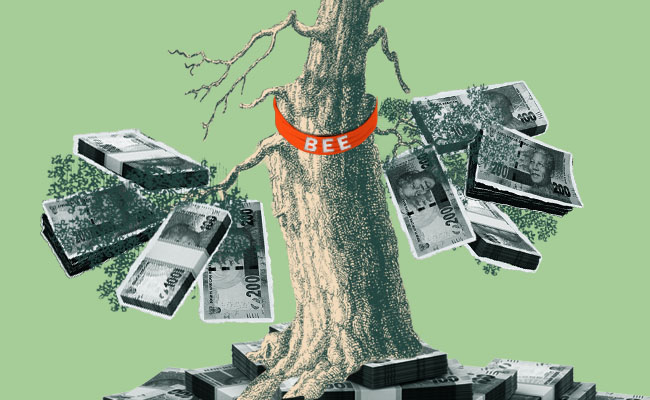
Top image collage: Rawpixel; Currency.
Sign up to Currency’s weekly newsletters to receive your own bulletin of weekday news and weekend treats. Register here.