

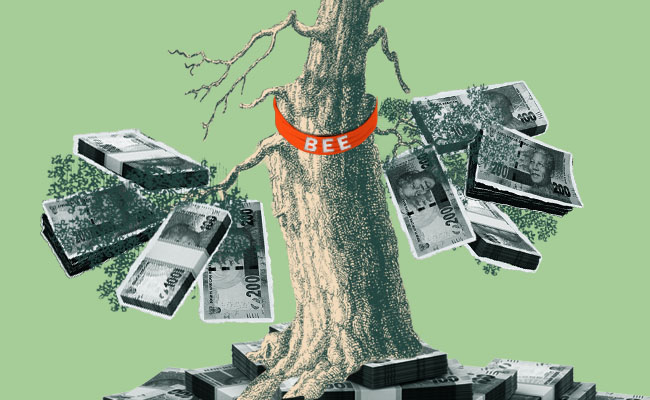

At the recent Nedbank Top Empowerment Conference in Sandton, trade, industry and competition minister Parks Tau launched into a defence of broad-based BEE (BBBEE).
Addressing the criticism that BBBEE has “failed” because huge “gaps” remain, he made the following revealing comment: “I want to be clear that the argument is not new, and it is not neutral. The global backlash against affirmative action is a politically driven campaign by those who have always opposed economic redress.”
I would like to say this is factually inaccurate, and the evidence I provide for this claim is unimpeachable, because the evidence is me. And by me, obviously I don’t mean me in particular, but I take myself to represent something akin to the centre of political gravity in business circles.
Until fairly recently, I considered BBBEE to be an interesting, righteous, necessary, uniquely South African and enormously creative way of confronting a pressing political issue. In 40-odd years of writing business commentary journalism, I’ve expressed that sentiment more times than I can remember.
In its first iteration, I was thrilled to see employees of Telkom and so many other businesses finally get an equity stake in their companies. But now, sadly, I find myself on the other side of the argument, like so many of my countrymen, particularly those trying to sustain businesses in extremely difficult circumstances.
So, what changed?
Free money
Actually, it’s very simple. It’s also very typical of contra-market political interventionism: bad actors have learnt how to game the system. And in this case, they have managed to do so to the extent that the policy is working against itself, because BBBEE is not possible without economic growth and, as it stands, BBBEE is constricting growth.
The fact that Tau can’t see this has a natural explanation; the bad actors are precisely the people in his own party arguing not only for the continuation of BBBEE but for its expansion and extension.
I know, as we all do, that there are people out there who have “always opposed economic redress”. My own guess is that this group constitutes a very vocal but very small minority.
In the early 2000s, my sense was that the South African business community embraced BBBEE with enthusiasm and creativity, and you can see that in the fact that so many business organisations willingly took part in sector codes and special dispensations. The mining industry and hosts of other companies went ahead and accepted the original 26% ownership target – though often through expensive, heavily structured empowerment transactions – with alacrity, pride even.
But then the gaming of the system began and business, in the broadest sense, started having second thoughts. The problem is that having given away 25% of its equity, business considered its responsibility, from an equity point of view, largely done.
With business having given away that equity, hordes of politicians wanted to know when it would be their turn to be showered with free money. The response of the mining industry was that if government demands businesses give away 25% of their equity and they do that, and then the government demands they give away another 25%, where does it stop exactly?
Shareholders accepted the first round, but if there is going to be round two, and then round three, what exactly is the point of investing in mining? So government has held off insisting on another 25% cadre cash bonanza in mining.
BEE was not the only reason mining stagnated; Eskom, Transnet, licensing delays and commodity cycles all mattered. But the repeated reopening of the ownership question became one of the clearest signals to investors that the rules were never quite final. The industry has inched forward, but nothing like the explosive growth in Australia and Canada over the years, and nothing like its potential.
Sanral: a cautionary tale
Few things illustrate this better than the South African National Roads Agency (Sanral) and its tortuous relationship with top-notch local civil company WBHO and so many other construction companies.
Civil engineering companies are very reliant on government contracts, so when the government’s BBBEE policy for the construction industry was announced, WBHO complied to the letter. WBHO has been responsible for starting dozens of smaller road-building companies and has carefully constructed a genuine level 1 BBBEE contributor, 51% black-owned and 30% black-women-owned.
WBHO, by the way, built the Cape Town Stadium, Moses Mabhida Stadium, the Mall of Africa, lots of corporate headquarters in Sandton, including the Discovery HQ and the Alice Lane precinct, and Kusile Power Station, among mountains of other stuff.
But then the ANC in its infinite wisdom handed the reins of Sanral to a communist transport minister, Blade Nzimande, who promptly appointed someone he presumably knew from his previous portfolio in education, English lecturer Themba Mhambi, to head the board.
Sanral then became engulfed in procurement controversy, litigation and boardroom turbulence in an industry already distorted by the wider construction-mafia phenomenon.
Mhambi’s first initiative was to oust Sanral’s longtime and very successful senior staff.
Sanral obviously, IMHO, wanted to game the system, like everybody else, but it faced an unusual problem: WBHO was totally BBBEE compliant. How, then, to avoid giving the road-building contracts to this company, and instead hand them over to their mates in the cadre? Well, simple. Increase the BEE requirements, right?
So that ended in a big court case, which WBHO effectively won. So, what did Sanral do? It handed the big road contracts to Chinese construction companies. You have to laugh. Obviously, these companies were not at the time anywhere near as BEE compliant as WBHO and the other local construction companies, but they promised they would be, eventually, maybe.
Bogus statistics
The point is that Tau’s comment that people who oppose BEE are just racist and always have been is not only false, but also actually a smear. And it’s a smear, not because he wants it to be, but because it has to be.
This is visible in his use of bogus statistics like the claim that “only 31% of the JSE” is owned by black South Africans. Well, yes, but to the extent we know, about 50% of the JSE is owned by foreigners, so actually black and white South African ownership of the JSE is more or less equal. Obviously, the population proportions are different, but omitting that pertinent statistic gives it all a different complexion.
Lots of people point out that BEE has been a key element in almost every large-scale corruption scandal in South Africa. But you know, these scandals, which all but destroyed Eskom and Transnet, are just the tip of the iceberg.
The problem is not only outright corruption, but also that large organisations like city councils, water boards, training organisations and so many others have just disintegrated into incompetence and failures of innovation and management. In some ways, that is worse because it just lingers on and on.
The overall net result has been an economy that has grown by 0.7% for more than a decade.
One of the problems is that there is so little scholarship on the question. The one attempt at factually quantifying the cost of BEE was presented by Solidarity and the Free Market Foundation last year. Its central claim is that BBBEE compliance costs South Africa R145bn-R290bn a year, equal to 2%-4% of GDP, and that this has reduced annual growth by 1.5 to three percentage points, costing the country as many as 3.8-million jobs.
The report was more advocacy than scholarship, but even if it’s half that, it surely constitutes a consideration in the process of extending and intensifying BBBEE.
The fact that Tau doesn’t see that is because his own organisation is now dominated by people who either have or want to game the system.
They are shouting in his ear: “Make BEE more onerous, we want our turn.” The public, I think, are more varied: some support BEE in principle, some are supportive but suspicious, some are indifferent, some are against, some vacillate – like me! But the point is that Tau had an opportunity to address the abuses of BEE at the conference, but chose not to, which says much more than he appears to recognise.
All of this is why the mood has changed on BBBEE. It’s not racism, it’s frustration.
A version of this column was first published by the Financial Mail. Currency and the Financial Mail are part of the Financial Mail Group.
ALSO READ:
- South Africa needs BEE – but that doesn’t blind us to its faults
- Why markets – not BEE – lift people from poverty
- ‘How BEE is hobbling South Africa’s economy’
Top image collage: Rawpixel; Currency.
Sign up to Currency’s weekly newsletters to receive your own bulletin of weekday news and weekend treats. Register here.




The 80/20 rule essentially means a fully compliant company can be priced 25% more than the lowest tender and still win.
Hi Tim. This article has angered and frustrated me beyond words. Like you I have moved from being 100% supportive, having created a 51% BWO company in 2010 in the rail engineering space to being totally apposed, but reluctantly compliant. I even presented an article in the Capital Equipment Export Council entitled “BEE Can Work” to an extremely sceptical audience in 2011 when Bombardier Transportation requested we create a rail equipment manufacturing clusture with dti support. The company has had a three different Black owners since and the struggle continues.